
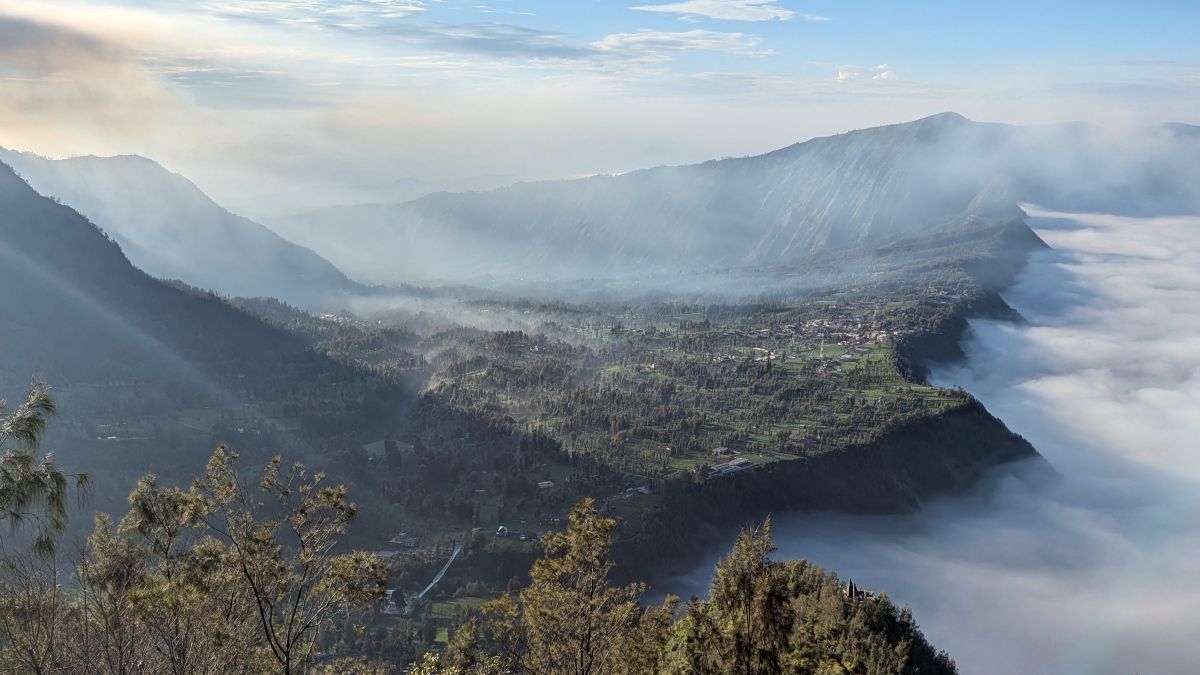
Java is one of Indonesia’s most diverse and exciting islands – a place where ancient temples meet active volcanoes, stunning waterfalls and dynamic street life. This place is home to culture, stunning nature, and the most friendly people we’ve ever met.
In this post, we’re sharing our best of Java itinerary suggestion to help you plan your own unforgettable trip. You’ll explore the highlights of Jakarta, Yogyakarta, Mount Bromo, Tumpak Sewu Waterfall, Ijen Crater and Meru Betiri National Park – with practical tips along the way, especially for fellow vegan travelers.
Use this as inspiration or follow it step-by-step: either way, get ready for a Java adventure you won’t forget!
This post contains affiliate links. If you make a purchase or booking through these links, we earn a small commission at no extra cost to you. This supports our work and allows us to keep offering free content here on the blog.
Introduction to Java

Population
Java is the most populated island in the world, with over 150 million people living on it – that’s more than half of Indonesia’s total population! Despite this, you’ll still find peaceful spots, quiet villages, and plenty of nature if you step away from the main cities.
Currency
The local currency is the Indonesian Rupiah (IDR).
At the time of writing:
1 EUR ≈ 17,000 IDR
1 USD ≈ 15,500 IDR
Cash is essential in smaller towns, but cards are accepted in many restaurants and hotels. Keep small bills for markets, street food and tips.
Travel tip: Personally, we are using a Wise card (formerly TransferWise) for low-fee currency conversion and to avoid hidden fees when paying by card or withdrawing cash in Indonesia.
Religion
Java is predominantly Muslim, but known for its religious and cultural diversity. You’ll also find Hindu, Buddhist, and Christian communities – especially near major temples like Prambanan and Borobudur.
Tip: Dress modestly when visiting religious sites and rural areas, and be respectful during prayer times, especially during Ramadan.
Visa
For most countries, options include Visa on Arrival (VOA) or apply online for an e-VOA. Here’s what you need to know:
- Valid for 30 days
- Extendable once for another 30 days (total: 60 days)
- You can apply for an e-VOA before you travel on the official site: evisa.imigrasi.go.id
Indonesian immigration may ask for proof of onward travel when you arrive. If you don’t have one yet, consider booking a refundable ticket or using a service that provides temporary flight confirmations, for example through bestonwardticket.
Transport
In cities like Yogyakarta or Jakarta, apps like Grab and Gojek are the easiest way to get around – whether you want a taxi, motorbike or food delivery.

SIM Cards & eSIMs
Staying connected in Java is easy:
- Local SIM card: Cheap and widely available at airports, shops, and convenience stores. Telkomsel has the best coverage in remote areas.
- eSIM: More expensive, but you can keep your SIM card from home. We personally used Telkomsel.
Drinking Water
Tap water is not safe to drink. Always use bottled or filtered water. Consider bringing a reusable bottle with a built-in filter to reduce plastic waste.
Best Time to Visit Java
Java has a tropical climate with two main seasons:
- Dry season (May – October): The best time for travel. Clear skies, less humidity and easier access to volcanoes, temples, and waterfalls. It’s also the most popular season (especially during July/August, were both Asian and European countries have holidays), so expect more tourists at Borobudur, Prambanan and Mount Bromo.
- Wet season (November – April): Daily rain showers, sometimes heavy. Traveling is still possible (and cheaper), but transport delays are more common, and some trekking paths can be muddy or closed. On the plus side, the landscapes are lush and green, and you’ll often find fewer crowds.
- Special events: If you want a unique experience, try to visit for Vesak Day at Borobudur (usually in May, full moon) when thousands of lanterns are released, or for the Ramayana Ballet at Prambanan (held May-October).
Locations in Java
Jakarta
How long we spent here: 2 nights (leaving early next morning)
What we recommend: 2-3 nights
How to get here: Beginning of the travel -> by plane via Jakarta Airport
Where to stay: We stayed at Konko Hostel Jakarta and were super satisfied. It’s walkable distance to Burgreens (vegan restaurant hehe) and the Gambir train station, where you can take the train to Yogyakarta.

About Jakarta
Jakarta is the energetic, bustling, never-sleeping capital of Indonesia. Home to over 10 million people, it ranks among the 10 largest capital cities in the world. Many travelers arrive here to kick off their Java adventure, but not many stay longer than a night or two. The reason? While Jakarta offers plenty of exciting things to discover, such as a rich history, a unique blend of cultures and delicious street food, it can also feel huge, crowded and overwhelming for visitors. If you’re like us and not much of a city person, you’ll probably find your happiness with our laid-back 1 Day in Jakarta article. But if you’re reading this and thinking, “what a whiny bunch, I’m here to experience city life!,” we invite you to dive deeper and discover what to do during 2, 3 or more days in Jakarta in this article.
Vegan in Jakarta
In Jakarta, we grabbed a quick bite at vegan chains like Burgreens and Fortunate Coffee. For full reviews of these and other vegan spots across Indonesia, check our our Vegan in Indonesia Guide.
Yogyakarta
How long we spent here: 5 nights
What we recommend: 3-5 nights
How to get here: From Jakarta by train (tickets bought in advance via tiket.com). To get around, we recommend our driver Doddy, which whom we stayed in contact after our first Grab ride: +62 81339809008 (Whatsapp). He didn’t hesitate to drive us everywhere at every imaginable hour of the day (think 6am for Prambanan). If you contact him, tell him hi from Lynn & Daniel! 😀
Where to stay: We stayed at this lovely Airbnb in the outskirts of Yogyakarta. To visit the center, you can take Grab and Gojek.
About Yogyakarta
Yogyakarta – or Jogja, as the locals lovingly call it – is the cultural heart of Java. This vibrant city is bursting with traditional arts and crafts, rich history, and a huge variety of local (vegan!) food. Seriously, we tried so many vegan restaurants here, and we loved every single one! But Yogyakarta is more than just food and culture. It’s also the perfect base for exploring iconic sites like the Prambanan and Borobudur temples, or even Mount Merapi. In this article, you’ll find everything you need to know about the best of Yogyakarta – from the coolest neighborhoods to visit, the best day-trips, and (of course!) our favorite vegan food spots.

Vegan in Yogyakarta
One of our favorite food highlights in Java was Simple Plant Vegan Kitchen & Artspace. Hidden away at the end of a small forest trail, this place feels like an escape from the city. Beyond the cozy restaurant, there’s also a small shop that supports animal charities. The best part? You’ll be sharing the space with cats, chickens, and even a pig – it’s one of those unforgettable experiences where food and values come together.
We also found a few budget-friendly spots around town. Padang Vegan Damai, tucked away inside Malioboro Mall, serves authentic Padang food at prices hard to beat. It’s worth the visit for those looking for true local flavors. And at Black Forest Cafe, we enjoyed a mix of Indonesian classics and Western comfort food, including breakfast pancakes and vegan rendang.

Chains like Loving Hut and Fortunate Coffee are also present in Yogyakarta. Since they can be found all across Indonesia, we included our experiences with them in our full Vegan in Indonesia Guide.
Mount Bromo
How long we spent here: 2 nights in Probolinggo (2nd night leaving at 2am)
What we recommend: 1 night if you’re in a hurry, 2 nights for a more relaxed pace
How to get there: From Yogyakarta by train to Probolinggo (tickets bought in advance via tiket.com)
Where to stay: We spent 2 nights at Bromo Venture in Probolinggo. Reza, the manager, helped us organize everything, from the driver to finding vegan food, and even stayed up late to make sure we got picked up safely by our driver for Mount Bromo.

About Mount Bromo
You’ve probably seen the pictures already a hundred times: a smoking volcano, dramatic sunrise and a valley of endless volcanic, black sand. And experiencing Mount Bromo in person will be even better! We started our hike from Seruni Viewpoint, walking through the dark under a starry sky. After a leisurely hour-long climb, we arrived at the popular King Kong Hill just before sunrise – with a whole bunch of other people! It was crowded, but luckily the area is big enough to find your own spot. And the moment the first light hits, you’ll forget about the people around you anyway. But definitely stay a bit longer after sunrise – most people leave quickly, and you’ll get a much quieter moment to soak it all in. After sunrise, we hiked all the way up to Mount Bromo crater.
Mount Bromo is definitely a once-in-a-lifetime destination and absolutely deserves a spot on your Best of Java bucket list. We’ve written a detailed article about our experience – covering both the magical moments and some of the more challenging aspects. You can find all about our Mount Bromo experience, and how to get there from Probolinggo, here.
Costs:
– Cemoro Lawang village entrance: 30.000 IDR (~1.70€)
– Bromo National Park entrance: 220.000 IDR on weekdays / 320.000 IDR on weekends. If you want to avoid the official park entrance fee, ask your driver to drop you at Seruni Viewpoint and walk from there. More about this here.
Vegan Food Around Mount Bromo
There are no fully vegan places around Mount Bromo and restaurant options in general are rare. That’s why we recommend to stock up on food and snacks before your trip. We stayed in Probolinggo before reaching Cemoro Lawang and here are our recommendations.
Our favorite discovery was Aulia’s Burrito, a tiny spot with the warmest host you could imagine. The fully vegan burrito comes packed with falafel, avocado snd homemade mayo, and it was so good we instantly wished we had more time to go back. Beyond the food, chatting with Aulia herself was an absolute highlight, as she’s incredibly kind and welcoming.
We also tried Vegan Way a small all-vegan café serving soups, noodles, crispy tofu, and even vegan ice cream. The standout for us was the salted caramel drink! We also got a tofu dish to go, which was the perfect energy boost for our Mount Bromo hike the next morning.
Both of these places are small, local gems unique to Probolinggo. If you’re interested in bigger vegan chains you’ll find all across Indonesia (like Loving Hut or Burgreens), check out our Vegan in Indonesia Guide.
Tumpak Sewu & Goa Tetes
How long we spent here: 2 nights
What we recommend: 2 nights
How to get here: By scooter or car. We hired a driver that took us from Probolinggo to Mount Bromo, then to Tumpak Sewu (Price: 1.100.000 IDR -> if you’re interested, contact +62 81216998887 on Whatsapp, they will be happy to help you organize your trip).
Where to stay: We stayed at Dear Traveller Luxury Glamping – lovely, clean big tents in a great location right next to the entrance Goa Tetes! And by staying there, you even get a free entrance ticket to the waterfalls (Goa Tetes side).

About Tumpak Sewu and Goa Tetes
You know those places that make you say “wow” out loud? Tumpak Sewu was exactly that for us. The waterfall, also known as Coban Sewu, is located in East Java and is probably one of the most impressive natural sights we’ve ever seen. When visiting, you have two main options: there’s a viewpoint that lets you admire the mighty waterfall from above, but you can also hike all the way into the valley and experience its full, majestic force up close. In our opinion, both are worth doing. And it doesn’t end there: just a short walk away lies Goa Tetes, a unique collection of several smaller waterfalls and caves. You can follow a trail that’s leading through water and streams to explore the area – it basically feels like a giant natural water park! Prepare to get wet, wear shoes with a solid grip (it gets very slippery) and have fun! The whole thing is adventurous and has some steep stairs, so don’t hesitate to go in your own rhythm and use your hands from time to time.

Costs: The entrance fee to Tumpak Sewu viewpoint is 20.000 IDR. To go down to the waterfalls, it costs another 50.000 IDR (includes both Tumpak Sewu and Goa Tetes). What we didn’t expect is that you’re required to take a guide to descend to the base of Tumpak Sewu (we hadn’t seen this mentioned on any other travel blog, so it’s probably quite new? – as of June 2025). The thought of having a guide didn’t really excite us, so we decided to walk back along the road to the Goa Tetes entrance. And surprisingly, no guide was needed here. From this side, you can access the valley and explore Goa Tetes first, then make your way over to the base of Tumpak Sewu waterfall.
Vegan Food Around Tumpak Sewu and Goa Tetes
There are several warungs on the main streets around the waterfalls, such as Warung Aji, where you’ll always find some rice dishes with tofu or tempeh. They often sell instant ramen too, but check the ingredients for milk and egg.
Kawah Ijen
How long we spent here: /
What we recommend: 1 night if you’re in a hurry, 2 nights for a more relaxed pace (you’ll need to get up in the middle of the night)
How to get here: By scooter or car. We hired a driver that took us from Probolinggo to Mount Bromo, then to Tumpak Sewu, and could also go on to Kawah Ijen (Price: 1.100.000 IDR -> if you’re interested, contact +62 81216998887 on Whatsapp, they will be happy to help you organize your trip).
Where to stay: We didn’t stay here this time, but can recommend Didu’s Homestay from a previous experience. Or if you’re looking for something more luxurious (and unique): Lintang Luku Resort.
About Kawah Ijen
We skipped the famous Kawah Ijen this time, but still wanted to include it on this Best of Java list, because it’s one of the most unique locations in Java – and rightfully so. Lynn visited the crater and its famous blue fire already in 2016 and still remembers it as an unforgettable experience. The whole scenery is surreal and almost feels like being on another planet. At the same time, it is extremely humbling and heartbreaking to see the sulfur miners work under these extremely dangerous conditions, carrying heavy loads of sulfur while being exposed to toxic fumes. To be honest, the idea of visiting Kawah Ijen “for fun” was hard to reconcile with the brutal reality that this workers face every day, harming their health without any protective gear. But what made us take the final decision to skip this place were recent reports about how crowded Ijen has become in the meantime. Like Mount Bromo, Kawah Ijen’s growing popularity attracts large crowds of people – and after our intense experience at the crater of Mount Bromo, we just weren’t ready for another hike in that kind of environment.
That said, this was our personal decision, and it shouldn’t influence yours! Many travelers describe Kawah Ijen as one of the highlights of their trip, and we totally get why. If you choose to go, you can always take it at your own pace and decide how far down into the crater (where most of the crowds will be) you really want to go.
Best Time to Visit: Start your hike around 1-2am to reach the crater in time to see the blue flames before sunrise. These flames are only visible in the dark.
The Hike: The trail to the crater rim is about 3 km uphill (roughly 1.5-2 hours). It’s steep in parts, and if you go into the crater to see the flames up close, be prepared for a steep, rocky descent.
Gear: Depending on the wind, the sulfur fumes can be intense and putting your health at risk. A proper gas mask is essential if you’re entering the crater. Most tours include one. Also bring a warm jacket (it gets cold at night), a headlamp and good footwear.
Entrance Fee: Around 150,000 IDR on weekdays / 200,000 IDR on weekends. A guide is not mandatory, but often recommended for safety.
Meru Betiri National Park
How long we spent here: 2 nights
What we recommend: 3-5 nights
How to get here: By scooter or car, as it is quite isolated. We hired a driver that took us from Tumpak Sewu to Meru Betiri National Park.
Where to stay: We stayed at Adventure Turtle Homestay and loved every minute! Especially our host Sri made this stay unforgettable. She was genuinely open and interested in our stories, prepared the best vegan meals and shared a lot of interesting info about Indonesia with us.
About Meru Betiri National Park

This place is a bit harder to reach, but if you have some extra days: go for it, it’s an absolute gem! Stretching along the southern coast between Banyuwangi and Jember, this park is a paradise for all nature lovers. You’ll find the most stunning, remote beaches, dense jungle and mangrove forests. One of the main highlights is Sukamade Beach, famous for its turtle conservation program. You can stay overnight in basic accommodation and, after dark, witness turtles come ashore to nest.
We only spent 2 nights here and skipped the visit to Sukamade Beach due to time limitations. But we still saw some incredible places that were nearly untouched by tourism.
Vegan Food Around Meru Betiri National Park
We mostly ate at out accommodation Adventure Turtle Homestay, where our host Sri spoiled us with delicious vegan meals and snacks. However, even if you don’t have the same amazing host, based on our experience across Java, we’re confident that most local warungs in the area offer simple but satisfying rice and tempeh/tofu dishes.
Itinerary Suggestion for Java
| Day | Destination | Highlights | Transport |
|---|---|---|---|
| 1 | Jakarta | Arrival, overnight stay | Train or flight to Yogyakarta |
| 2–3 | Yogyakarta | Borobudur, Prambanan, city, vegan food | Train to Probolinggo (~7h) |
| 4 | Probolinggo | Bromo prep, Vegan Eats (check out Bromo article) | Tour/driver to Cemoro Lawang (2AM start) |
| 5 | Mount Bromo | Sunrise, crater hike | Tour/driver to Tumpak Sewu in the afternoon |
| 6-7 | Tumpak Sewu | Waterfalls, Goa Tetes | Tour/driver to Ijen base in the afternoon |
| 8 | Ijen Area | Rest & prepare for night hike | Stay in Banyuwangi/Bondowoso |
| 9 | Kawah Ijen | Blue flames, crater views | Tour/driver |
| 10-12 | Meru Betiri NP | Beach, jungle vibes, see turtles | 4×4 or driver from Banyuwangi |
| 13 | Banyuwangi | Beach, markets, rest | Train or flight to Jakarta/Surabaya |
| 14 | Jakarta or Surabaya | Explore or fly out | Departure |
This is a possible, but very rushed itinerary. We share it as an idea of what is doable, but it’s not necessarily what we recommend.
- If you have 14 days or less: we suggest to leave out Meru Betiri or Kawah Ijen (keep in mind that Meru Betiri is more remote, therefor harder to reach and you’ll probably have to pay a bit more for transport).
- If you’re short on time or want the most hassle-free solution: Book Mount Bromo – Tupak Sewu – Ijen as an organized tour, for example through this 3days/2 nights tour. If you prefer to skip one of the places, you have for example this Bromo – Ijen tour or this Tumpak Sewu – Bromo tour.
- Remember that driving in Java takes time. Even if destinations seem close on the map, road conditions and traffic can turn short distances into hours of travel.
- In general, finding a driver in Java is incredibly easy! We’ve shared a few suggestions for some of the destinations above, but honestly, no matter where you are, you could just ask around – someone will always know someone (who knows someone…) who can take you where you need to go.
Vegan in Java
Finding Vegan Food in Java
Good news: following this best of Java itinerary as a vegan is absolutely doable, and surprisingly easy! While fully vegan restaurants are still rare outside of big cities, local Indonesian cuisine offers plenty of naturally plant-based options.
You’ll find dishes like gado-gado (steamed veggies with peanut sauce), pecel (similar, with a spicier kick), tempeh goreng (fried tempeh), nasi goreng (fried rice, just ask for no egg), and sayur lodeh (vegetable coconut curry) almost everywhere.

In bigger cities like Yogyakarta, Jakarta, or Banywangi, there are dedicated vegan cafés and restaurants. In smaller towns, it’s a good idea to learn a few basic phrases or use a translation app to explain what you eat (and don’t eat). Bring snacks just in case, especially when heading to more remote areas like Mount Bromo or Tumpak Sewu.
For more tips, check out our full Vegan Guide to Indonesia for restaurant recommendations, local dishes and practical travel advice.
Eco & Vegan Travel Tips for Java
Here are some quick ideas that are easy to implement and make your travel to Java more sustainable:
- Plastic waste: Bring a reusable water bottle. Many hotels and hostels offer free refills with filtered water, so you can avoid buying single-use plastic bottles.
- Volcano or mountain hikes: Stick to official trails and avoid littering. Volcanic landscapes are fragile and unsafe off-path.
- Waterfalls: Stay on marked paths to avoid erosion and accidents. Many waterfalls are surrounded by farmland, so be sure to respect private land and local communities.
- Rice fields: Rice fields are a popular photo spot, but in the first place they are people’s workplace. Stay on the designated paths, don’t trample crops and be respectful if you take photos of farmers at work.
- Vegan travel: Tofu, tempeh, vegetables and rice are everywhere. In big cities like Yogyakarta and Jakarta, you’ll find vegan cafés and warungs (small eateries) that can adapt dishes. For more details, check out our full Vegan Indonesia Guide.
FAQ: Planning Your Trip to Java, Indonesia
Is Java safe for travelers?
Yes, Java is generally safe for travelers. As with any destination, keep an eye on your belongings, especially in busy cities like Jakarta or Yogyakarta. Natural sites like Mount Bromo and Kawah Ijen involve some physical effort—so always follow local safety advice and wear appropriate gear.
What’s the best time to visit Java?
The best time to visit Java is during the dry season, which runs from May to October. You’ll get sunnier days and better road conditions for mountain and jungle travel. The wet season (November to April) can still be beautiful, but expect more rain and potential delays, especially in remote areas like Meru Betiri.
How much time should I spend in Java?
We’d recommend at least 10–14 days to explore Java properly. This gives you time to see the cultural highlights (like Yogyakarta and the temples), witness epic nature (Bromo, Ijen, waterfalls), and even venture off the beaten path (Meru Betiri National Park).
Do I need a guide or can I travel Java independently?
You can definitely travel Java independently! Trains and rideshare apps like Grab and Gojek make it easy to get around cities. For more remote areas (like Bromo or Meru Betiri), we recommend hiring a driver or joining a small group tour to simplify logistics.
How do I get around Java?
Java has a great train network—especially between Jakarta, Yogyakarta, and Probolinggo. For short distances, apps like Grab and Gojek are reliable and affordable. In rural areas or for sunrise hikes, hiring a driver is often the easiest (and safest) option.
Can I visit Java on a budget?
Absolutely! Java is one of the most budget-friendly islands in Indonesia. You’ll find affordable transport, accommodation, and local food (especially at warungs and markets). Many of Java’s best experiences—like hiking a volcano or visiting a temple—are either free or very affordable.
Further Reading
Blog Articles
- How to Spend 1 Day in Jakarta: Quick Guide to Exploring the Capital
- Discover the Best of Yogyakarta: Temples, Culture & Vegan Eats
- Mount Bromo from Probolinggo: Sunrise Adventure and Practical Tips
- Vegan in Indonesia Guide
- Best of Bali
Useful Resources

About the Authors
Lynn & Daniel are the vegan couple behind VanderlustJourney, combining their passion for adventure and plant-based living. They share stories and visuals of natural places, hikes, vegan discoveries, and meaningful encounters from around the world – always striving to travel with kindness.
👉 Follow us on Instagram
✉️ Contact: vanderlustjourney@outlook.com
What a unique place – at least for me from the United States. I loved hearing and reading about it.
So happy to hear we could bring a little bit of Java to the US 🙂
I’m dying to travel to Indonesia and loved this writeup with all the info on Java- thanks for putting it together!
Thank you, hope Indonesia will happen soon for you!!
Love the sound of Mount Bromo and the beaches (and sea turtles) in the national park!
Thank you Sonia 🙂