
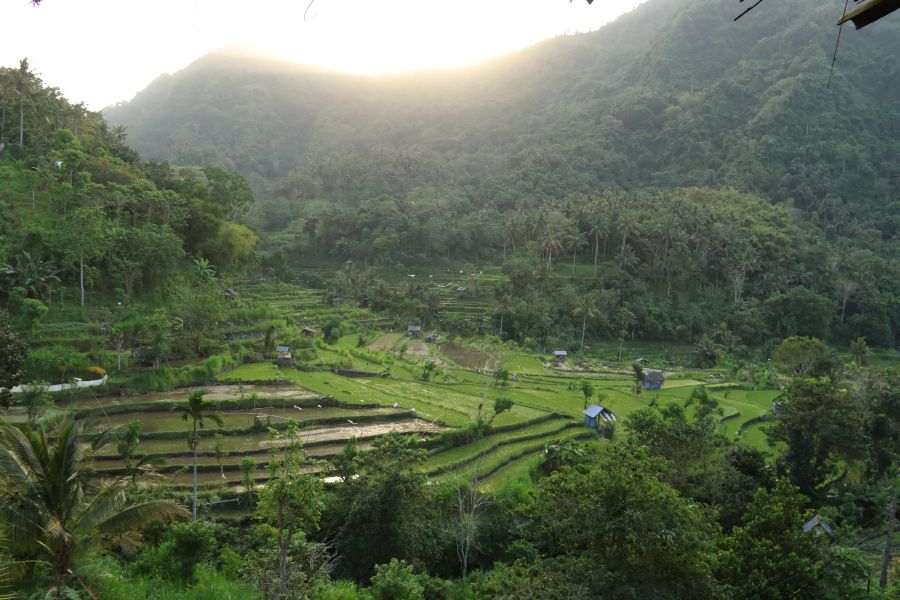
Have you heard of Tetebatu? We hadn’t either – at least not until we started planning our itinerary for Indonesia, and Lombok in particular. But it quickly became clear that this little mountain village deserved a spot on our must-visit list.
Discovering Tetebatu
As we dove deeper into our research, we realized Tetebatu isn’t quite the hidden gem we initially thought. In fact, it’s the oldest tourist destination on Lombok! Travelers have been making their way here since the 1970s, drawn to the serenity and lush beauty of the village at the foot of Mount Rinjani. And while the coastal areas can be hot and humid, Tetebatu, sitting at 700 meters above sea level, offers a cool and refreshing escape.
Rainy Days and Warm Hospitality
Most people stay in Tetebatu for just a couple of days, maybe a bit longer if they’re planning to hike Mount Rinjani. We stayed for a full six days, and it rained every single one of them. We loved every minute.
One of the biggest reasons we felt so at home here was our incredible hosts, Hary and Ida. From the moment we arrived on their property, they welcomed us like old friends. That very first night, we sat around the fire together, drinking homemade rice wine and listening to Hary play guitar and sing. His playlist? Impressively eclectic, including the French ballad Aïcha and even some German children’s songs.
They taught us how to ride a scooter on a football field, which is the only reason we can now explore Lombok so freely. They shared stories about life in Indonesia, their views on Indonesian politics, and even took us along to one of Hary’s concerts.
It was the perfect little getaway, especially after two busy weeks in Bali.

Exploring the Village
Tetebatu doesn’t have a single tourist shop, and the locals remain surprisingly unfazed by the groups of visitors wandering through their village with curious eyes. If you’re exploring without a guide, expect to hear the question “Where do you go?” several times a day – even from children who’ve clearly mastered the line to perfection. When visiting waterfalls, you’ll often be asked to pay a small entrance fee (around 10,000 IDR), and according to what we’ve heard from other travelers, the fee can sometimes vary depending on the person’s mood. Occasionally, an extra parking fee for motorbikes is added as well. But aside from that, visitors are able to explore at their own pace, without pressure to spend money.
Waterfalls and Monkey Forests
Waterfalls are one of the main attractions in the area, and a few are within walking distance of the village. Our favorite was Air Terjun Sarang Walet, surrounded by lush greenery and offering the chance to take a nice, fresh dip. Often, there were local kids at the pools, playing and splashing around. It felt like a jump back in time, to when children roamed freely and only came home once the sun went down. If it was older kids or teenagers, the girls were often busy taking group pictures and selfies, while the boys were hiding away to smoke. Maybe not everything was that nostalgic after all.
Another well-known attraction in the area is Tetebatu’s Monkey Forest. If you’ve visited the one in Ubud, Bali, and think back on the experience with a shudder – don’t worry. This one is very different. The monkeys here are less spoiled by tourists and generally prefer to keep their distance from humans.
In addition to the familiar macaques (yes, the same ones from Bali), the area is also home to the elusive black monkey, which tends to stay high up in the trees. You’ll usually notice them not by sight, but by the movement of the branches as they swing from one tree to another. If you have a good zoom lens or a pair of binoculars, now’s the time to use them.

Life Among the Rice Fields
The rest of our time in Tetebatu was mostly spent walking around or riding our scooter, stopping wherever we felt like it. There are rice fields everywhere – alongside banana trees, red peppers and tomatoes. Did we mention we really like this place?
The rice fields especially felt like a glimpse into a slower, more timeless way of life. While farm work in many Western countries has been taken over by machines, here it still seems to rely mostly on human effort. Incredibly hard work, every single day. In general, local craftsmanship is still very much alive in Tetebatu. As we wandered through the village, we passed traditional bamboo and hand-weaving artisans, many of whom are happy to offer visitors a tour and share insights into their work. Unlike some past experiences in places like this, we never felt any pressure to buy. Instead, it was simply fascinating to witness the time, dedication, and skill that goes into each creation. We even got the chance to try our hand at bamboo weaving – and while we slowly managed to weave one line, the local woman beside us had already finished five.

Everyday Moments
In general, people in Tetebatu always seemed to be working. Our favorite warung was just a few meters from our accommodation, and no matter whether we showed up at noon, 3 pm, or even 10pm at night – the kitchen was always open, “of course”, and someone was always there to welcome us.
Tetebatu may no longer be a hidden gem, but it’s a place that remains authentic and real. And while six rainy days might not sound ideal on paper – for us, it was exactly what we needed. We left feeling rested, welcomed, and with a much deeper connection to local life than we had expected. If you’re looking for a slower pace, meaningful encounters, and a glimpse into everyday life in rural Indonesia, this little village is well worth a stop.
Going Further
For those planning a longer journey, we’ve put together our Best of Lombok Guide (coming soon) to help you discover more highlights, hidden gems, and practical tips. And if you want to explore Indonesia while keeping a plant-based lifestyle, check out our Vegan Guide to Indonesia.