
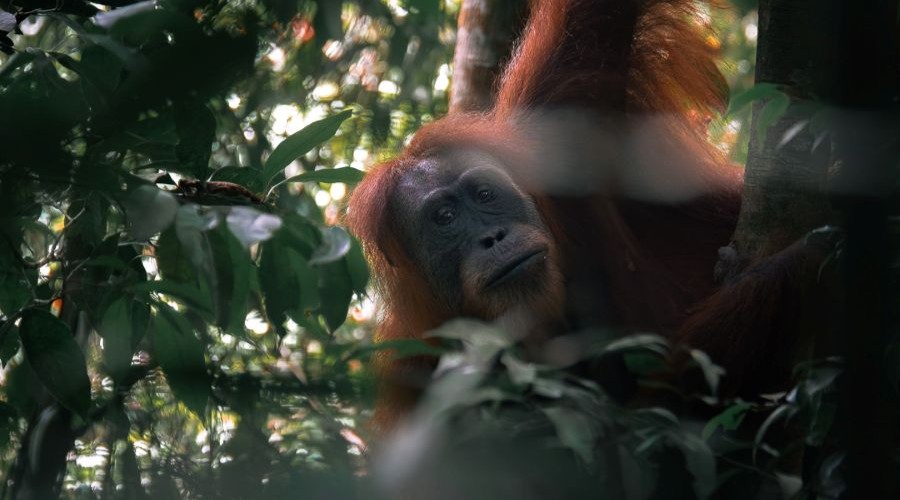
As a kid, I always dreamed of traveling the world. In reality, I boarded my first plane at 14 – and the second only once I reached adulthood and could travel independently. But the yearning to explore distant places was always there. I didn’t dream of big cities or tourist destinations, but it was the wild, untouched corners of the world that called to me, places where I could encounter animals in their natural habitat. So when we landed in Sumatra, Indonesia, home to one of the last remaining wild orangutan populations on Earth, my inner child jumped up and down with joy and excitement. At the same time, I was also aware of the complicated relationship between humans and the wild.
For full transparency: we paid for this jungle trek with Sumatra Orangutan Explore out of our own pocket and are not being compensated in any way for this review. All thoughts are our own.
Sumatra and Orangutans
About Indonesia and Sumatra
Sumatra is Indonesia’s second-largest island, with a population of approximately 60 million people. Around 20-25% of Sumatra’s land area remains covered by rainforest, including protected national parks that shelter one of the world’s last remaining wild orangutan populations. While most visitors come to Sumatra for jungle trekking, the island also offers stunning beaches for surfing and diving, volcanoes and mountains, lakes, waterfalls and natural hot springs, as well as unique cultural experiences.
About the Indonesian Orangutan
The Indonesian Sumatran orangutan (Pongo abelii) is one of only three orangutan species in the world and is classified as critically endangered. These great apes are native exclusively to the island of Sumatra in Indonesia, and are known for their high intelligence and complex social behavior. Unlike their Bornean cousins, Sumatran orangutans are more arboreal, spending most of their time in the trees. Today, fewer than 14.000 individuals remain in the wild, mainly within protected areas such as Gunung Leuser National Park. Their survival is threatened by habitat loss caused by logging, palm oil plantations, the illegal pet trade and human encroachment.

Introducing Bukit Lawang: Gateway to the Jungle
If you’re looking to visit Indonesia to see orangutans, you won’t get around Bukit Lawang. Bukit Lawang is a small village on the edge of Gunung Leuser National Park, a UNESCO-listed rainforest in Northern Sumatra. Along with Borneo (Malaysia), it’s one of the few places in the world where you can observe semi-wild and wild orangutans in their natural habitat. The village was once home to a rehabilitation center, and while the official center is now closed, it still plays a key role in conversation. Many jungle treks are organized from here, allowing you to witness orangutans during one or more days.

Bukit Lawang is a small village that welcomes visitors year-round. Despite an increase in tourism, it has managed to preserve much of its original charm. Most tour operators, guesthouses, and a handful of shops are clustered near the river in the more tourist-oriented part of town. But if you’re after a more authentic experience, simply follow the river upstream toward the village center where you find warungs (local eateries) and even accommodation options in local homes.
How to Get to Bukit Lawang
Bukit Lawang is about 3-4 hours by car from Medan, the capital of North Sumatra. From Medan’s Kualanamu International Airport or city center, you can:
- Book a private transfer (easiest, but most expensive)
- Take a bus from Pinang Baris terminal (budget option, less comfortable)
- Use a local shared taxi (angkot) if you’re feeling adventurous
Most jungle trekking companies can help arrange transportation if booked in advance. We organized a shared taxi through our trek provider and paid 210,000 IDR for two people, one way.
Where to Stay in Bukit Lawang
When planning your visit to Bukit Lawang, you have a couple of options for accommodation:
1. Stay with Your Trekking Organization
- Many jungle trek providers offer overnight stays at their own lodges and guesthouses, often close to the riverside.
- Staying with your tour operator simplifies logistics, and the guides can organize transport between the accommodation and start of the trek.
2. Choose Your Own Accommodation
- Bukit Lawang has a range of guesthouses, homestays and lodges near the river and upstream in the village.
- This option gives more flexibility and a chance to experience local life.
- You can support local businesses by staying in family-run guesthouses or eating at local warungs.
How to Recognize Ethical Orangutan Tours
Responsible, Eco-Tourism, … What’s Behind These Words?
Bukit Lawang is known for eco-tourism and responsible jungle trekking, offering visitors the chance to observe semi-wild and wild orangutans in their natural habitat. But what does eco-tourism actually mean? Let’s look at this fancy word a bit more in depth.
Eco-tourism is defined as a “responsible way of travel”. It aims to reduce its impact to the environment to a minimum, contribute to its preservation and support local communities. It should also have an educational aspect, teaching visitors about nature around them and how they can protect it. Examples include national parks or protected areas, wildlife tours that observe animals in their natural habitats, voluntary program, or even stays at sustainable accommodations, for example eco-friendly hotels. This sort of tourism, when done right, helps support local livelihoods and raises awareness about the importance of protecting the environment, in our case Indonesia’s rainforests and wildlife. But how do you recognize a responsible wildlife operator?
Finding The Right Jungle Trekking
Not all orangutan tours are the same, and even if most of them like to throw around words like “responsible” and “ethical wildlife tourism”, it’s important not to blindly trust their word, but do your own research. Here are some key standards that any trekking organization should meet in order to truly be considered ethical:
- No Feeding of Orangutans: Ethical tours do not feed orangutans. Feeding disrupts their natural diet and exposes them to unhealthy foods or even pathogens from humans. It can also alter their foraging behavior, making them dependent on handouts instead of learning survival skills, which is especially dangerous for young orangutans who need to practice finding food in the wild. Feeding can harm their health, change their natural behavior and make them dependent on humans.
- Respectful Distance: Guides ensure you observe orangutans from a safe distance to avoid stressing the animals. A physical distance of at least 10m is required. This distance prevents the animals from feeling threatened or stressed by human presence and allows them to behave naturally. Just as importantly, it reduces the risk of disease transmission. Since orangutans share about 97% of our DNA, they are highly vulnerable to human illnesses such as colds, flu, or even COVID-19, which can be life-threatening for them.
- Small Group Sizes: Smaller groups are more enjoyable for the participants, guides and wild animals. Smaller groups mean less noise, less crowding, and less environmental impact. Wildlife encounters feel more intimate, while the animals experience less disturbance. For guides, it’s easier to manage the group and maintain safety. For tourists, it creates a calmer, more personal experience.
- Certified Guides: Trained local guides understand orangutan behavior, habitat, and conservation rules. They know when to move, when to wait, and how to spot stress signals in animals. Their expertise ensures both the visitors’ safety and the orangutans’ well-being. Supporting certified guides also supports long-term conservation practices in the area.
- Support Local Communities: When tours are operated by or benefit local communities, people see direct value in protecting orangutans and their forests. This reduces reliance on destructive practices like logging or hunting, creating a sustainable balance between wildlife protection, education and human livelihoods.
- Leave No Trace: Even though we don’t witness the direct impact, small actions like dropping plastic or stepping off the trail can have lasting negative effects on fragile habitats. By carrying out all waste and avoiding harm to plants or trails, tourists ensure the forest ecosystem stays intact.
Prepare for Your Indonesia Orangutan Adventure
Packing Essentials:
- Comfortable, moisture-wicking clothing and sturdy shoes
- Hat, sunglasses, and rain gear (if visiting during rainy season)
- Insect repellent and sunscreen
- Reusable water bottle and vegan snacks
- Camera or smartphone for wildlife photography
Trek Difficulty:
- Moderate; requires walking 4-8 km per day on uneven jungle trails
- Suitable for beginners if reasonably fit, but trekking poles can help
Best Time to Visit:
- Dry season (June-September) for easier trails and better wildlife sightings
Health & Safety:
- Vaccinations: routine travel vaccines recommended; check with your doctor for updates
- Travel insurance is advised
Our Indonesia Orangutan Experience
As mentioned already, in order to see orangutans in Indonesia the wild, finding an organization that truly falls into the category of “ethical” was extremely important to us. After lots of research, we chose to do our jungle trekking with Sumatra Orangutan Explore. Before booking, we tried to make sure to get as much information as possible – mainly by reading blog posts, reviews and checking their website. What we found gave us confidence in our choice: the company seemed committed to offering ethical and responsible orangutan treks.
Start of the Trek
Sumatra Orangutan Explore offers jungle treks ranging from one-day excursions to multi-day adventures lasting up to five days, with overnight stays in the jungle. We chose the 2-day/1-night trek and would highly recommend everyone to spend at least 1 night in the jungle, as it’s a once-in-a-lifetime experience!
Our group consisted of 6 participants and 2 guides, which we found to be a really good size. After breakfast and an introduction from Yahya, our main guide, it was time to set off to the jungle! In Bukit Lawang, this means crossing a narrow bridge that connects the village to the jungle side. That’s when the real adventure began… my inner child did a flip in the air.

What’s incredible that as soon you step into the jungle (even though it’s technically still connected to the village, with a few lodges still around), the background noise changes completely. There’s constantly some chirping and tweeting and humming going on. Even if you can’t see any animal, it’s obvious the jungle is full of life.
Sumatran Orangutan Encounters
Just before entering the official gate to Gunung Leuser National Park, Yahya gave us a final briefing. Two main rules: always stay at least 10 meters away from orangutans (or more if your guide says so), and take all your trash with you.
Then we passed through the gate – alongside at least ten other groups. It was July, peak holiday season for many Asian and European travelers, so naturally, we weren’t the only ones hoping to see orangutans. And then, not long after, we spotted her: a female semi-wild orangutan, perched high in the trees. “Semi-wild” means she has lived in captivity before, gone through rehabilitation, but is still accustomed to the presence of humans. It also means she knows: humans = food. Even though our guides strictly respected the no-feeding policy, they told us that, unfortunately, not every organization does. It’s easy to imagine how some guides might occasionally drop food to lure orangutans closer and impress their tourist groups.
At this moment, I felt conflicted. While part of me (not my inner child, she was more clever than that) watched this first sighting with wide eyes, I wasn’t as overjoyed as I had always pictured myself to be in this moment. Instead, the scene felt almost circus-like. Dozens of people stood below, craning their necks and snapping pictures. Every time the orangutan moved, the crowd shifted too. There were no clear trails, and I had to watch both my steps and those of the people around me to avoid crashing into them. Unsurprisingly, the magic wasn’t quite there yet. But with two full days ahead of us, I tried not to let it bother me, knowing we would eventually get away from the crowds. I just hoped the young female orangutan knew how to get away too, if she felt like it.

And indeed, as we ventured deeper in the jungle, we left most of the crowds behind. And it didn’t take too long until we (or rather our guides) spotted another orangutan. And then, not long after, the most beautiful moment of this whole trekking tour, a chance encounter so magical and precious, that it made our whole trip to Indonesia worthwhile within an instant: a mother with her baby! There are really no words for this. As far as I can remember, we just sat there in silence, observing the duo from a respectful distance, and felt absolutely lucky. Internally, I high-fived my younger self. What a beautiful dream to come true.
The animals we encountered at this point on our route didn’t seem to be bothered by their human visitors. Some orangutans swung leisurely away through the trees, but often they stayed where they were for a pretty long time. One even seemed to put on a show for us, hanging in the branches, almost like he wanted to show off. The feeling to see them in their natural environment, being so totally in their element, was both fascinating and humbling.

And it wasn’t just orangutans we encountered in the Indonesian jungle! We also saw long-tailed macaques, Thomas’s leaf monkeys, one snake, a Great Argus (a species of pheasant) and countless butterflies and insects. Deep inside the jungle but rarely seen, the place is also home to sun bears, Sumatran rhinos, elephants and even Sumatran tigers.

Being surrounded by so much wildlife made me realize, once again, just how alive the jungle is. Even when we couldn’t see animals, we could always hear them – the rustling of leaves above us, the call of distant birds, the constant humming of insects. A single tree alone could be home to thousands of souls.
Seeing orangutans here, deeper in the Indonesian jungle, felt completely different from that first crowded encounter. Out here, the forest was quieter, and the animals were the ones deciding if they wanted to be seen or not. Watching a mother cling to her baby was a moment of pure awe. And it left me wishing for nothing more than that we, as humans, learn to set aside our egos and our greed, and find a way to protect the future of this little one.
Pros & Cons of Our Jungle Trekking Experience
| Pros | Cons |
|---|---|
|
|
Why We Chose Sumatra Orangutan Explore
We chose Sumatra Orangutan Explore after reading great reviews online. What mattered most to us was selecting an organization that truly respects the animals – one that doesn’t harass, feed, or disturb orangutans just to guarantee sightings. Another important point for us was that they offered vegan food during the trek.
Sumatra Orangutan Explore ticked all our boxes:
- Respect for animals and nature: Absolutely. Our guides strictly followed the “10-meter distance” rule and made sure we did too. Sadly, we saw other tours ignoring this, with people getting dangerously close to the orangutans.
- Zero trash policy: During fruit breaks, our guides carefully collected all peels and pits to make sure nothing was left behind in the jungle.
- Plastic-free: Meals were served using natural materials like banana leaves or reusable containers – no single-use plastics.
- Vegan-friendly: See details below 🙂
- Support for local communities: All guides and staff are Indonesian and most have grown up in Bukit Lawang. According to their website, round 15% of the benefits are donated to different local causes, such as children education, rainforest conservation, orangutans protection and women empowerment.

Vegan Food during Orangutan Trekking
We requested vegan food at our booking and we weren’t disappointed. It’s still astonishing to me how much energy and attention to detail was put on the meals during this trip. Breakfast consisted of rice porridge with fruits. During the trek, we stopped for a fruit break, where they laid out so many different delicious fresh portions of fruit that I was convinced this was our main lunch (boy, was I wrong…). But the real lunch came one hour later in the form of rice, veggies and tempeh, served thoughtfully in a banana leaf. In the evening, we got spoiled with a table full of different plates, such as curry, tempeh, tofu, veggies, … It was all delicious and we even as a group of 6, we couldn’t manage to finish all of it. One thing is sure, you won’t go hungry.

Dangers & Protection of Orangutans
While the connection between the production of palm oil and orangutans is widely known, there are other factors that continue to further endanger the Indonesian orangutan.
| Dangers Facing Wild Orangutans | How You Can Help Protect Orangutans |
|---|---|
|
Habitat Loss and Deforestation Large areas of rainforest have been destroyed or fragmented to make way for agriculture, infrastructure, and logging. This isolates orangutan populations, limits food sources, and disrupts their natural behavior. |
Avoid Products with Unsustainable Palm Oil Palm oil is in nearly everything, from snacks to cosmetics. Look for products with certified sustainable palm oil (CSPO), or buy brands that are palm-oil free altogether. |
|
The Impact of Palm Oil Plantations Vast areas of rainforest are cleared, often illegally, for palm oil monocultures. During our journey from Medan to Bukit Lawang, the landscape was dominated by endless rows of palm oil trees. This increases human-wildlife conflict as displaced orangutans search for food. Almost the entire route from Medan to Bukit Lawang consisted of palm oil trees. |
Choose Ethical Tours If visiting Sumatra or Borneo, choose tour operators that follow ethical wildlife tourism standards. Avoid any that allow feeding or touching orangutans. |
|
Human-Wildlife Conflict and Poaching Orangutans entering farmland or plantations are sometimes seen as pests and injured or killed. Young orangutans are illegally captured for the exotic pet trade, often after their mothers are killed. Enforcement is inconsistent. |
Support Conservation Organizations Consider donating to or volunteering with trusted NGOs protecting orangutans, such as the Sumatran Orangutan Conservation Programme (SOCP) or the Orangutan Foundation International. |

Final Thoughts
Seeing orangutans in the wild has been a dream of mine since childhood, and finally making that dream a reality in Indonesia was unforgettable. Choosing an organization that aligns with my values – respect for orangutans and other wildlife, leaving no trash in the jungle, and offering vegan food options – was incredibly important, and Sumatra Orangutan Explore delivered on all of these.
Despite the best efforts however, wildlife tourism will always be a complicated topic, and there is no perfect way to experience it. Whenever humans and wildlife meet, there is inevitably some disruption of the natural world. Still, responsible eco-tourism can make a real difference: it can support conservation, empower local communities, and give people a reason to protect rather than exploit these habitats.
For us, the biggest red flag was the larger crowds at the start of the national park and during more “special” sightings, like when we saw the alpha male orangutan. That said, our guides were excellent, ensuring we followed the rules at all times and maintained a respectful distance from the animals. Sadly, not all groups were as considerate, which emphasizes just how important it is to choose the right kind of responsible, ethical wildlife tourism. For me, this journey was, despite all my doubts, a dream come true. It has also been a reminder to me that it’s important how we travel. If we make thoughtful choices, we can protect these incredible animals. And we can contribute, in our own small but meaningful way, to a world in which future generations of children with big dreams can feel the same joy and excitement of seeing orangutans in the wild.
FAQ: Visiting Bukit Lawang and Seeing Orangutans in Sumatra
When is the best time to visit Bukit Lawang?
The best time to visit Bukit Lawang is during the dry season, from May to September. During these months, trails are easier to navigate and wildlife sightings—including orangutans—are more frequent. July and August are peak months, so expect more crowds.
How long should I stay in Bukit Lawang?
Most visitors stay 2–4 days, especially if they’re doing a multi-day jungle trek. Spending at least one night in the jungle is highly recommended for a deeper experience.
Do I need a guide to trek in the jungle?
Yes. Jungle trekking in Gunung Leuser National Park is only allowed with a certified local guide. This protects both visitors and the environment, while supporting the local economy.
Can I see orangutans without trekking?
While it’s possible to spot orangutans near the edge of the jungle, joining a guided trek is the most respectful and reliable way to see them. Treks increase your chances of seeing orangutans deeper in the forest, away from crowds.
Is Bukit Lawang safe for solo or female travelers?
Yes, Bukit Lawang is generally considered safe and welcoming, including for solo and female travelers. Like anywhere, it’s good to take basic precautions, but locals are friendly and tourism is well established.
Are all jungle treks ethical?
Unfortunately, not all treks follow ethical guidelines. It’s important to choose operators who:
- Keep a safe distance from orangutans
- Do not feed or touch wildlife
- Limit group sizes
- Remove all waste
- Hire trained, local guides
(See section above for a full checklist.)
What should I pack for a jungle trek in Bukit Lawang?
Essential items include:
- Headlamp (for overnight treks)
- Light, breathable long-sleeved clothing
- Good hiking shoes
- Reusable water bottle
- Mosquito repellent
- Rain jacket (especially in shoulder season)
- Dry bag for electronics
Further Reading
Blog Articles
Useful Resources
- Sumatran Orangutan Conservation Programme (SOCP)
- Orangutan Foundation International
- Sumatra Orangutan Explore

About the Authors
Lynn & Daniel are the vegan couple behind VanderlustJourney, combining their passion for adventure and plant-based living. They share stories and visuals of natural places, hikes, vegan discoveries, and meaningful encounters from around the world – always striving to travel with kindness.
I’d love to see orangutans in the wild, though ensuring this is with an ethical tour operator as you did. It sounds like the 2 day/1 night trek in dry season would be ideal.
Yes, for us 1 night was the ideal time. 1 or 2 days more are certainly cool too, but you need good fitness 😀
I have visited Sabah and seen orangutans both in the Sepilok Sanctuary and in the wild, so, of course, reading your blog has now made me want to visit Sumatra and go on a jungle trek. Aren’t they just the most intelligent and calm animals?
That’s cool that you’ve seen orangutans before! And agree, it was so fascinating to see them with their intelligence and acrobatic skills. Hope you manage to visit Sumatra:)
What a fantastic experience, and your photos are so good. I love that you did a lot of research to find a company and tour that was sustainable and ethical, and also appreciate you pointing out some of the things that people can do at home, even without taking this tour, to help the animals. I’d be interested to know about the cost of such a tour, but either way it’s something I’d love to do
Thank you so much! 🙂 And good question! We paid 2.000.000 IDR/person (around 120EUR) for the 2days/1 night trek, 2x breakfast, 2x lunch and 1x dinner included.