
If you’ve ever dreamed of traveling through Vietnam – from exciting Hanoi and the misty northern mountains, along the stunning coastline and Ha Long Bay, all the way to national parks and vibrant Ho Chi Minh City – this 4-week Vietnam itinerary is for you! Vietnam is a fascinating country of contrasts: ancient temples and buzzing cafés, serene rice fields and to neon city skylines. And every region offers its own impressions, landscapes, flavors, and adventures. With 4 weeks in Vietnam, you’ll have enough time to get a feel for the culture, explore nature, and experience both the north and south without rushing.
Introduction to Vietnam
Vietnam – Quick Facts
Essential information to know before traveling through Vietnam.
Short overview
Stretching over 1,600 km from north to south, Vietnam offers an incredible mix of landscapes — from the limestone mountains of Ha Giang and rice terraces of Sapa to the beaches of Phu Quoc and the Mekong Delta. The country blends ancient traditions with fast-paced cities, mouthwatering cuisine, and welcoming locals. Whether you’re drawn to nature, culture, or food, Vietnam promises an unforgettable travel experience.
Practical tips
- Languages: Vietnamese (official); English widely spoken in tourist areas.
- Time zone: UTC+7.
- Plug type: A, C, and sometimes F (European-style plugs).
- Best time to travel: – North: October–April (cool & dry) – South: November–April (dry season) – Central Vietnam: February–August (less rain)
- Transport: Trains, buses, domestic flights, and motorbikes are the main ways to get around. For booking transport, 12go.asia is a reliable platform. Grab app works well for taxis in major cities.
- Best for: Nature, culture, street food, beaches, mountains, and adventure travel.
This post contains affiliate links. If you make a purchase or booking through these links, we earn a small commission at no extra cost to you. This supports our work and allows us to keep offering free content here on the blog
About this Itinerary
Geographically, Vietnam is a fascinating country. At its narrowest point, only about 50 kilometers separate the western border from the eastern coastline, yet from north to south it stretches over 1,600 kilometers! Naturally, exploring the country in its entirety takes time. We did just that, and what can we say – we were amazed by its diversity. From top to bottom, Vietnam changes not only in landscape, but also in culture, architecture, food, and climate. In this guide, we share our Vietnam itinerary with our favorite places, tips on how to travel between them, and plenty of recommendations for accommodation and vegan food. And if you don’t have that much time, don’t worry – we’ve divided our suggestions into North Vietnam and South & Central Highlands, so you can easily focus on one region during your first visit… and hopefully come back for more.

Vietnam Itinerary Overview: 4 Weeks from North to South
Below is a quick summary of how to divide your month in Vietnam, with two weeks exploring the north, followed by two weeks soaking up the laid-back charm of the south.
| Region | Duration | Highlights |
|---|---|---|
| North + Central Vietnam | 2 weeks | Hanoi, Sapa, Ninh Binh, Ha Long Bay, Phong Nha, Hue, Hoi An |
| Central + South Vietnam | 2 weeks | Hoi An, Da Lat, Cát Tiên National Park, Ho Chi Minh City |
Suggested Route: North → South
Our suggested route goes from north to south and is often the most popular, because:
- Flights into Hanoi are often cheaper for international arrivals.
- Weather patterns make this route smoother from late October to April.
- It’s easier to end your trip on a beach in the south before flying for example onward to Thailand, Cambodia, or Singapore.
However, you can also reverse this itinerary if you start in Ho Chi Minh City: the experience remains just as incredible 😀
Itinerary Map
To help you visualize the route, here’s a map of our Vietnam itinerary for 4 weeks, covering all the key stops from Hanoi in the north to Ho Chi Minh City in the south. It’s the perfect overview to plan your trip and see how each destination connects, no matter if you prefer traveling by bus, train or plane. Landmarks in northern and central Vietnam are marked in green (Hoi An included), while those in central and southern Vietnam are marked in red.
Practical Tips
Best Time to Visit Vietnam
Because Vietnam spans several climate zones:
- North Vietnam: Best from October to April (dry, cool weather)
- Central Vietnam: Best from February to August
- South Vietnam: Best from November to April (dry and sunny)
If you travel outside these months, don’t worry – rain usually comes in short bursts, and temperatures stay warm year-round. We personally traveled in October, which turned out to be a great time overall. While some of our plans in the north (like visiting Sapa) had to be canceled due to early typhoon activity, we managed to escape the heavy rains in central Vietnam by just a week. Apart from that, the weather was mostly pleasant, with fewer tourists and more affordable hotel rates – a big bonus if you prefer a quieter, budget-friendly experience.
| Month | Weather highlights | Best regions to visit |
|---|---|---|
| Jan–Feb | Cool and dry in the north; warm in the south | North & South |
| Mar–Apr | Pleasant temperatures and low rainfall across most regions | Whole country |
| May–Jun | Hotter and more humid; rain increases in parts of the north and south | Central Vietnam |
| Jul–Aug | Rainy season peaks in north & south; central coast is often sunnier | Central coast (Hoi An, Da Nang) |
| Sep–Oct | Variable — typhoon risk in central; generally good in north & south | North & South |
| Nov–Dec | Dry and comfortable, especially in the south; cooler in northern mountains | South & Central |
Visa
Most travelers to Vietnam will need a visa, although requirements depend on nationality. Many countries’ citizens can apply for an e-visa online for stays up to 30 days. The application is usually straightforward and takes a few days to process. If you plan a longer stay or want multiple entries, a visa on arrival or embassy-issued visa may be required. Make sure your passport is valid for at least six months beyond your arrival date.
Always check the latest regulations before traveling, as rules can change, especially for different nationalities.
Money & ATMs
ATMs are widely available in cities and towns, but always check the machine’s fee notice. Most shops, restaurants, and even hotels prefer cash, so be sure to carry enough local currency with you.
As a travel card, we recommend the Wise multi-currency card : you can hold and spend in many currencies, withdraw local cash at ATMs with competitive exchange rates, and avoid hefty FX markups from banks.
Practical tips: ATMs are widely available in cities and towns, but always check the machine’s fee notice. Withdraw reasonable amounts to avoid repeated fees, and carry a little cash as many stalls, shops, and guesthouses still prefer cash.
Internet & SIM Cards in Vietnam
Staying connected in Vietnam is easy and affordable. The most reliable mobile providers are Viettel, Mobifone, and Vinaphone. You can buy a local SIM at the airport, in official phone shops, or convenience stores.
If you prefer not to switch physical SIM cards, you can use an eSIM, which is extremely convenient and can be activated before you arrive. Popular options include Saily, Airalo, Nomad, and Holafly, all offering fast data plans for Vietnam.
Budget & Travel Style
Vietnam is one of Southeast Asia’s best-value destinations.
Expect to spend:
- Budget traveler: €22-35/day (Hostels, local eateries, night buses, basic activities)
- Comfort / mid-range: €45-70/day (Boutique hotels, cafés, some flights, organized tours)
- Luxury traveler: €90+/day (High-end resorts, private transfers, fine dining)
Street food, affordable homestays, and efficient transport make it possible to travel comfortably without breaking the bank.
Vegan Travel in Vietnam
To our big delight, Vietnam was pretty vegan-friendly! Many traditional dishes like phở chay, bánh mì chay, and bún chay can be found all over the country. While the English word “vegan” isn’t widely recognized, look for the word “chay” on menus: it means vegetarian, and most chay dishes are free from meat, fish, and often other animal products too. To be extra sure, you can add “không sữa” (no milk) and “không trứng” (no eggs) when ordering.
Major cities like Hanoi, Da Nang, and Ho Chi Minh City have incredible plant-based cafés and restaurants, but don’t skip the more traditional local cuisine, it’s full of naturally vegan-friendly options. Expect flavors built around soy sauce, lemongrass, chili, and fresh herbs. Regional differences also shine through: the north favors milder, balanced flavors, while the south brings bolder, sweeter, and spicier dishes.

Throughout this itinerary, you’ll find our favorite vegan and plant-based restaurant recommendations for each destination. For a deeper dive into eating vegan across the country, check out our Vegan in Vietnam Guide (coming soon).
North Vietnam Itinerary
This itinerary takes you from Vietnam’s vibrant capital through the peaceful countryside, misty mountains, and charming towns; ending in the colorful lantern fairytale of Hoi An. It’s the perfect route for travelers who want a mix of nature, culture, and local life, without rushing too much.
Hanoi – Street Life & Vegan Food Heaven
Recommended days: 2-3 days
Things to Do
Hanoi is the exciting and quirky capital of Vietnam. It’s loud, colorful, and chaotic – and incredibly charming. We expected the noise and the traffic, but not the calm lakeside that closes to cars on weekends, where locals stroll and dance together. Or the strong exercise culture, with especially elderly people doing tai chi, jogging, and stretching outdoors every day.
We had our first bánh mì here (just next to the famous Bánh Mì 25, because the queue was too long for our hungry stomachs; and it was just as good 😄). We tried the local chè desserts and wandered endlessly through the streets, amazed at how fluent and choreography-like the heavy traffic seemed to flow.

Here are some of our favorite things to do in Hanoi:
- Ho Chi Minh Mausoleum: Visit the final resting place of Vietnam’s revolutionary leader and learn more about the country’s history.
- One Pillar Pagoda: A small but beautiful temple built on a single pillar, symbolizing purity and enlightenment.
- Temple of Literature: Vietnam’s first university: a peaceful and fascinating garden dedicated to Confucius.
- Train Street: Watch the train squeeze through the narrow street just a few centimeters from the buildings – best experienced with a drink at one of the local cafés.
- Walk through the Old Quarter: Explore narrow alleys filled with shops, food stalls, and endless motorbikes: the true soul of Hanoi!
- Hoàn Kiếm Lake: Relax by the lake, especially on weekends when the area becomes car-free and full of local life.
- Coffee break: Settle down at one of the many street cafés and watch the traffic flow by
- Rooftop views: Head to Terrace Sky Bar or The Note Coffee for sunset views over the lake.

Where to Stay in Hanoi
We stayed at a lovely Airbnb apartment close to Hồ Tây (West Lake) and absolutely loved the charming place and the area! Tranquility Suites Westlake is another beautiful accommodation at the same lake. If you rather stay more central, places like HoLo Central Hanoi can be a good fit for you.
Vegan Food
For a deeper dive into Hanoi’s vegan restaurant scene, check out our article Vegan in Hanoi.
Hanoi is a paradise for vegans! While walking through the city, you’ll encounter countless restaurants named “Vietnamese & Vegetarian food” or “Chay” (vegetarian in Vietnamese). Our favorites around the Old Quarter were Hương Việt (the one next to the famous Bánh Mì 25 – cheaper and probably just as good! Just specify no sauce when ordering the Bánh Mì, to be sure it’s vegan), TÉP Vietnamese Restaurant & Vegan Food, Dana Vegan House, Ưu Đàm Chay, and Little Bowl for desserts (the owner understands veganism and can direct you towards which bowls to have). A bit less central, and close to the Hồ Tây Lake, you’ll find the fully vegan places Chay vỉa hè, Mây Vegan Garden, Tự Châu Veggie and the incredible Veggie Castle (fully vegan all-you-can-eat buffet for only 100,000 VND!).

Bonus: Sapa – Trekking Through Rice Terraces
Recommended days: 2-3 days
How to get here from Hanoi: By bus or night bus, can be booked through 12Go
Things to Do
Sapa is a dream for nature lovers and hikers. Misty mountains, rice terraces and countless hiking paths make it one of Vietnam’s most scenic regions. Unfortunately, we couldn’t make it to Sapa during our trip due to typhoons and landslides, but it’s definitely on our list for the future – and we hope it’s on yours, too! Trekking through the villages of Lao Chải and Tả Van is said to be an unforgettable experience, offering incredible views over the rice terraces and a chance to learn about the daily life of the Hmong and Dao communities. You can also visit Love Waterfall and Fansipan Mountain, the highest peak in Indochina, for a real taste of adventure and breathtaking scenery. For more inspiration, we recommend taking a look at this detailed guide by Two Packs And A Pup – it’s full of helpful tips and ideas for exploring Sapa.
Where to Stay in Sapa
We had a booking at Sapa TT Homestay, that we unfortunately had to cancel. If you make it to Sapa, please let us know about your experience in the comments 😀
Vegan Food
It seems that there are some great vegan food options in Sapa. For our stay, we had planned to check out Anhly Vegan and Sapa Vegan Restaurant.
Ninh Binh – Limestone Peaks & Boat Rides
Recommended days: 2 days
How to get here from Hanoi: By minivan, can be booked through 12Go
Things to Do
Ninh Binh is a small city surrounded by stunning landscapes: think limestone mountains, lakes, and green rice fields. The area is calm and easy to explore by bicycle or scooter, making it a wonderful contrast to bustling Hanoi. During our time here, we rented bicycles from our accommodation and explored the surroundings at our own pace. We stopped at Bích Động Pagoda, took a boat trip in Tràng An and watched the sunset from Lying Dragon Mountain (Hang Múa). The Tràng An boat tour is one of the area’s most popular activities, but a bit too touristic and crowded for our taste. The rowers (mostly women) do incredibly demanding physical work, often for hours in the hot sun – so if you go, please be sure to tip them fairly.

All these spots are easy to visit independently, but if you prefer, you can also join a guided tour that includes transport between the main sights:
Where to Stay in Ninh Binh
We stayed at Mua Valley Lodge, just outside the city of Ninh Binh. The lodge is set in a peaceful area, surrounded by greenery, and comes with a pool and spacious, bright rooms. Breakfast was included, and they offered a simple vegan option, consisting of fried rice with vegetables or a vegetable sandwich. It was fine, though we would have appreciated a bit more flexibility: they had tofu on the dinner menu, but it wasn’t possible to serve it for breakfast.
Vegan Food
We had plenty of vegan options within walking distance from our accommodation. Donald Bar was our favorite – don’t miss their tofu-mushroom stew! Banana Bar Restaurant also offers several tofu dishes, while Trang and Riverside Garden serve vegan-friendly options like a falafel burger and Bánh Mì.
Halong Bay – Cruising Among Limestone Karsts
Recommended days: 2 days
How to get here from Ninh Binh: By minivan, can be booked through GetYourGuide
Things to Do
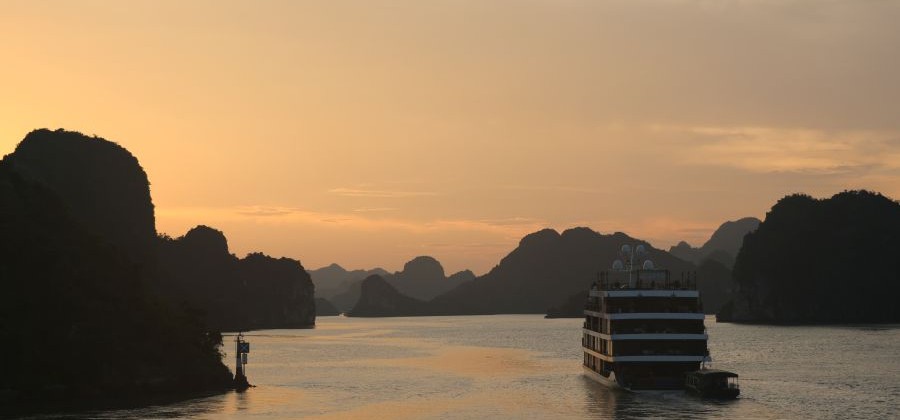
Halong Bay (also spelled Ha Long Bay) is a UNESCO World Heritage Site, famous for its emerald waters and limestone cliffs. It’s one of Vietnam’s most iconic destinations, and naturally we were excited to head there. Friends were visiting us at that time on our trip, so we decided to spoil ourselves with an overnight cruise on the water. Heading into the bay with its widely recognizable limestone formations was indeed an amazing feeling: somehow it felt familiar, but you still can’t quite believe you’re really there (sort of like seeing your favorite artist in concert for the first time 😀 ). The area was much bigger than we had imagined, with forest-covered limestone islands stretching on and on forever through the waters. And the big advantage of an overnight cruise: at some point, the many boats around you disappear and you’re all by yourself (or almost – there was one more boat nearby). Ha Long Bay is truly magical at sunset and sunrise, when the soft light disappears behind the mountains.

We booked our cruise through GetYourGuide and were happy with our choice. To be honest, a cruise is not our usual style of travel and we always feel a bit out of place on more luxurious or organized tours. But for one night, it was a great experience and a really cool way to see Ha Long Bay. The tour offered many activities, like kayaking, discovering caves and even a morning tai chi lesson, which we loved! But a special shout-out goes to the enthusiastic crew, who really did all their tasks with a lot of joy and made sure everyone felt welcome.
Phong Nha – Caves & Countryside
Recommended days: 2 days
How to get here from Ha Long Bay: Going back to Hanoi by minivan (with GetYourGuide), take sleeper bus on the same day from Hanoi to Phong Nha (our bus arrived at 3am in Phong Nha and dropped us off right in front of our hotel, which was pretty convenient 😀 The sleeper bus is comfortable and they provide blankets). The bus can be booked through 12Go.
Things to Do
If you love exploring the outdoors and have a taste for adventure, Phong Nha is the perfect place for you! This small riverside town is home to some of the most spectacular caves in the world.
- On our first day, we visited Tien Son Cave and Phong Nha Cave, which are only reachable by boat. You can simply head to the ticket office in town and hop on the next boat – it will take you along the river to the two caves. We first climbed the roughly 400 steps up to Tien Son Cave. The little workout was absolutely worth it! Inside, we were greeted by majestic stalactites and impressive rock formations. Phong Nha Cave stretches over 7,700 meters, with the first 1,500 meters accessible by boat. Since we visited during the rainy season, the water level was too high for our boat to enter and to explore more of the underground lake. Still, what we partly saw of the dry cave, especially the majestic stalagmite and stalactite, was worth the visit!
Fun fact: our boat was supposed to drop us off first at Tien Son Cave and then at Phong Nha Cave, but we didn’t realize that at the time. Since the two caves are connected on land, we simply walked down a small path from Tien Son directly to Phong Nha. When we returned to the boat, the driver took us along the river to the “official” cave entrance to Phong Nha and waited for us to disembark. When we signaled that we’d already visited that part, it took him a moment to understand – and then he burst out laughing, visibly happy that the end of his workday had come a little earlier than expected 😀
Entrance fee (combined Phong Nha + Tien Son Cave): 180.000 VND per person.
Boat (mandatory, shared): around 550.000 VND per boat (up to 12 people, price shared among passengers).

- The next day, we explored the famous Paradise Cave, one of the most beautiful and largest dry caves in the world. Did you know it was only discovered in 2005 by a local man? Stretching for more than 30 kilometers, it’s incredible that it remained hidden for so long! Only the first one kilometer is open to the public, but that’s more than enough to be blown away by its vast chambers and breathtaking stalactites and stalagmites. A wooden walkway makes it easy to explore and admire the illuminated formations in detail.
Entrance fee: 250,000 VND per person
Electric buggy (normally optional, but when we visited they told us it was mandatory? We later guessed it was because we arrived shortly before closing time): 60,000 VND round trip
- After Paradise Cave, we stopped by the Phong Nha Botanic Garden. There’s a short jungle trail that’s a lot of fun if you enjoy hiking, leading to Gio Waterfall and a natural swimming area – perfect for cooling off after a morning of exploring caves.
Entrance fee: 80,000 VND per person

Where to Stay in Phong Nha
We stayed at Celia Boutique Hotel, a truly cozy and unique place. The owner personally opened the door for us when we arrived by night bus around 3 a.m. (just message him in advance), and he made us feel welcome right from the start. The staff even adapted the pancakes for breakfast so they would be vegan! The hotel has an indoor swimming pool and a really cool decor, with plenty of cozy corners for reading and even a rooftop terrace with a small gym. We really recommend this place!

Vegan Food
We had plenty of vegan-friendly options within walking distance from our accommodation. Our favorite spot was the Phong Nha Vegan Restaurant: their menu is 100% plant-based and full of flavor, with delicious curries, noodles, and fresh spring rolls. For a more local experience, we also enjoyed Lantern Vietnamese Restaurant, which serves traditional Vietnamese dishes with lots of vegan options. And if you’re craving something different after days of rice and noodles, Phong Nha Coffee Station – Vietnamese Food & Firewood Pizza is the perfect choice. They offer great Western options like wood-fired pizzas, smoothie bowls, and scrambled tofu.
Hue – Ancient Capital by the Perfume River
Recommended days: 2 days
How to get here from Phong Nha: Take a bus or private transfer (around 4 hours, can be booked through 12Go).
Things to Do
Hue, Vietnam’s former imperial capital, offers a mix of royal history and riverside charm. The city is beautifully set along the Perfume River and still carries echoes of the Nguyễn Dynasty, which ruled Vietnam for over a century. To be honest, we’re sometimes a bit of culture noobs and don’t spend as much time exploring historical buildings as we probably should. But even we were immediately impressed by Hue’s main attraction – the Imperial City! It’s a vast complex of temples, royal palaces, and gardens, and truly the heart of Hue’s historical identity. Another spot worth visiting is Thien Mu Pagoda, which offers a stunning view at sunset. You can also take a traditional dragon boat ride on the Perfume River or explore Dong Ba Market for local products and street snacks.

Entrance fee for the Imperial City: 200.000 VND or combo ticket of 420.000 VND that includes entrance to the Imperial City, Minh Mang Tomb, and Khai Dinh Tomb
Where to Stay in Hue
We stayed at Soleil Boutique, a cozy, bright and clean hotel in walking distance to the river and Imperial City. For breakfast, vegan options included bread, jam, veggies (cucumber and tomato) and fruits.
Vegan Food
Hue is famous for its Buddhist-inspired vegetarian cuisine, and most “chay” (vegetarian) eateries are naturally vegan-friendly. We tried Quan Chay Moc Nhien, which serves local vegan food at incredibly low prices. Also don’t miss Hoà Lành Vegan Food, a small stall at the local market. If you’re visiting Thien Mu Pagoda, you’re very close to Tâm Vegan. We shared their super tasty hotpot, which was almost too much for us to finish!

Hoi An – Lanterns & Beaches
Recommended days: 2–3 days
How to get here from Hue: By bus or train (see the different options at 12Go).
Things to Do
Hoi An is one of Vietnam’s most picturesque towns: a UNESCO World Heritage Site known for its colorful lanterns, well-preserved ancient architecture, and nearby beaches. The best thing to do in Hoi An is simply to wander around the Ancient Town, especially at night. The whole place comes alive with thousands of glowing lanterns, creating a magical atmosphere. You can take a boat ride along the river or just enjoy the view from the shore.

Afterward, grab a bite at the night market! Vegan-friendly options include crispy rice pancakes (the vendor on the left just after entering the market street knows a lot about veganism and confirmed his filling is vegan), mango sticky rice, and Bánh Mì (we absolutely recommend the stall on the crossing of La Hoi street and Nguyen Hoang street!). But Hoi An is just as charming during the day. Have a look the centuries-old houses, temples, and countless tailor shops – maybe even get your own clothes tailored!? And our coup de coeur: Precious Heritage Art Gallery, which offers a stunning voyage into Vietnam’s different ethnic groups and small, hidden villages, through beautiful portraits and a deep dive into their costumes, traditions and music.
Lastly, if you’re looking for a city escape, head to the area around An Bang Beach, one of Hoi An’s most beautiful beaches!

Where to Stay in Hoi An
We stayed in the area around An Bang Beach, more precisely at Seaweed Luxury Villa. The place is run by a lovely elderly couple, offering big rooms with a balcony, a pool and fresh baguette with jam as the vegan breakfast option. If you prefer staying closer to the Old Town in Hoi An, check out New Life Homestay and Fuse Old Town.
Vegan Food
Hoi An is heaven for vegan travelers! If you’re in the center of Hoi An, be sure to check out IVEGAN, with delicious homemade burgers, smoothie bowls, coffees and cakes. Their menu also specifies the nutrients of each dish if that is important for you. MẸT Hội An in the Old Town also has a lot of vegan options. If you’re staying, as we did, close to An Bang Beach, we absolutely recommend The Fisherman Garden Vegan Restaurant & Cafe. The place offers a large menu from local dishes to vegan pizza and tells the beautiful story of how they turned vegan out of love for the animals and the planet, but still kept their name “Fisherman” to honor their ancestors.
Da Lat – Mountains, Waterfalls & Coffee Farms
Recommended days: 2–3 days
How to get here from Hoi An: Overnight bus Da Nang (reachable in 30min by taxi or Grab from Hoi An) to Da Lat (check overnight bus options at 12Go).
Things to Do
Da Lat (sometimes also spelled Dalat) is a cool mountain retreat and a refreshing escape from Vietnam’s tropical heat. Known for its pine forests, flower gardens, and French-style villas, it’s often called one of the most romantic places in the country.
Within the city center, one of the most fun attractions is the Crazy House (entrance fee 80.000 VND), with its surreal architecture, mystical creatures, and winding staircases. If you’re up for a quirky experience, you can even stay overnight and explore the place outside of opening hours! In the afternoon or evening, check out 100 Roof Bar — it has a similar style to the Crazy House, but in bar form 😄 There are endless stairs, twisting corridors, and hidden corners filled with sculptures and creatures on the walls. It took us several attempts to find the exit. and we weren’t even drunk! It’s a unique, fascinating spot that’s worth visiting.

For something more relaxing, take a stroll (or a jog! The refreshing mountain air didn’t give us the usual excuse that it was too hot or humid for a run :P) around Xuan Huong Lake. You’ll also find plenty of temples and pagodas nearby; our favorite was Linh Phước Temple, a colorful Buddhist complex with several buildings to explore. You can even write your wish on a piece of paper and ring the bell for it to come true, a sweet and meaningful little ritual we really enjoyed.
Outside Da Lat, there’s plenty of nature to discover. Since it rained for most of our stay, we decided to skip this part, but Datanla Falls and Elephant Falls are popular spots for short hikes and scenic views.
Where to Stay in Dalat
We stayed in An Gia, a cozy, affordable and central hotel, close to the lake. Other options include Romeo & Juliet with great views over the lake. And, if you’re looking for a unique stay, why not spend one or more night at Crazy House 😀

Vegan Food
Da Lat has some amazing vegan food options. Our favorite was Bếp Chay Thiên Bình, a fully vegan buffet for only 50.000 VND! The family running the place is super sweet, the buffet offers plenty of variety, and there’s even free tea. We loved sitting on the first floor by the window and watching the lively street life go by. Close by, you’ll find Nhà Hàng Thuần Chay Vegan Heaven, which serves delicious Vietnamese dishes and insanely good milkshakes. For a change from local food, check out Indiagate – they serve flavorful Indian meals, understand veganism well, and are happy to recommend suitable dishes.

Cát Tiên National Park – Jungle Adventures
For more in depth infos about the national park, check out our article: Cát Tiên National Park: Best Things to Do + Ultimate Vegan Tips
Recommended days: 2-3 days
How to get here from Da Lat: Local bus to Cát Tiên, booked via Dalat Vietnam Tours. Just text the whatsapp number +84918313696 (double-check on the website in case it changed) to reserve your seat – might sound a bit dodgy for people not used to travel through Southeast Asia, but trust us, it all worked out well and we had a very comfortable ride 😀
Things to Do
If you love nature and hiking, don’t skip Cát Tiên National Park – one of Vietnam’s most biodiverse areas and one of our personal favorite stops on this Vietnam trip! The park is home to gibbons, deer, and hundreds of bird species. What we loved especially is that, unlike in other national parks we visited, you’re not forced to take a guide. Instead, you can easily explore on foot or by bike. However, if you want to learn more about the park’s wildlife and nature, joining a guided tour is always a great idea. There are plenty of options, and your accommodation can usually help you organize one. Otherwise, you’ll also find fully organized tours (often with transport from Da Lat included) on GetYourGuide:
Our favorite activity in Cát Tiên National Park was a bike ride to Crocodile Lake, which included 10 km of biking and a 5 km hike one way. Along the trail, you’ll pass a giant ancient tree that’s truly remarkable. The lake is home to – you guessed it – crocodiles! More specifically, the Siamese crocodile, a critically endangered species, with Cát Tiên being one of its last remaining wild habitats. We were a bit skeptical when people told us we could visit without a guide, and relieved once we arrived at the lake and realized there’s an observation platform that lets you watch these fascinating animals safely from a distance 😀

Other great things to do in the park include guided jungle hikes (day or night), boat trips on the Đồng Nai River, or visiting the Dao Tien Endangered Primate Centre, which focuses on rehabilitating and releasing rescued primates back into the wild.
Where to Stay in Cát Tiên
For the national park, we have an absolute coup de coeur: Quang Minh River View Resort. We had a lovely room overlooking Dong Nai River, including a terrace and hammock to relax. Breakfast included Mì Quảng as a vegan option, and we ended up eating several times at the resort’s restaurant since they offered multiple tofu dishes. On our last day, they even prepared a take-away Bánh Mì for us, which wasn’t on the menu! All in all, it was one of our best experiences in Vietnam: the staff were incredibly kind and went out of their way to make our stay special, all at a very affordable price.

Vegan Food
As mentioned above, we mostly ate at our accommodation Quang Minh River View Resort and the meals here were amazing. Otherwise, options are limited in Cát Tiên (for example, you’ll only find some small markets selling vegan snacks like chips or oreos), so it’s easiest to bring some snacks with you or ask your accommodation to prepare vegan dishes or take-away (for example for jungle trips).
Ho Chi Minh City (Saigon) – Vibrant Energy & Modern Vietnam
Recommended days: 2-3 days
How to get here from Cát Tiên: By bus: simply go to the intersection of the two main roads (around here) and ask for a bus ticket to Ho Chi Minh City. The bus departs almost every hour starting at 8 a.m. and takes around 4-5 hours.

Things to Do
Ho Chi Minh City (also known as Saigon) is Vietnam’s bustling southern hub, a city full of energy, culture, and contrasts between old and new. It’s a place where modern skyscrapers rise beside French colonial buildings, and where street food stalls line the sidewalks beneath luxury malls. Don’t miss a visit at the War Remnants Museum, which offers a thought-provoking and emotional insight into Vietnam’s recent history and the impact of the Vietnam War. You can also visit the Notre Dame Cathedral and Central Post Office, two landmarks showcasing classic French colonial architecture and a glimpse into the city’s past. In the evening, stroll along Nguyen Hue Walking Street, a wide pedestrian boulevard where locals gather to chat, skate, or enjoy street performances. It’s the perfect place to feel the city’s youthful and dynamic vibe.

Where to Stay in Ho Chi Minh City
We stayed in an Airbnb in District 1, which was central and close to all the sights and restaurants we wanted to visit. If you prefer to book a hotel, have a look at Booking.com for accommodation ideas:
Vegan Food
To find our more about HCMC’s local food scene, have a look at our in-depth article: Vegan in Ho Chi Minh City.
The city is a paradise for vegan travelers, with plenty of delicious options everywhere! We especially recommend iVegan, a small local chain offering healthy bowls, smoothies, and hearty Vietnamese dishes in a calm, modern setting. For a completely different vibe, try Filthy Vegan, a fun spot serving indulgent vegan junk food: think burgers, pizza, loaded fries, and chocolate ckae. The place is run by a super friendly owner and OG vegan since more than 30 years, who truly understands plant-based cravings. And of course, don’t leave without trying a vegan Bánh Mì! You’ll find plant-based versions all over the city, often at street stalls. Our favorite was Banh Mi Xanh, which offers different versions of vegan Bánh Mì.

Alternative Itinerary Ideas
If you have less than four weeks or want to focus on a specific region, here are some quick options:
- 2 Weeks in Vietnam: Explore only North Vietnam, from Hanoi to Halong Bay and Sapa.
- 10 Days South Vietnam: Focus on Hoi An, Da Lat, Cát Tiên and Ho Chi Minh City.
- Slow Travel Version: Take extra time in each region to hike, relax on beaches, or explore the cities and local life more fully.
More Travel Tips
Getting to Vietnam
Vietnam is well-connected by air and land, making it easy to combine with neighboring countries like Laos and Cambodia.

From Laos to Vietnam Overland
If you’re coming from Laos, one of the most popular and budget-friendly ways is the Vientiane to Hanoi sleeper bus: a long but memorable journey across the mountains and countryside. Check out our detailed guide here: Vientiane to Hanoi by Sleeper Bus.
From Cambodia to Vietnam Overland
Traveling from Cambodia is very straightforward. You can easily cross the border from Phnom Penh to Ho Chi Minh City (about 6-7 hours by bus), or from Siem Reap via Phnom Penh. Again, 12go is a convenient platform to book your tickets, and most bus companies listed there will help you with the border crossing procedures directly on the spot.
By Plane
Vietnam has three main international airports:
- Hanoi (Noi Bai International Airport – HAN) in the north
- Da Nang (DAD) in central Vietnam
- Ho Chi Minh City (Tan Son Nhat International Airport – SGN) in the south
These airports are well connected to major Asian hubs like Bangkok, Singapore, and Kuala Lumpur, as well as to long-haul destinations in Europe and Australia.
Getting Around Vietnam
Vietnam is well-connected and easy to travel through.

- By Bus: Buses and sleeper buses are a budget-friendly way to move between destinations. 12go.asia is the go-to platform for booking tickets in advance. We used it throughout our whole Southeast Asia trip!
- By Train: The Reunification Express runs all the way from Hanoi to Ho Chi Minh City, offering a scenic (though long) way to see the country. Overnight trains are available for longer legs such as Hanoi-Hue or Da Nang-Ho Chi Minh City. Again, trains can be booked through 12go.asia.
- By Flight: Domestic flights are cheap and can save time if you’re short on days. Airlines like Vietnam Airlines, VietJet Air, and Bamboo Airways operate frequent routes between major cities.
- By Motorbike: For the adventurous, traveling by motorbike is an iconic way to experience Vietnam. You can rent one for shorter loops (like the Ha Giang Loop) or even ride the length of the country; just make sure you have proper travel insurance and experience.
Here’s a practical packing list for Vietnam, covering essentials for cities, mountains, beaches, and rural areas:
- Essentials: Passport & visa, travel insurance, flight/train/bus tickets, cash (VND) & cards, Wise multi-currency card.
- Clothing: Lightweight breathable clothes, long-sleeved shirts & trousers, sweater/jacket for north, rain jacket/poncho, comfortable shoes, sandals, swimwear, hat & sunglasses.
- Toiletries & Health: Sunscreen, insect repellent, hand sanitizer, travel towel, basic first-aid kit, prescription meds.
- Electronics: Phone & charger, power bank, travel adapter (A/C/F), camera, earphones.
- Travel Gear: Daypack, reusable water bottle, luggage lock, waterproof dry bag, travel document organizer.
- Optional: Scarf/sarong, snorkel gear, notebook & pen, snacks, mosquito net.
Tips: Pack light, quick-dry fabrics are essential, and carry a mix of cash and cards for convenience.
FAQ: Traveling in Vietnam
Is Vietnam easy to travel around?
Yes! Vietnam is one of the easiest countries in Southeast Asia to travel. There’s an excellent network of trains, buses, domestic flights, and tourist shuttles connecting all major destinations. Apps like 12Go Asia, Grab, and VnExpress Train make planning simple.
How long do you need for Vietnam?
You can see the highlights in 10–14 days, but a more relaxed trip is 3–4 weeks. The country is long, so travel distances between north and south are big — many travelers fly between Hanoi and Ho Chi Minh City to save time.
What’s the best time to visit Vietnam?
Vietnam spans multiple climate zones. Generally, the best months are November to April.
North: cool & dry (Oct–Apr)
Central: dry season (Feb–Aug)
South: dry season (Nov–Apr)
No matter the season, you’ll always have sunshine *somewhere* in the country.
Is Vietnam expensive?
Vietnam is very budget-friendly. Local meals cost $1–3, coffee $1, buses $5–15, and hotels range from budget homestays to luxury resorts. The biggest expenses are Halong Bay cruises and internal flights.
Which is better: Halong Bay or Bai Tu Long / Lan Ha Bay?
Halong Bay is famous but can feel crowded. Bai Tu Long and Lan Ha Bay are quieter, cleaner, and more peaceful alternatives — perfect if you prefer nature over crowds. Many cruises now operate there for a more relaxed experience.
Is Vietnam safe for travelers?
Yes, Vietnam is very safe. Petty theft can occur in busy cities, so keep valuables secure, but violent crime is extremely rare. Traffic is usually the biggest challenge — always be careful when crossing streets.
Do I need a visa for Vietnam?
Many nationalities can apply for an e-Visa (30 days) online. The process is simple and official. Always check the latest requirements before you travel.
Is tap water safe to drink?
No — tap water is not drinkable. Always drink filtered or bottled water. A reusable bottle + filtered water stations are widely available in hotels and cafés.
What should I pack for Vietnam?
Lightweight clothes, a rain jacket, comfortable shoes, sunscreen, insect repellent, and a power bank. Quick-dry clothing is especially useful. Check out the full packing list above for more details.
Is English spoken in Vietnam?
Yes, in major cities and tourist areas you’ll get by easily. In rural areas, English is limited, but people are friendly and gestures go a long way.
Further Reading
Blog Articles
Traveling to Vietnam:
- Sleeper Bus from Vientiane to Hanoi
- Vegan in Hanoi
- Vegan in Ho Chi Minh City
- Cát Tiên National Park: Best Things to Do + Ultimate Vegan Tips
Useful Resources

About the Authors
Lynn & Daniel are the vegan couple behind VanderlustJourney, combining their passion for adventure and plant-based living. They share stories and visuals of natural places, hikes, vegan discoveries, and meaningful encounters from around the world – always striving to travel with kindness.
👉 Follow us on Instagram
✉️ Contact: vanderlustjourney@outlook.com