
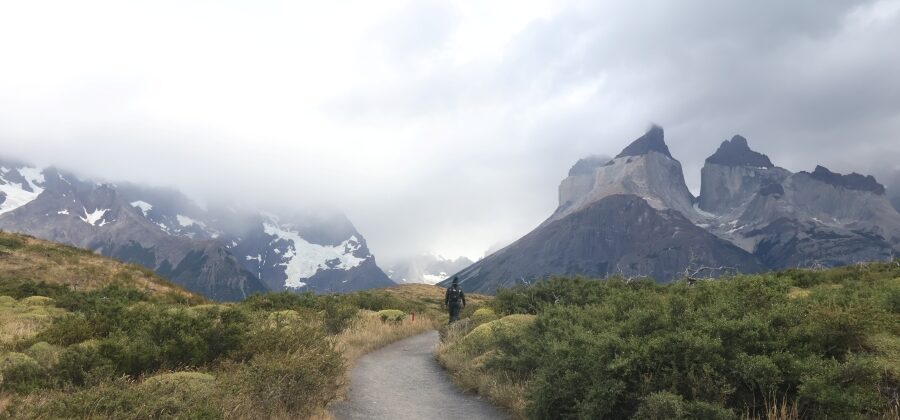
Torres del Paine National Park in Chilean Patagonia is one of the world’s most iconic hiking destinations. Towering granite peaks, glaciers, turquoise lakes and wide open grasslands create a landscape that feels almost unreal. While many travelers associate the park with multi-day treks like the W or O Trek, Torres del Paine also offers an incredible variety of day hikes, perfect whether you’re staying inside the park or visiting for the day. In this guide, we’ll share the best day hikes in Torres del Paine, how to plan them, where to stay, and a few practical tips for vegan travelers. No matter if you plan to hike to the famous Base Las Torres viewpoint or are looking for shorter, scenic walks, this article will help you plan unforgettable hiking days in Patagonia.
Introduction
Quick Facts
- Best for: hiking, glaciers, mountains, lakes, wildlife, photography, adventure travel
- Where to stay: Inside the park (refugios, campsites) or Puerto Natales for day trips
- Main highlights: The “Torres”, Grey Glacier, French Valley, Lago Pehoé, wildlife spotting
- Getting around: Hiking trails, shuttle buses, guided tours, park transfers
- When to visit: October–April for best weather; summer months are busiest
- Getting there: ~2–3 hours from Puerto Natales by car or bus
- Traveling as a vegan in Torres del Paine: Requires preparation, but possible with packed snacks or selected park meals
Ideal for adventurers seeking stunning Patagonian landscapes and unforgettable hikes.
This post contains affiliate links. If you make a purchase or booking through these links, we earn a small commission at no extra cost to you. This supports our work and allows us to keep offering free content here on the blog.
About Torres del Paine
Located in Chilean Patagonia, Torres del Paine National Park is one of the most spectacular hiking destinations in South America. The park is known for its sharp granite peaks, glaciers and mountains, turquoise lakes, rivers, and vast open landscapes. It’s a place that feels wild and powerful, and features endless variations for nature-lovers. While many travelers immediately think of the famous Base Las Torres hike, leading to the iconic granite towers above a clear blue lake, this trail is only a small part of what the park has to offer. Torres del Paine is packed with day hikes ranging from short scenic walks to challenging full-day adventures, suitable for different fitness levels and hiking styles. It’s easy to explore a new area each day and experience completely different landscapes on every hike. In this hiking guide, we’ll focus on the best day hikes in Torres del Paine, along with practical planning tips to help you make the most of your time in the park.

If you’re looking for a complete guide on food, accommodation and vegan logistics in Torres del Paine, check out our full vegan travel guide here: Vegan in Torres del Paine: Food, Accommodation & Planning Tips.
How to Get to Torres del Paine
| Option | Details | Best for |
|---|---|---|
| Flying in | Fly to Punta Arenas (PUQ), then take a ~3-hour bus to Puerto Natales. From there, continue by rental car or scheduled bus to Torres del Paine. | Travelers arriving from outside Patagonia |
| By bus | Regular long-distance buses connect Puerto Natales with Patagonian hubs such as El Calafate (Argentina). Daily buses run from Puerto Natales to key park entrances. Shuttle buses operate inside the park, connecting places like Laguna Amarga, Pudeto and hotel areas (paid separately). | Budget travelers & day hikers |
| Rental car | Driving from Puerto Natales offers full flexibility and easy access to multiple trailheads. | Sunrise hikes, photographers, flexible itineraries |
| Guided transfers / tours | Organized day tours include transport to and from the trailhead and often a guide. Can be booked in advance via GetYourGuide. | Solo travelers, short stays, hassle-free hiking |
Accommodations for Day Hikes in Torres del Paine
Accommodation Inside and Around the National Park
| Accommodation | Location | Type | Price | Vegan Options |
|---|---|---|---|---|
| Yellow Plum Camp Pehoé | Near Lago Pehoé (central-western park area) | Campsite with tents & meals | $$ | Fully vegan meals available on request (breakfast, dinner & lunchbox). Very vegan-friendly, flexible & enthusiastic host. |
| EcoCamp Patagonia | Central park area, near W Trek trailheads | Luxury eco domes | $$$ | Vegan meals available, including vegan to-go meals for hiking days. |
| Chilenativo Riverside Camp | Villa Río Serrano (southern park entrance) | Luxury tents | $$$ | Vegan diets accommodated on request. Recommend reconfirming at booking. |
| Hotel Lago Grey | Lake Grey, near glacier boat tours | Hotel | $$$ | Several vegan options available on the menu. |
| Hotel del Paine | Riverside near main park entrance | Hotel | $$$ | Vegan options possible; recommend requesting in advance. |
| Self-catering cabins | Near or just outside park (e.g. Lago Tyndall) | Cabins / apartments | $–$$ | Fully self-catered. Stock up on groceries in Puerto Natales before arrival. |
Accommodation in Puerto Natales
Staying in Puerto Natales
Puerto Natales is the main gateway town to Torres del Paine and a popular base for day hikers. It offers more affordable accommodation options, well-stocked supermarkets and a surprisingly good vegan food scene. Buses and transfers connect Puerto Natales with the park daily, making it easy to plan full hiking days.
Staying here is especially convenient for vegan travelers who prefer self-catering or dining out before and after hikes. We can personally recommend Puma House, offering shared hostel dorms and private rooms. They also rent out hiking equipment at fair prices.
If you’re traveling vegan and want more detailed, up-to-date information on vegan-friendly accommodations, meals, and practical tips for the park, we’ve covered everything in our separate, in-depth guide to traveling as a vegan in Torres del Paine .
The Best Day Hikes in Torres del Paine
Overview of Day Hikes
Below you’ll find a quick comparison of some of the best day hikes in Torres del Paine, scroll down for more detailed descriptions of each trail. The bus access details are based on staying in Puerto Natales.
| Hike | Distance | Elevation Gain | Difficulty | Access |
|---|---|---|---|---|
| Mirador Base Las Torres | 20.6 km (out-and-back) | 1,023 m | Challenging | Bus → Laguna Amarga → Shuttle |
| Cuernos Lookout | 6.4 km (out-and-back) | 201 m | Easy | Bus → Pudeto → Walk |
| Los Cuernos Camping | 24.8 km (out-and-back) | 782 m | Challenging (length) | Bus → Laguna Amarga → Shuttle |
| Grey Lookout | 2.4 km (out-and-back) | 24 m | Easy | Bus → Pudeto → Ferry |
| Laguna Azul | 9.8 km (out-and-back) | 204 m | Easy–Moderate | Rental car or private transfer recommended |
| Mirador Cóndor | 2.6 km (out-and-back) | 225 m | Moderate | Bus → Pudeto → Walk |
We like to use AllTrails for planning and navigating our hikes, and it worked very well in Torres del Paine. The trails are clearly marked in the app, and you can check elevation profiles, distance and recent reviews before heading out. Since there is no reliable internet connection inside most parts of the park, make sure to download the maps for offline use in advance. That way, you can still track your route and check your location even without service.
Our Favorite Day Hikes in Torres del Paine
Mirador Base Las Torres
Distance: 20.6km out-and-back
Elevation gain: 1,023m
Difficulty: Challenging
Highlights: The iconic granite towers and turquoise glacial lake
Find the hike on AllTrails
Definitely the most famous hike in Torres del Paine, and rightfully so. It has everything a great hike needs: varied terrain, beautiful views along the way, river crossings, and a little challenge before being rewarded with movie-like scenery at the end (well, technically halfway – you still have to make it back :D).
We started the journey around 9am after taking the bus from Puerto Natales and then a shuttle bus inside the park (reminder: 4,500 CLP in cash one-way). If you’re sleeping inside the national park or have your own car, we’d definitely recommend starting earlier, as it gets very crowded during high season. Otherwise, the bus from Puerto Natales works well. Just be aware that the last shuttle back runs at 7pm, so you can’t linger too long on the trail. Even if you’re a fast hiker, factor in possible delays due to crowds, especially on the way up.

After about 1km, you’ll reach a narrow bridge that can only be crossed by two people at a time, which can slow things down a bit. From there, the trail gradually ascends, revealing incredible views over the valleys and lakes. Some sections are sheltered from the wind, others are completely exposed. There’s even a stretch called “Windy Pass,” and it absolutely lived up to its name 😀 We constantly found ourselves taking jackets off and putting them back on again.
It’s a well-marked, fun, and diverse route, leading through sandy and rocky terrain, exposed ridges and forests, boulders and rocks. Around kilometer 6, you’ll pass Chileno Campsite, where you’ll find a water refill, paid toilets and drinks (around 5,000 CLP for a Coke), plus a scenic riverside spot that’s perfect for a short break.
From there, the trail continues with gentle ups and downs before reaching the final section: the steep climb to the viewpoint with the famous granite towers and turquoise lake. This last kilometer climbs steadily and without much relief. We ended up hiking behind a slower group than our usual pace, but it actually forced us to slow down and arrive at the top not completely exhausted. If you’re an impatient hiker, though, this section alone is reason enough to start early. There’s usually a steady line of hikers going up, and with people coming down at the same time, there’s very little room to overtake. We were also very lucky with the weather. It got windier the higher we climbed, but we can easily imagine how a rainy or stormy day would make this final stretch ten times harder, as there’s absolutely no shelter from the elements.

The platform offers enough space to enjoy good views from different angles and allows the high number of visitors to spread out, take pictures, and enjoy a well-deserved break. We spent around an hour there, taking photos and having lunch – all while bundled up in every layer we had brought, as it’s much colder and windier at the top than on the way up. Also keep in mind that the final ascent closes at 3pm, and everyone must leave the viewpoint by 4pm.
All in all, we’d say this hike is a must-do for anyone visiting Torres del Paine National Park who enjoys hiking and has the physical fitness for it. The massive crowds can put a bit of a damper on the experience, and we certainly weren’t as immersed in nature as we might have hoped due to the number of people around. Still, the beauty of the landscape and the spectacular one-of-a-kind scenery at the final viewpoint made it an experience we wouldn’t want to miss.
Cuernos Lookout
Distance: 6.4km out-and-back
Elevation gain: 201m
Difficulty: Easy
Highlights: Salto Grande waterfall
Find the hike on AllTrails
We did this trail the day after the long hike up to Mirador Base Las Torres, and it turned out to be the perfect way to recover. After completing the park’s “VIP” hike the day before, we were genuinely surprised by how much we enjoyed this one. While it may seem rather inconspicuous on paper, the Cuernos Lookout is a true hidden gem with a spectacular landscape.
If you’re taking the bus from Puerto Natales, you can remain seated after entering the national park until it reaches Refugio Pudeto (the ferry departure point). From there, you’ll need to walk uphill along the road for a short stretch, with Lake Pehoé on your left, until you reach the start of the trail.
On the day we did this hike, it was extremely windy. There’s even a sign at the trailhead indicating wind conditions, and if the wind reaches a certain strength, the hike may be closed for safety reasons. Luckily, it calmed down as the morning went on.

The trail offers beautiful views of the lake right from the beginning, but keep going: soon you’ll reach the spectacular Salto Grande waterfall, which truly impressed us with its sheer force and power. And even after that, the scenery just keeps getting better. The path continues with constant, breathtaking views of the Los Cuernos (“The Horns”) mountain range. Their dramatic shape, multiple shades of grey and sheer size made us say “wow” out loud more than once.
Combined with gorgeous views of Lake Nordenskjöld and the raw, wild Patagonian grasslands, this mostly flat and relatively easy hike impressed us just as much as its more famous (and more demanding) neighbors in the park. At the end, a beautiful viewpoint awaits, offering front-row views of Los Cuernos rising above the deep blue lake. It’s the perfect place to take a short break before heading back the same way.

Torres del Paine Camping – Los Cuernos Camping
Distance: 24.8km out-and-back
Elevation gain: 782m
Difficulty: Challenging (mostly due to the length)
Highlights: Views of Lake Nordenskjöld
Find the hike on AllTrails
This hike is part of the “W” Trek, but it can also easily be done as a single out-and-back hike. Don’t be intimidated by the length of the route: for the most part, the ups and downs are quite manageable, and only the final section involves a slightly steeper ascent. Unlike the Mirador Base Las Torres hike, it’s not absolutely necessary to reach the very end to enjoy the best views. The vast majority of the trail runs along Lake Nordenskjöld, offering mesmerizing scenery almost the entire way.
If you’re coming by bus from Puerto Natales, the starting point is the same as for Mirador Base Las Torres. After arriving at the park entrance at Laguna Amarga, you’ll need to switch to a shuttle (4,500 CLP in cash), which takes you to the trailhead. From there, you’ll initially share the route with hikers heading to Base Las Torres. After crossing the first bridge (which is limited to two people at a time and can therefore cause a bit of a traffic jam) you’ll turn left while most others continue straight toward Base Las Torres. From that point on, you’ll have the trail almost to yourself.

The hike begins across grasslands that gradually climb uphill. Before long, you’re rewarded with your first awe-inspiring views over the lake. From there on, almost the entire route feels like one continuous viewpoint. The terrain is neither particularly strenuous nor technical, making it easy to fully take in the panorama. The trail passes over sandy sections, scattered stones, small bridges and streams. For the most part, there isn’t much shade, so be sure to bring sun protection – or rain gear, depending on the mood of Patagonian weather 😉

Other Day Hikes in Torres del Paine National Park
While we didn’t personally hike the following trails, they are popular day hikes in Torres del Paine National Park and worth considering depending on your time and fitness level.
Grey Lookout
Distance: 2.4km out-and-back
Elevation gain: 24m
Difficulty: Easy
Highlights: Views of Grey Glacier and floating icebergs
Find the hike on AllTrails
This hike leads to viewpoints overlooking Grey Glacier, part of the Southern Patagonian Ice Field. The trail offers beautiful lake views along the way and on the glacier at the end. It’s a great option if you want to see a glacier up close without committing to the full W Trek. To access the start of this trail from Puerto Natales, you’ll have to take the bus until Refugio Pudeto and then the catamaran across Lake Pehoé to Paine Grande, where the hike begins.
Laguna Azul
Distance: 9.8km out-and-back
Elevation gain: 204m
Difficulty: Easy-moderate
Highlights: Blue lake when sunny, views of the Torres towers
Find this hike on AllTrails
Laguna Azul is a shorter and much less crowded alternative for seeing the peaks of the famous towers. It’s best to have a car to access this hike.
Mirador Cóndor
Distance: 2.6km out-and-back
Elevation gain: 225m
Difficulty: Moderate
Highlights: Panoramic views over Lake Pehoé and the Paine Massif
Find this hike on AllTrails
A short but steep climb that rewards you with sweeping 360° views over the park. It can easily be accessed bus from Puerto Natales, by getting out at the Refugio Pudeto stop.

Practical Tips for Day Hiking in Torres del Paine
Weather & Timing
Patagonian weather is famously unpredictable. Wind, rain and sun can all appear within a single day. Always be prepared for sudden changes and carry clothes for all seasons.

What to Pack for a Day Hike
- Cash (CLP)
- Windproof & waterproof jacket
- Warm layers (find animal-free puffers for example on Save The Duck)
- Hiking boots (waterproof recommended)
- Quick-dry clothing
- Hat, gloves & sunglasses
- Reusable water bottle
- Snacks & packed food (especially vegan options)
- Headlamp or flashlight (early starts / campsites)
- Power bank (limited charging options in refugios)
- Sunscreen & lip balm (strong UV, even in cold weather)
Park Entry & Transport
Park entry tickets must be purchased online in advance via the official CONAF website. Also always double-check bus and shuttle return times to avoid getting stuck inside the park.
Vegan Tips for Day Hikes in Torres del Paine
Traveling as a vegan in Torres del Paine is absolutely doable with a bit of planning. For a full breakdown of vegan restaurants, accommodation and self-catering tips, see our detailed guide: Vegan in Torres del Paine: Food, Accommodation & Planning Tips.

Conclusion
Torres del Paine is a region of stunning, wild beauty and true nature immersion. While the multi-day treks require significant planning and advance booking, day hikes can offer a fantastic alternative. In our eyes, they provide a much easier and more hassle-free way to explore the park, while still giving you access to many of its most iconic trails. Whether you’re short on time, traveling on a tighter budget, or simply prefer the comfort of returning to the same accommodation each evening, day hikes make the experience far more flexible – you can choose trails based on the weather, your energy level, or the views you’re most excited about. And despite not committing to a multi-day trek, you’ll still experience the iconic Torres peaks, turquoise lakes, and vast Patagonian landscapes that make the park so unforgettable.
This guide is completely free. If it helped you plan your trip and you’d like to say thank you, you can do so here 🙂

FAQ: Best Day Hikes in Torres del Paine National Park
Can I visit Torres del Paine as a day trip from Puerto Natales?
Yes. Many of the park’s most famous trails, including Mirador Base Las Torres and the Cuernos Lookout, can be done as day hikes from Puerto Natales. Regular buses run daily during the main season, and some trailheads require a short shuttle transfer inside the park.
Do I need to book park tickets in advance?
Yes. Entry tickets for Torres del Paine National Park must be purchased online in advance via the official CONAF website. Tickets are not sold at the entrance gates.
What is the most popular day hike in Torres del Paine?
The most popular day hike is the Mirador Base Las Torres trail, which leads to the iconic granite towers rising above a turquoise glacial lake. It’s challenging but incredibly rewarding.
Are there easy hikes in Torres del Paine?
Yes. Trails like the Cuernos Lookout or the Lago Grey viewpoint offer relatively easy terrain with spectacular scenery. These hikes are great options if you prefer shorter distances or less elevation gain.
Can I hike without a guide?
Yes. Most day hikes in Torres del Paine are well-marked and can be done independently. A guide is not required in the main hiking season, though winter visits may have different regulations.
How difficult are the day hikes?
Difficulty varies. Some hikes are mostly flat and manageable for moderately fit travelers, while others—like Base Las Torres—are long and physically demanding with significant elevation gain.
Is transportation inside the park easy?
Transportation is straightforward but requires planning. Most visitors arrive by bus from Puerto Natales. Some trailheads require an additional shuttle or catamaran connection inside the park, so checking schedules in advance is important.
What should I pack for a day hike in Torres del Paine?
Bring plenty of water, snacks, windproof layers, sun protection and sturdy hiking shoes. Weather conditions can change quickly, and strong Patagonian winds are common even on sunny days.
Are the trails crowded?
During peak season (December to February), popular hikes like Base Las Torres can be very busy. Starting early in the morning helps avoid the largest crowds.
Can I combine multiple day hikes in one visit?
Yes. Spending 2–3 days in the area allows you to combine a challenging hike with one or two shorter scenic trails, giving you a well-rounded experience of the park.
Further Reading
Blog Articles
Torres del Paine:
Hiking Guides:
- Valbona Pass: Hiking from Valbona to Theth (Albania)
- Tarnica and the Bieszczady Mountains: The Ultimate Hiking Guide (Poland)
- Five Polish Ponds: A Closer Look at One of Poland’s Most Popular Hikes (Poland)
Useful Resources

About the Authors
Lynn & Daniel are the vegan couple behind VanderlustJourney, combining their passion for adventure and plant-based living. They share stories and visuals of natural places, hikes, vegan discoveries, and meaningful encounters from around the world – always striving to travel with kindness.
👉 Follow us on Instagram
✉️ Contact: vanderlustjourney@outlook.com
The Torres del Paine area looks stunning! It is so nice to read about both easier and more challenging trails to explore this area, we like to mix up harder with easier hiking days.
Thank you! The park really has something for everyone:)
Torres del Paine is one of the most breathtaking places I’ve ever visited. I was there a few years ago and absolutely loved every minute of it. The landscapes feel almost unreal, especially on the day hikes. Your guide does such a great job breaking down the options for different skill levels. I truly hope to go back one day and experience it all again.
Thank you so much and glad you had a great time! It truly is such a beautiful place:)