
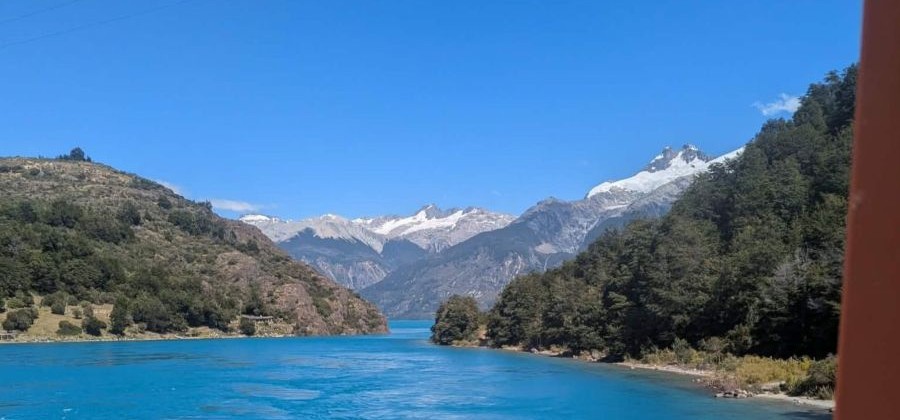
During our trip through Chile, the Carretera Austral was probably the stretch that occupied our minds the most. It also gave us the biggest headache: How were we going to do it? Travel by bus and risk missing out on hidden corners? Rent a car and blow our budget? Or skip it altogether? In the end, we spent around 10 days traveling the Carretera Austral by bus, and it taught us far more than we expected. About ourselves, who we are, and who we sometimes wish we were. And most of all, about mindset on the road. In this article, we’ll not only explore the question “Is the Carretera Austral by bus worth it?”, but share our struggles and joys along the way, along with some (hopefully) useful tips for your own journey.
An Introduction to the Carretera Austral
Our story officially begins on a night bus from Argentina to Chile. But in reality, it started much earlier, somewhere between maps and spreadsheets, when we were fleshing out our Patagonia route from Ushuaia all the way to San Pedro de Atacama. Right in the middle of that itinerary sat the Carretera Austral, a more than 1,000-kilometer promise of wilderness, freedom, and adventure. We imagined just the two of us, our car, and an empty road stretching endlessly ahead. We’d sleep in cosy lodges, drink beer with the locals and stop in front of viewpoints, whenever we felt like it, because we were free like the wind.

Until we learned that, well, even the wind and freedom are tied to a certain budget on the Carretera Austral.
Who This Carretera Austral by Bus Guide Is For
If you’ve been reading so far, you’ll probably tell us: “So, what’s the problem? If renting a car is too expensive, you can hitchhike. The Carretera Austral is perfect for that.”
And we’d reply: “But then we never know where we’ll end up exactly. And accommodation in this area is expensive too, so we prefer to book ahead.”
To which you’d probably answer (still eager to help): “Well, you can camp!”
And at this point we need to make a confession: we are not campers. As much as we like to present ourselves as nature-loving and outdoorsy, the love comes with conditions. We like a warm bed at the end of the day. A real toilet. A hot shower. And we take a good meal on the road seriously enough to have created an entire blog about our vegan lifestyle while traveling.
If you’re a camping lover, you’ve probably closed the page by now. If you don’t understand the whining about rental car prices, you might have too. But if you’re still here, chances are you find yourself somewhere in this in-between as well (or you simply enjoy reading about our rants and misfortunes). Either way, you might be curious to know how we actually traveled the Carretera Austral by bus, how it went, the mistakes we’ve made, and what we would recommend.
This article will contain quite a bit of rambling (and a small identity crisis), but we’ll try to balance it with as many practical tips as possible. It even has a structure. (Somehow.) So, let’s get started.
What is the Carretera Austral?
Carretera Austral: Quick Overview
- Route: Puerto Montt → Villa O’Higgin (in this article, we’ll talk about our route from Chile Chico → Puerto Montt)
- Duration: 7-14 days (we did ~10 days)
- Transport: Bus + ferry
- Budget: Medium
- Biggest challenge: Unpredictable transport & schedules
- Best for: Flexible travelers who embrace the unexpected
This post contains affiliate links. If you make a purchase or booking through these links, we earn a small commission at no extra cost to you. This supports our work and allows us to keep offering free content here on the blog.
History and Landscapes
The Carretera Austral (officially Ruta 7) is a remote highway in southern Chile, stretching for about 1,240 km from Puerto Montt in the north down to Villa O’Higgins in Patagonia. It was built starting in the 1970s, mainly to connect isolated communities in Chilean Patagonia that were previously only accessible by boat or through Argentina. Even today, large parts of the road remain unpaved, and the route includes ferry crossings, gravel sections and mountain passes. It travels through regions shaped by glaciers, volcanoes, rivers, and dense temperate rainforest, making it one of the most scenic, but also logistically challenging routes in South America. While infrastructure has improved over the years, the Carretera Austral still requires time, flexibility and a bit of patience. And until today it carries a certain myth for travelers, representing freedom, remoteness and that feeling of true adventure.
Organisation on the Carretera Austral
How to Travel the Carretera Austral
As it became obvious from the beginning of this article, we put quite a bit of thought into the transportation part of this trip. Basically, travelers on the Carretera Austral have the following options:
- Car rental (the most expensive, but also offers the most flexibility)
- Hitchhiking (from what we heard from fellow travelers, quite doable)
- Bus (this grey, mysterious area in between)
- Cyclists (the real heroes)
When doing our research, we found a lot of blog articles about car road trips and hitchhiking. But almost nothing about bus connections, and if there was, it sounded vague and unclear. (Nothing about cycling either, but honestly: if you’re badass enough to do this, we have nothing to teach you and you’ll probably don’t need the internet to give you tips anyway.) So, here’s our road and what we learned about buses on the way. While we’re at it, we thought it’s useful to also add our accommodations and some food info for our fellow vegan travelers 🙂
Getting to the Carretera Austral
The Carretera Austral can be traveled in two directions. While many travelers begin in the north and head south (starting in Puerto Montt), we tackled the road the opposite way: from south to north, starting in Chile Chico after crossing from Argentina. However, whether you travel the Carretera Austral top-down or bottom-up doesn’t really matter and the practical information remains the same.
Crossing from Argentina to Chile Chico
Arriving in Los Antiguos (Argentina)
Technically, this is before the Carretera Austral, and we’re aware that not everyone starts in Chile Chico. However, for those traveling by bus and starting in the south, it’s one of the most logical entry points, and we might be able to provide some useful information about the border crossing as well.

No matter where you’re coming from in Argentina, your goal is to reach Los Antiguos, the small border town on the way to Chile. Los Antiguos and Chile Chico are only a few kilometers apart, separated by the Jeinimeni border crossing. In our case, we took a semi-sleeper night bus from El Chaltén, which was supposed to take around 12 hours. In reality, thanks to a potentially crazy (or just very enthusiastic) driver, we arrived after only 10 hours. The seats on the bus were wide and comfortable, could be reclined generously, and there was one toilet on board. Did we mention that we love Argentinian night buses? (And we said that even before experiencing the reality of buses on the Carretera Austral.) Another option (for those who reallyyy enjoy long bus rides) is to travel directly from El Calafate to Los Antiguos, a journey of over 14 hours.
Crossing from Los Antiguos (Argentina) to Chile Chico (Chile)
Los Antiguos in Argentina and Chile Chico in Chile are only a few kilometers apart, but the crossing is not as straightforward as one might hope. The reason: there is no bus connection between the two, and taking a taxi is… not really a thing here, at least not officially. Luckily, not everyone seems too concerned about that, and you can find a few contacts online who offer transfers. We contacted several, and the price was the same for everyone: 15,000 CLP per person.
We ended up going with Daniel, a super friendly and proactive guy. You can reach him at this number: +56990386338. The process worked like this: he picked us up in Los Antiguos and drove us to the first border point, where you stamp out of Argentina. After that, you continue on to the Chilean side for entry procedures, and from there it’s just a short ride into Chile Chico.
Another option (which we saw a few people do!) is walking all the way from Los Antiguos to Chile Chico. The road is flat and straightforward, but well… long, especially with bags. Of course, you can also start your journey on foot and try to hitchhike along the way.
Important: Entering Chile
Chile has very strict biosecurity rules. You are not allowed to bring fresh produce such as fruits, vegetables, seeds, or animal products into the country. Your luggage may be checked, and fines can be issued if you don’t declare restricted items.
Starting the Carretera Austral from Within Chile
Not everyone arrives via Argentina. If you’re already in Chile, the beginning looks very different and a little simpler.
Most travelers start from Puerto Montt, which is considered the “official” northern gateway to the Carretera Austral. You can fly there from Santiago or take a long-distance bus. From Puerto Montt, the journey south involves a combination of road and ferry connections before the highway properly begins. Some choose to take the ferry from Puerto Montt directly to Chaitén, skipping the first ferry segments and starting further south. This option is popular with bus travelers who want to simplify logistics (though “simplify” on the Carretera Austral is always relative). Another common starting point is Coyhaique. It has a regional airport and functions as the main hub of the region. If you’re short on time, flying into Coyhaique and exploring the central section of the Carretera Austral can make a lot of sense.
Our Route on the Carretera Austral (Northbound)
Carretera Austral – Our Route Overview
Map of our Route
Chile Chico
With Chile Chico being our first stop on the Carretera Austral, arriving in this small village felt like the exciting beginning of a long journey into the unknown. Situated on the shores of Lake General Carrera, it’s mainly known for its picturesque views of lake and mountains, as well as hiking opportunities. Without a car, however, these are not always easy to reach, so we ended up treating Chile Chico more as a transition stop before moving on.

Where to Stay in Chile Chico
We spent one night at Río Baker, a simple but cozy accommodation run by a lovely woman, which cost us €38. Like many places along the Carretera Austral, it isn’t listed on booking platforms and can only be reserved directly via WhatsApp. Online, options are more limited. For well-rated places, we found this hotel (around €75-90/night), a cottage (around €75/night), and a full apartment (€100-200/night depending on size).
Vegan Food in Chile Chico
We didn’t stay long enough to properly try out restaurants, but vegan options can be found at Café Chirifo and Cerveza Rebelión. For self-catering, although a Google Maps review mentioned vegan frozen burgers at Supermercado Sur, we couldn’t find them when we checked, nor were we able to find plant-based milk anywhere in town.
Bus from Chile Chico to Puerto Río Tranquilo & Coyhaique
This was our first real reality check of what traveling the Carretera Austral by bus actually means.
As the well-prepared travelers that we are, we had done our research beforehand and knew that a local bus departs from Chile Chico to Coyhaique every two days, stopping in Puerto Río Tranquilo along the way – which was supposed to be our next stop (and where we had, very responsibly and budget-consciously, already booked a room). Cheerful and innocent, we went to the bus station to buy a ticket for the next day.
“No ticket”, the guy told us.
“Oh, it’s already sold out?”
“No, it’s just not possible to buy a ticket in advance,” he shrugged, giving us an apologetic smile, clearly recognizing the type of travelers we are. “You show up for the bus at 8am and you get in.”
“And if it’s full?”
He looked at us: “Well… there’s another bus two days later.”
Goodbye to our cozy world of planning ahead, reserved seats, and certainty – hello Carretera Austral!
But we weren’t going to be discouraged that quickly. The bus left at 8am, so we showed up at 7:20am, determined to get a spot. At first, things looked promising: we were almost the only ones there, apart from a local family who seemed slightly worried (probably because they knew what was coming). For about 20 minutes, our plan seemed to be working… until travelers started pouring in: first in pairs, then in bigger groups, arriving every few minutes. Before long, the station was packed, far too many people with far too many backpacks. Then the bus arrived, and with it, the expected chaos. Everyone rushed to be first in line to store their luggage and secure one of the precious seats. Soon, the storage space was full, and backpacks had to be taken inside the bus. And then, somehow (we still don’t quite know how) everyone got in. Two people ended up sitting on luggage in the aisle, but somehow both humans and bags fit.

Then the five-hour bus ride to Puerto Río Tranquilo began, and within minutes, all the stress faded away. Because the scenery was just that beautiful. Mountains and lakes came together to form some of the most stunning landscapes we’ve ever seen – and this was just a few kilometers outside of Chile Chico. The driver (whose praises we’ll continue to sing later in this post) even stopped multiple times so we could get out and take photos. So, in conclusion: yes, it’s stressful not knowing if you’ll get a seat. Yes, it’s crowded. But yes, it’s absolutely, 100% worth it.
Bus from Chile Chico to Puerto Río Tranquilo & Coyhaique: Practical Info
- Frequency: Sunday, Tuesday, Thursday (Monday, Wednesday and Friday other direction)
- Departure: Around 8:00 AM
- Price: 15,000 CLP per person
- Tickets: Cannot be bought in advance: first come, first served
- Duration: ~5 hours to Puerto Río Tranquilo, longer to Coyhaique
- Tip: You can try texting the driver on WhatsApp at +56 9 9038 6338 to “reserve” a seat. However, it’s unclear how reliable this is, so we would still recommend showing up early.
Puerto Río Tranquilo
Puerto Río Tranquilo is a gorgeous small village on the shore of Lake General Carrera. Like so many towns along the Carretera Austral, it offers a curious contrast: the streets are lined with tour operators offering boat and kayak trips to the Marble Caves, and there’s no shortage of cafés and restaurants… but then, when we arrived on a Sunday, the only big supermarket in town was closed! Google Maps doesn’t really show most of the smaller minimarkets, but many of those were closed as well; with the exception of this one.
Where to Stay in Puerto Río Tranquilo
We stayed in a dorm room at Refugio Huairavo (around €22/night for a bed), which can be contacted through WhatsApp. The hostel was small and cosy, and run by a lovely owner who clearly cares about the well-being of his guests and always willing to help you with questions. For those looking for more privacy, this accommodation (about €50/night for a double room, about €70/night for an apartment) and this 2-bedroom-house (about €75/ night) are well rated. If we had the budget, we would probably splurge on this hotel with lake view (about €80-150/night).
Vegan Food in Puerto Río Tranquilo
Food-wise, Puerto Río Tranquilo had a few surprisingly good vegan options despite its small size. Café Chirifo is a lovely place open for breakfast and lunch that serves multiple vegan dishes (when we visited, they had falafel plates) and three (!!!) vegan cakes. When you ask, “Are any of your desserts vegan?” and they reply, “All of them!”, you know you’re in the right place. Then there’s also Ruedas y Ríos, which we didn’t get to try but seems to serve two tasty burgers, one with mushrooms and one with quinoa and lentils.

Bus from Puerto Río Tranquilo to Cerro Castillo & Coyhaique
To get from Puerto Río Tranquilo to our next stop in Coyhaique, we took the same bus as two days earlier, coming all the way from Chile Chico. We were less anxious this time about getting a seat, as we had seen on the first ride that most people get off in Puerto Río Tranquilo. We also knew from experience that the bus never arrives at the scheduled time… and indeed, it showed up more than an hour late. If something unexpected happens (like a flat tire), expect even longer delays. And, well… “flat tire” turned out to be the theme of the day on the way to Coyhaique.

We had been on the road for about 40 minutes, comfortably spread across two seats in a half-empty bus, when the driver pulled into what looked like a small garage, stopped, and told us we could get out, as this might take a while. It’s always fascinating to watch someone speak when you don’t understand the language: based on his expression, he could just as well have said, “This is a planned break and I’m off for a well-deserved beer!” As we later found out when chatting with him, the reality was slightly different: he had four (!!) punctured tires, and this garage was the last place that could help before Coyhaique. Otherwise, we would have been properly stranded somewhere along the Carretera Austral.
The repairs took more than two hours, but the driver stayed in remarkably good spirits. We asked him whether it ever gets tiring to drive this route every day (he only takes Saturdays off). Not at all, he said beaming, as he loves driving and enjoys meeting new people every day. The way he described it, it sounded like his dream job; and even the inevitable overtime (we finally arrived in Coyhaique at 10pm) didn’t seem to affect his mood.
We thought of him often during the rest of our journey along the Carretera Austral. And tried, at least a little, to be more like him whenever things didn’t go according to plan.
Bus from Puerto Río Tranquilo to Coyhaique: Practical Info
- Frequency: Sunday, Tuesday, Thursday (coming from Chile Chico)
- Departure: Scheduled in the morning, but often delayed (in our case by over 1 hour)
- Price: Around 15,000 CLP per person
- Tickets: Cannot be bought in advance – first come, first served
- Duration: ~5-6 hours (depending on road conditions and… luck)
- Tip: Since many passengers get off in Puerto Río Tranquilo, chances of getting a seat are usually higher than in Chile Chico. Still, arrive early and be prepared for delays.
Cerro Castillo
For Cerro Castillo, we briefly deviated from the bus itinerary. While the bus from Puerto Río Tranquilo can drop you off in Cerro Castillo, we continued to Coyhaique, rented a car, and drove back. The reason? We wanted to hike to Cerro Castillo Lagoon, and the trailhead is a few kilometers outside of town. Since hitchhiking isn’t really our style, renting a car for two days felt like the most practical option, and Coyhaique was the only place that offered car rental.
Where to Stay in Cerro Castillo
We slept in a cozy bungalow at Quelen Patagonia (€70-100/night depending on room type) with big, bright rooms, large windows and truly peaceful surroundings. There are lots of similar accommodations around, such as Cabaña Caiquen (around €78/night) and Outscape (around €200+/night) for 5 people.
Laguna Cerro Castillo Hike
For the next day, we had planned to hike Cerro Castillo Lagoon, a 13 km out-and-back trail to a stunning turquoise lagoon in the national park. Motivated as we were, we showed up at the entrance at 7am, ready to start. By then, we had already walked 2 km from where we had parked the car a bit further away. The official entrance wasn’t open yet, which we thought worked in our favor. Maybe we could skip the (in our eyes slightly exaggerated) 20,000 CLP entrance fee. But alas, nothing ever comes easy on the Carretera Austral.
Just a few meters into the trail, a guy appeared from one of the nearby cabins and told us we had to wait until the official opening at 8am. We assured him we’d happily pay on the way back… but apparently, that wasn’t an option. We needed a ticket to show to a ranger around km 5. The idea of being turned around just before the final stretch wasn’t exactly appealing, so, slightly grumpy (we’re not morning people), we sat down and waited until the park opened around 7:45am. We filled out the safety form, paid the fee, and set off again. This time, properly. The hike climbs steadily, with beautiful views over mountains and rivers along the way. At km 5, we met the ranger: a friendly guy who asked how we were doing, showed us where to refill water, and couldn’t have cared less about our tickets. But by then, our bad mood from the morning had faded, and we were simply happy to enjoy the views. The final ascent was tough, and the wind got stronger with every step. But when we reached the top, the view made everything worth it: a surreal, turquoise lagoon framed by snow-covered peaks. And somehow, moments like this make all the chaos along the Carretera Austral feel exactly right.

Coyhaique
We mainly used Coyhaique as a stopover to rent a car for Cerro Castillo, stock up on food, and plan the next steps of our journey. It’s one of the larger towns along the Carretera Austral and a convenient place to find everything you might have been missing before.
Where to Stay in Coyhaique
We stayed at this cozy Airbnb, where you get a private bedroom and bathroom while sharing the kitchen with the host family. Maria Pia was incredibly warm and welcoming, making us feel right at home.
If you prefer more privacy, Cabañas Trapagonia is a great alternative, and there are plenty of other accommodation options around Coyhaique to suit different budgets and styles.
Vegan Food in Coyhaique
For vegans (and really for anyone), we recommend checking out Unimarc to stock up on supplies. They carry plant-based milk, vegan cheese (!) and are generally one of the best-stocked supermarkets in the area.
There are also several good vegan options in town. Silvestre Foodtruck Vegano offers a fully vegan menu, but was sadly closed when we tried to visit, despite showing as open on Google Maps (not the first time this has happened to us, so we’d recommend always having a plan B). De la Raíz is another fully vegan restaurant with great reviews (reading the, we are a bit jealous not to have made it there). Mamma Gaucha (pizza), Café de Mayo and Kürüf Patagonia also offer vegan options.

Bus from Coyhaique to Chaitén
The bus from Coyhaique to Chaitén felt like a 5-star limousine ride, simply because we could actually book tickets this time. No anxious waiting, no side-eyeing the competition, no holding your breath until you’ve secured a seat. Just the luxury of numbered seats and reservation tickets – finally, the world as it’s supposed to be. And the 9-hour ride from Coyhaique to Chaitén was amazingly beautiful! Somewhere a bit before Puyuhuapi, the road turns into serpentines and the bus slows down due to gravel sections and passing vehicles. The scenery here was incredible: the vegetation almost looked like a rainforest, and with the blue sky that day, it was easy to imagine we were somewhere much more tropical. And then the best part: snow-covered mountains rising in the background, a mix of landscapes we’ve never seen like this before. We didn’t get tired of staring out the window, in awe of how quickly the scenery can change in Chile.
Bus from Coyhaique to Chaitén: Practical Info
- Frequency: Several times per week
- Departure: Usually 10am
- Price: Around 25,000–35,000 CLP per person
- Tickets: Can be booked in advance online
- Duration: ~8-9 hours (including stops)
- Booking: Check availability & reserve your seat here
Chaitén
Arriving in Chaitén felt like yet another “nothing runs smoothly on the first try on the Carretera Austral” moment. We were supposed to stay in a homestay and had extended our booking from two to three nights, meaning we’d arrive a day earlier. The host loved sending rapid-fire voice notes in Spanish instead of texts, so our WhatsApp exchange went something like this:
Us: asking (in writing) if she had a room for the extra night.
Her: replying in very fast Spanish via voice note, yes.
Us: “Perfect, we’ll take it!”
But when we arrived, she looked at us wide-eyed and told us she was expecting us the next day, and that there was no room available. Slightly desperate (especially after checking last-minute hotel prices), we replayed her voice message as proof of our reservation. Unimpressed, she showed us her handwritten booking agenda, the ultimate authority, clearly outranking any WhatsApp conversation. Tired from a long bus ride, we asked if we could stay just a moment while figuring out an alternative. After a pause, she suddenly said: “Wait, I have a room for you.” Confused but not about to question our luck, we followed her outside… only to find ourselves in a small, separate bungalow with its own bathroom and kitchen. “You can stay here,” she said, “until 9am tomorrow.” Good enough for us, and even better than the room we had originally booked.
Another sign from the Carretera Austral? Maybe the story is, after all: “Nothing runs smoothly on the first try, but what I have in store for you is even better.”
Where to Stay in Chaltén
Naturally, after this experience, we hesitated to recommend the homestay, but we know that mistakes happen, and it’s actually a very good option if you’re traveling on a budget (€30/night). The rooms are simple with a shared bathroom, but everything is clean and fair for the price. You can also use the kitchen, just keep in mind that you’re staying in the owner’s home, so she’ll likely be around while you cook. We didn’t communicate much due to our limited Spanish, but she seemed very social, with neighbors frequently coming and going, so it’s a great chance to connect with locals if that’s something you enjoy.
If you prefer more privacy, Chaitén also has fully equipped apartments available, either with one bedroom (around €50/night) or two bedrooms (€60-70/night).
Vegan Food in Chaitén
Chaitén has a few restaurants with vegan options, including Chispita (typical local sandwiches), La Pizzeria Chaitén (vegan cheese available for an extra 3€) and La Garza Cocina Chaitén, which offers more slow food-style dishes (the menu changes daily, so best do double-check if they have vegan options on that day).
Supermarkets are small and fairly limited, but we did find vegan soy burgers at Supermercado La Bodega, and vegan burgers, protein bars, and other basics at Supermercado Y Botillería Calle Portales. However, we couldn’t find any plant-based milk in town, so if that’s important for you, it’s best to stock up in Coyhaique beforehand.
Hiking in Chaitén
Chaitén is surrounded by beautiful nature, with both wild beaches and lush national parks right on its doorstep. Pumalín Douglas Tompkins National Park is free to enter and offers several great hikes, including a 5 km out-and-back trail to the Chaitén Volcano. The trailhead lies a bit outside of town, but compared to other places along the Carretera Austral, it’s actually fairly easy to find taxis here. We can recommend Trekanpangui; the driver charged around €30 for a return trip and was super flexible with timing (WhatsApp: +56975122967). For more recent contacts, head to the tourist office: you can either ask inside (they have a booklet with multiple numbers) or check the board outside with local listings. Alternatively, many travelers also try their luck hitchhiking.

Bus or Ferry from Chaitén to Puerto Montt
For our final leg on the Carretera Austral, from Chaitén to Puerto Montt, we had the choice between a bus and a ferry. True to the character of this journey so far, the bus ride turned out to be just a little more complicated than necessary. The reason? You can reserve seats, but not online. Instead, you have to buy them in Chaitén (in the building opposite the tourist office). But here comes the catch: once you arrive in Chaitén, it might already be too late, because in high season the bus can be fully booked several days in advance. At this point, we were really starting to feel like things could be a little easier. Anyway, fortunately there’s still the ferry option – a pretty cool one, to be honest. It runs at night and can also fill up quickly, but at least you can book it online in advance, which makes planning a lot less stressful.
Chaitén to Puerto Montt: Practical Info
- Options: Bus or ferry (overnight)
- Bus tickets: Cannot be booked online – must be purchased in Chaitén (15,000-20,000 CLP per person)
- Availability: In high season, buses can be fully booked several days in advance
- Ferry tickets: Can be booked online in advance (~25,000-50,000 CLP per person)
- Tip: If you prefer certainty, choose the ferry and book early. For the bus, try to secure tickets as soon as you arrive in Chaitén.
Puerto Montt
And just like that, we reached the end of the Carretera Austral. Puerto Montt, for us, was mainly a convenient stopover, a place to stock up in large supermarkets (yes, told ya we take food seriously), do our laundry, and plan the next steps of our Chile adventure. For many travelers, however, this port city marks the beginning of their journey along the Carretera Austral. And somehow, isn’t that a lovely symbolism? It brings everything full circle and shows that this road isn’t really about where it starts or ends, but rather about everything that happens in between.
Where to Stay in Puerto Montt
For our time in Puerto Montt, we based ourselves in El Capitán – a spacious apartment that gave us the opportunity to spread out our staff, do some proper food prep and settle in comfortably to reflect on the past weeks on the Carretera Austral.
Vegan Food in Puerto Montt
Puerto Montt is home to a few fully vegan food place called Dharma. A big recommendation is also New Cow Vegan Food, a fully vegan food truck serving authentic local specialties like ceviche and completos. Vegan products (like cheese, burgers and milk) can be found at Unimarc and Jumbo.

Is the Carretera Austral worth it?
So now to the question of all questions: Is the Carretera Austral worth it, especially when traveling by bus? You probably already sensed that this won’t be a simple yes-or-no answer, but a bit more nuanced.
Take a moment and reflect on the feelings that came up while reading this post so far. Were you rolling your eyes, thinking we were making a big deal out of nothing? Were you slightly stressed, imagining yourself in those situations? Or did you immediately think: “Nope, definitely not my kind of travel”? In this last case, you probably already have your answer (maybe the price of a rental car is actually low compared to constantly elevated blood pressure on the road). If you found yourself in the first group, go for it! This kind of travel will likely feel exciting, freeing, and exactly like what you’re looking for. And if you’re somewhere in between, a little unsure and hesitating… well, we personally like to follow Mark Twain’s wise words: “Twenty years from now you will be more disappointed by the things that you didn’t do than by the ones you did do.”
If you have the time and the opportunity to explore such a remote and beautiful part of the world, it might just be worth embracing the uncertainty. And even if not everything goes as planned, even if there are moments of frustration, you will grow from it. And if all of that happens while being surrounded by some of the most raw and stunning landscapes you’ve ever seen… that’s not such a bad deal, is it?
The Carretera Austral by Bus is for you if…
- … you value experiences over comfort
- … you’re flexible with plans and timing
- … you don’t mind uncertainty (or even enjoy it)
- … you’re okay relying on local communication instead of online booking
- … you like slow travel and taking things step by step
- … you enjoy meeting other travelers along the route

The Carretera Austral by Bus isn’t for you if…
- … you need structure and fixed schedules
- … uncertainty causes you more stress than excitement
- … you prefer booking everything in advance
- … you’re short on time and need efficiency
- … you want a smooth, predictable travel experience
Practical Tips
Practical Tips for the Carretera Austral
What We’ve Learned
A clever thing to say at parties is that travel “broadens your horizon”, and we would enthusiastically nod along. But did we ever really stop to think about what that actually means? At home, we’re the “travelers” in our circle, the ones people ask “where are you?” instead of “how are you?”. But put us among other travelers, and suddenly we’re not the adventurous ones anymore. If anything, we’re probably among those who still like a certain level of comfort and predictability. One feeling that kept coming up during our first days on the Carretera Austral was a subtle sense of entitlement, or maybe frustration would be the better word. Why isn’t this better organized? Why isn’t there a proper booking system, when it’s obvious that so many people rely on these buses? It’s easy to question the place you’re in, but much harder to turn that question around: why did we come here expecting it to work differently? Why should an entire region adapt to the way we’re used to traveling? Back home, we like to think of ourselves as flexible and easy-going. But the Carretera Austral showed us exactly where we still like to cling and grip: to plans, to control, to certainty, … instead of letting go and trusting that things will somehow work out. Because in the end, they did. We learned that the “worst case scenario” is often far less dramatic than it feels in the moment. We never had to sleep on the street. We never had to pay absurd last-minute prices. Things were delayed, yes. Plans changed. But it was all… fine.

At the same time, we also realized something else: it’s okay if this isn’t entirely our style of travel. We met people who seemed completely at ease with the uncertainty, the spontaneous, carefree, fully-in-the-moment-type. And while we admired (and part of us maybe envied) that, it also made us realize that we don’t have to travel like everyone else. In the end, maybe that’s what it really means to “broaden your horizon”: not just adapting to the world around you, but also understanding yourself a little better along the way, and learning to be okay with what you find.
Our website is completely free and we don’t put ads to keep it user-friendly. If you enjoy our content, it helped you plan your trip and you’d like to say thank you, you can do so here 🙂

FAQ: Carretera Austral by Bus (Chile Travel Guide)
Can you travel the Carretera Austral in Chile by bus without a car?
Yes, it is possible to travel the Carretera Austral by bus without renting a car. Most main towns are connected by bus services, although some routes are infrequent and may require ferry connections.
Do you need to book buses in advance on the Carretera Austral?
It depends on the route. Some buses can be booked online, while others operate on a first come, first served basis and must be arranged locally. Booking ahead when possible is recommended.
How reliable are buses on the Carretera Austral in Patagonia?
Buses on the Carretera Austral are not always reliable. Delays, schedule changes, and occasional breakdowns can happen, so it’s important to stay flexible and allow buffer time.
How many days do you need to travel the Carretera Austral by bus?
Ideally, plan 10 to 14 days to travel the Carretera Austral by bus. This allows time for transport delays, weather changes, and exploring key stops along the route.
Is traveling the Carretera Austral by bus cheaper than renting a car?
Yes, traveling by bus is significantly cheaper than renting a car in Patagonia. However, it offers less flexibility and may require additional overnight stays.
Can you visit the Marble Caves from Puerto Rio Tranquilo without a car?
Yes, you can visit the Marble Caves without a car. Boat tours depart regularly from Puerto Río Tranquilo and can be easily booked locally.
Is hitchhiking or taking the bus better on the Carretera Austral?
Both options are common. Hitchhiking offers more flexibility, while buses provide more structure and predictability. The best choice depends on your travel style.
Can you travel the Carretera Austral without camping?
Yes, you can travel the Carretera Austral without camping. There are hostels, guesthouses, and cabins in most towns, although availability can be limited during peak season.
Do you need to speak Spanish to travel the Carretera Austral by bus?
No, but basic Spanish is very helpful. Many bus companies and accommodations operate primarily in Spanish, especially in remote areas.
What is the biggest challenge of traveling the Carretera Austral by bus?
The biggest challenge is uncertainty. Bus schedules can change, seats may be limited, and plans often need to be adjusted. Flexibility and patience are essential.
Further Reading
Blog Articles
Chile:
- Day Hikes in Torres del Paine: Stunning Trails for Every Skill Level
- Vegan in Torres Del Paine: Everything You Need To Know
Useful Resources

About the Authors
Lynn & Daniel are the vegan couple behind VanderlustJourney, combining their passion for adventure and plant-based living. They share stories and visuals of natural places, hikes, vegan discoveries, and meaningful encounters from around the world – always striving to travel with kindness.
👉 Follow us on Instagram
✉️ Contact: vanderlustjourney@outlook.com
I am hearing about the Carretera Austral for the first time and it sounds like an interesting place to visit. Thanks a lot for sharing your experience.
Thank you, much appreciated!
Wow! This is so detailed and so much was done. How tired were you? Sounds like s long trip. Worth it though. 🙂
Thank you! We took some time to rest once we arrived in Puerto Montt:) And yes, definitely worth it!
Wow, what a dope trip and blog. I have never heard of this place, and now it is on my list!
The Carretera Austral is DEFINITELY worth it. I had to cover it for a guidebook I co-authored. I journeyed from Futaleufú to Chaitén, then down the entire length to Villa O’Higgins (where I got stuck for five days due to the rains making the road impassible), then north to Puerto Guadal, crossing at Los Antiguos. Because of the bus situation and time pressures, I had to hitch over half of the Carretera. An absolutely unforgettable experience!
Wow sounds like a great adventure, thank you for sharing!
We did a similar route to you and hitch hiked across Los Antiguos – Chile Chico. Man, the carretera austral is such an adventure when you’re taking the bus. But such a beautiful part of the country!! Definitely a place that can test your patience. We had to skip a few places along the carretera austral unfortunately but we want to go back and explore more! great post, saving it for later 🙂
Thank you for sharing your experience! Yes, the Carretera Austral makes you go through all the feelings haha. I feel like it’s inevitable to adapt your itinerary while hitchhiking or taking public transport, but that’s what makes it so fun and special too:) And just another reason to go back to see the places you’ve missed:D
We did drive the Carratera Austral at the end and it was probably the best road trip we’ve ever done.
It’s really an incredible experience of freedom! Glad you enjoyed your trip!
Thank you for the map with the route! That was super helpful to see it actually mapped out!
Happy to hear that:) Thank you for the feedback!