
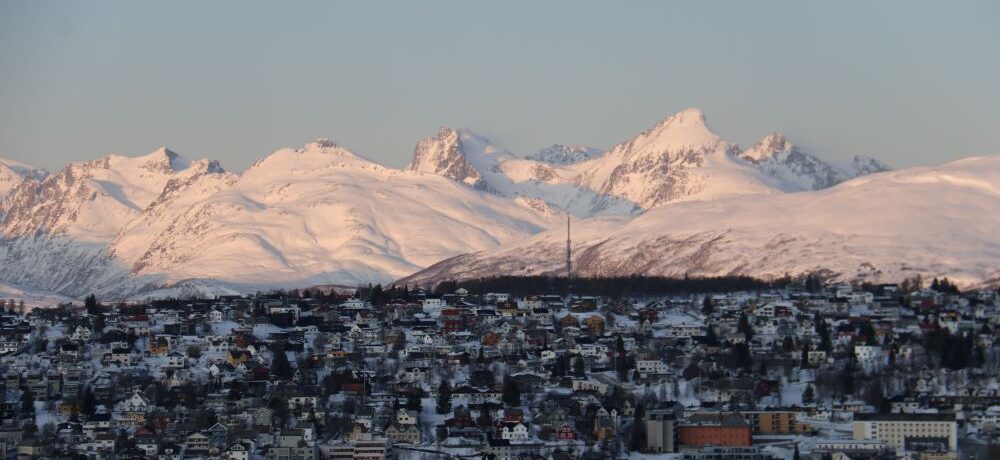
Tromsø is the largest city in Northern Norway and often called the “Gateway to the Arctic”. While many popular tourist attractions involve animals, such as husky sledding or reindeer experiences, there are also plenty of vegan-friendly activities to do in Tromsø. In this guide to surviving as a vegan in the Arctic, we’ve gathered our favourite vegan-friendly activities in Tromsø, vegan food recommendations and insights into the historic relationship between humans and animals in this region.
Introduction to Tromsø
- Location: Above the Arctic Circle, Northern Norway
- Best time to visit:
- Winter (Sept–Apr): Northern Lights, snow activities, cozy evenings
- Summer (May–Aug): Midnight sun, hiking, fjords, endless daylight
- How to get there: Direct flights from Oslo (~2h) or Bergen/Trondheim; train to Narvik + bus (4–5h)
- Best for: Northern Lights, Arctic fjords, hiking, culture, slow travel
- Highlights: Fjellheisen cable car & hike, Northern Lights, Kvaløya island, Arctic Cathedral, fjord cruises
- Practical tips: Dress in layers (thermal + waterproof), book Northern Lights tours early, supermarkets stock vegan products (Oatly, plant milks, tofu, beans, fresh veg)
Getting to Tromsø
Tromsø is located above the Arctic Circle but is surprisingly easy to reach. The quickest option is to fly, there are daily direct flights from Oslo (about 2 hours), as well as connections from other Norwegian, and even European, cities. Tromsø Airport is just 5 km from the city center, with frequent buses and taxis available.
If you’d like to travel overland, you can take the train from Oslo to Narvik (around 24 hours with an overnight leg). From Narvik, long-distance buses connect you to Tromsø in about 4-5 hours. While it’s a longer journey, the scenery through northern Norway is stunning and worth the ride if you have the time.
Getting Around in Tromsø
Tromsø is a compact and walkable city, with most cafés, shops, and museums located in or near the center. Still, depending on your plans, there are several convenient ways to get around:
- On foot: The city center is small, clean, and easy to navigate. Most attractions are within walking distance, making walking the simplest way to get around.
- Public transport: Troms Buses connect Tromsø with nearby areas such as Tromsdalen, Kvaløya, and Sommarøy. Tickets are available through the Troms Billett app or at kiosks.
- Car rental: If you’d like to explore outside the city (for example, to chase the Northern Lights, hike in Kvaløya, or visit remote fjords) renting a car gives you the most flexibility. Streets are generally well-maintained and clean, and driving in Tromsø is considered relatively easy, even in winter. Cars come equipped with winter tires (often with small crampons/studs), which makes handling icy roads much safer. That said, of course always drive carefully and adapt to conditions.
Best Time to Visit Tromsø
Winter (September-April): Perfect if you want to chase the Northern Lights, experience Arctic winter landscapes, and enjoy cozy evenings.
Summer (May–August): The midnight sun creates endless daylight hours, ideal for hiking, kayaking, and exploring fjords.
In short, winter is magical for aurora hunters and snowy adventures, while summer is best for those who love long days outdoors.
Experience Tromsø through a Vegan Lens
In February 2025, we spent a week in a lovely Airbnb close to Tromsø, enjoying the perfect mix of city life above the Arctic Circle and the tranquillity of nature. With limited daylight, we found ourselves adapting to the natural rhythm of the winter season, balancing vegan-friendly activities with moments of rest. During the day, we discovered the area, while evenings were all about cosying up at home, preparing delicious homemade vegan meals and fully embracing the slower pace of Arctic winter.

In this guide to vegan-friendly activities in Tromsø, you’ll find a variety of things to do that don’t involve the use of animals, along with restaurant recommendations and grocery shopping tips. While we traveled to Norway in winter, we’ve also included summer activities to help you plan year-round! Additionally, we explore the complex relationship between culture, traditions, and ethical travel. Acknowledging the sensitivity of these topics, we hope to approach them with respect and an open mind. If you have any thoughts or experiences to share, we’d love to hear them in the comments below!


Vegan-friendly Activities to do in Tromsø
Enjoy Panoramic Views over Tromsø
Whenever we visit a new city or place, there’s one thing we love to do – see it from above! In Tromsø, you can do this from Mount Storsteinen, which towers 421 meters above the city. There are two ways to get to the top:
- Cable Car: The Fjellheisen cable car takes you from Solliveien in Tromsdalen up to Storsteinen in just a few minutes. However, the price is quite expensive, with a return ticket costing 545 NOK (about 45€). You can buy the tickets online here.
- Hiking: A completely free option is hiking up! We can recommend this hike to Fjellstua via Sherpatrappa (Sherpa Stairs) and Dalbergstien. This 5.5-kilometer loop has an elevation gain of 462 meters, leading you through forests and open areas, and offering stunning views over Tromsø. You can even hike up all the way to Fløya (the summit) at 671 meters for an even better panorama. The trail is accessible year-round, but in winter we highly recommend snowshoes or crampons due to deep snow and icy conditions.

Once you reach the top, you’ll find a small café and, of course, breathtaking panoramic views! If you stay until after dark, this is also a good spot to watch the Northern Lights.
Experience the Northern Lights
In winter, Tromsø has become a popular destination for those hoping to witness the magical Northern Lights.You have two main options: venture out on your own (ideally with a car for greater flexibility) or join a guided tour. The chances of seeing the auroras depend on three key factors: weather conditions, solar activity, and location.
Location
While it’s possible to see the aurora from Tromsø, darker locations with no light pollution offer a better chance. Here are some potential spots to catch the Northern Lights:

Aurora Forecast
To increase your chances to see the Northern Lights, focus on two key factors: The Aurora Forecast and the Weather Forecast.
- Aurora Forecast: Websites like SpaceWeatherLive or apps like My Aurora Forecast show activity levels (KP index). You can also check the forecast on Yr.no (go to “other conditions” and scroll down to “Aurora”).
- Weather Forecast: Look for clear skies using Yr.no or Windy.
Best Time & Season
The best months to witness the Northern Lights in Tromsø are from September to April, when the nights are dark enough. The optimal viewing time is usually between 6 PM and 2 AM.
Fun fact: The terms Aurora and Northern Lights are closely related but not exactly the same:
- Aurora refers to the natural light phenomenon caused by charged particles from the sun interacting with Earth’s magnetic field and atmosphere. This term applies to both the Aurora Borealis (Northern Lights) and the Aurora Australis (Southern Lights).
- Northern Lights specifically refers to the Aurora Borealis, which occurs in the Northern Hemisphere, typically in regions like Norway, Canada, and Alaska.
So, while all Northern Lights are auroras, not all auroras are Northern Lights!
Join a Tour
Most people visiting Tromsø in winter hope to catch a glimpse of the Northern Lights, and plenty of tour operators are ready to make that happen So, the big question is: should you book a tour or go on your own? The answer depends on individual preferences, of course, but there are two scenarios where we would highly recommend to book a tour:
- You don’t have a car. Unless you plan to watch the aurora from Fjellstua, the viewpoint of Tromsø that is accessible by cable car from the city, having a car is the best way to reach other prime locations for Northern Lights viewing.
- The weather is bad during your stay in Tromsø: If it’s rainy or the sky is covered with thick clouds, unfortunately the chances of seeing the aurora are low. While a tour operator can’t change the weather, they can drive you to areas with better conditions. We heard of tours that even go as far as driving three hours into Finland! When choosing a tour, look for the reviews from people who experienced bad weather to see how far the operators are willing to go to maximize the chances. Another fun option is to take a boat tour that will take you into the fjords and away from the city’s light pollution.
Lastly, a few thoughts on pricing: While Northern Lights tours may seem expensive, keep in mind that they typically last 6–7 hours – and sometimes tour operators go beyond that if needed to increase the chances of a sighting. When you break it down per hour, the cost is actually quite reasonable for the experience and effort involved.
Northern Lights Conclusion

Above all, the most important thing it to be patient – the aurora can be unpredictable and sometimes you need to wait for several hours before it appears. Because of this, it is important to prepare well. Take some snacks, a warm tea and dress appropriately for the cold. You should wear layers that keep you warm, and don’t forget gloves, a beanie and insulated boots.
Go for a Hike in Tromsø or Around

Tromsø is a fantastic destination for hiking, offering scenic trails with breathtaking views of fjords and mountains. In winter, many trails are covered in snow, making snowshoeing a great option. In summer, the long daylight hours allow for extended hikes. Popular spots include Fløya with panoramic views over the city, and the trails around Kvaløya. Another highly recommended trail is Steindalsbreen, a stunning glacier hike.
Spa Experiences in Tromsø
After exploring the Arctic landscapes, unwinding at a spa is a perfect way to relax! Here are some suggestions:

- Pust Tromsø – Floating Sauna by the Fjord: Pust Tromsø offers a unique wellness experience with its floating sauna located on the waterfront. The combination of heat therapy and cold-water immersion is a popular Nordic tradition.
- Vulkana Arctic Spa & Adventure: For a truly luxurious spa day, Vulkana Arctic Spa offers a one-of-a-kind experience on a converted fishing boat. Guests can enjoy a variety of wellness facilities, including a wood-fired sauna, a Japanese-style hot tub and an Arctic plunge pool for those feeling adventurous.
- St. Elisabeth Spa: St. Elisabeth Spa offers a peaceful and relaxing environment, featuring a large heated pool, a sauna and various wellness treatments.
Visit Museums in Tromsø
Tromsø is home to several fascinating museums, offering a great opportunity to dive into Arctic history and culture. Here are some suggestions:

- Perspektivet Museum: This museum showcases Tromsø’s social and cultural history through photography and storytelling. It offers an insightful look into life in the Arctic over the centuries, highlighting the experiences of locals and their adaptation to the extreme environment.
- Tromsø University Museum: A must-visit for those interested in Sami culture, Arctic nature, and Northern Lights research. The exhibitions explore how humans have adapted to life in the Arctic, including traditional Sami ways of living.
- The Polar Museum: Focused on Arctic exploration, this museum tells the stories of famous polar explorers like Roald Amundsen and Fridtjof Nansen. It houses artifacts from historical expeditions and showcases the challenges of surviving in the Arctic.
Explore the Arctic Fjord

Tromsø is surrounded by stunning Arctic fjords, and one of the best ways to experience them is by boat. There are many companies offering tours year-round, with different focus and experiences depending on the season. Depending on when you visit, you might even spot some wildlife along the way, like sea eagles, reindeer, or, if you’re lucky, humpback whales and orcas (mostly from November to January). In winter, you’ll even have a chance to see the Northern Lights from the water if you book a late tour.
Vegan Food in Tromsø
Vegan Restaurants in Tromsø
Although there were no fully vegan restaurants in Tromsø during our visit in early 2025, we didn’t have trouble to find vegan options. Here are some recommendations:
- FINT Kafé & Bar: Vegetarian restaurant serving many vegan options, such as lentil soup, avocado toast, chia pudding and pastry.
- Asian Healthy Foods: Asian fast food restaurant with separate vegetarian/vegan menu, where vegan options are clearly labeled.
- Wedeb’s: Ethiopian restaurant with lots of vegan choices.
- Art Café: Café/restaurant with some vegan options such as Arrabiata, a raw chocolate cake and soy milk.
- Casa Inferno: Pizzeria offering pizzas with non-dairy cheese.
- Bardus Bistro & Bar: Bistro and bar with with a labeled vegan dinner option: lentil curry with broccoli and mushrooms. They are also known to offer off-menu vegan options, such as soup.
- Big Bite: Sandwich & salad restaurant, offering a vegan tex-mex wrap as well as a salad,
- Blå Rock: Burger restaurant with vegan options.
- Graffi Grill: Burger restaurant featuring a homemade vegan burger.
- Indie Indian Kitchen: Indian restaurant with clearly marked vegan options.
- Peppes Pizza: Norwegian restaurant chain offering vegan pizza with a garlic aioli substitute instead of cheese.
Vegan Grocery Shopping in Tromsø

In Tromsø, you can find a good selection of vegan products in supermarkets like Meny, Rema 1000, Kiwi, Coop Mega, and Bunnpris. These stores generally offer everything you need to cook your own vegan meals. We stocked up on essentials like rice, pasta, beans, tomato sauce, and a variety of fresh vegetables to prepare meals in our Airbnb.
A pleasant surprise was the wide availability of Oatly products (a Swedish brand), which were not only easy to find but also much cheaper than what we were used to at home.
Where to Stay in Tromsø
While we loved our cosy Airbnb just outside of the city, Tromsø has plenty of accommodation options for all budgets. Since vegan-friendly accommodation isn’t yet common in Northern Norway, we recommend focusing on location, access to kitchens, and quality breakfasts. Here are some great picks:
Enter Backpack Hotel (Budget option): A centrally located hostel-hotel hybrid offering both dorms and private rooms. Guests have access to a shared kitchen, which is perfect for preparing your own vegan meals.
Thon Hotel Polar (Mid-range option): This comfortable hotel offers a generous breakfast buffet where plant-based options (like fresh fruit, veggies, breads, and plant milks) are available. Its central location makes it easy to walk to most Tromsø attractions.
Clarion Hotel The Edge (Mid-range to high-end option) : A modern design hotel right by the harbour, offering stunning views of the fjord. Their breakfast buffet includes several vegan options, and the rooftop bar is one of the best spots in town for a panoramic view of Tromsø.
Thoughts on the Human-Animal Relationship in Norway
Wherever we travel, we are aware of the fact that cultures and traditions differ and we try to approach every new place with an open mind. Norway is no different. Here are some thoughts about what we experienced during our stay:
Animal Use in Norway
Exploring Tromsø through a vegan lens means encountering animal use almost everywhere you go. With its deep connection to the sea, Norway has long relied on fishing, and the harsh and long winters once made animal fur essential for survival. Many tourist activities also involve animals, whether it’s reindeer sledding or husky tours. And although as vegans, we don’t see a difference between a cow and a whale – we still found it heartbreaking to see whale meat so openly advertised in restaurants or tourist shops.
We have a deep commitment to a cruelty-free lifestyle, but at the same time we believe that understanding a country’s history is important. On some occasions, such as when it comes to the indigenous people of a country, we find it admittedly a bit more challenging to have a clear for-or-against position on a topic. Traditionally, these communities have lived in close connection with nature, relying on sustainable practices that allowed them to coexist with their environment. They relied on local resources, hunted animals for survival and followed the rhythms of the seasons. Although we believe that in today’s world, it is possible for most people to live a healthy life without animal products, we also recognize the many challenges indigenous communities face, including forced assimilation, discrimination, and the loss of language and traditions.
Sámi people and their Reindeer

Norway’s indigenous community is known as the Sámi. For centuries, their way of life has been deeply connected to reindeer herding, relying on these animals for food, clothing, and transport. Most tourists encounter the Sámi through activities like reindeer sledding, which we chose not to support. Instead, we looked for a way to learn more about Sámi traditions without participating in animal exploitation. Through our Airbnb host, whose parents are Sámi reindeer herders, we joined a small cultural visit. The focus was not on riding or “using” the reindeer, but on understanding their historical role and the challenges herders face today, especially with climate change.
During the visit, the reindeer approached us naturally and we got a chance to pet them and interact with them – they were curious and unafraid. While this was a moving moment, we also didn’t forget about the complex reality: reindeer remain a source of income, often raised for meat and fur.
We also learned more about the Sámi lifestyle. Traditionally, the Sámi inhabited the northern regions of what is today Norway, Sweden, Finland and the Kola Peninsula in Russia. They were semi-nomadic, moving with the seasons and following their reindeer herds to different grazing areas. Over time, national borders have restricted the Sámi’s ability to access their ancestral lands, forcing them to establish more permanent bases. In today’s Norway, only Sámi people are permitted to herd reindeer.
The Impact of Climate Change

One of the most significant challenges in recent years however is the impact of climate change. Traditionally, reindeer rely on snow during the winter months to help them graze on lichen, their main food source. However, warmer winters are causing shifts in the climate that are making it increasingly difficult for the animals to access this essential food. With rising temperatures, more rain falls instead of snow, and when the temperature drops again, it creates a hard ice layer on top of the snow. This ice layer makes it almost impossible for reindeer to dig through the snow to reach the lichen beneath.
Ethical Implications
The tour was truly interesting and we learned a lot. The Sámi people share a deep bond with their animals and their daily routines revolve around caring for them. In May, when the reindeer calves are born, the Sámi farmers dedicate most of their day to watching over the newborns, ensuring they are protected from natural predators, such as eagles.

However, there’s no denying that reindeer remain a vital source of income for the Sámi people, who rely on them for both meat and fur; and we understand that many vegans may not want to support this type of tour at all. For us, it wasn’t an easy black-and-white experience. On the one hand, we admired the Sámi’s resilience and deep connection to nature. On the other, we noticed how easily such tours can become “romanticized” by the attendees, and centuries-old traditions are simplified into convenient justifications for the continued use of animals today.
We tried to use the visit as an opportunity to raise awareness. We asked questions to our tour guides that hopefully encouraged the other participants to think more critically, for example, about the size of the herd and its gender distribution. What seemed like an “innocent” question made the group understand that the herd consists mostly of females, because most male reindeer are killed as babies for their meat. Unable to reproduce like females, they are considered “useless.” While this reality didn’t surprise us, it came as a shock to many visitors who had been enchanted by the animals’ cuteness without considering their fate.
In general, we try to follow two simple principles:
1. Staying true to our values: Our choices reflect our commitment to a cruelty-free lifestyle. Whether it’s refusing to support industries that exploit animals, seeking out plant-based alternatives, or advocating for change, we remain firm in our belief that animals deserve respect and compassion. This consistency helps us live with integrity, set an example, and — most importantly — feel at peace with ourselves.
2. Keeping an open mind: At the same time, we believe in engaging with people from different backgrounds, cultures, and perspectives with curiosity and respect. By approaching conversations with a willingness to learn, we create space for genuine dialogue. Asking thoughtful questions, as we did during our visit to the Sámi reindeer herders, can encourage others to reflect on their choices without feeling judged. This approach makes meaningful conversations possible and, in the best cases, plants seeds of change.
Conclusion

In conclusion, our experience in Tromsø turned out to be complex task of balancing our commitment to a cruelty-free lifestyle with the realities of cultural traditions and local practices. While Tromsø offers plenty of vegan-friendly activities, we were frequently confronted with the use of animals, whether through the promotion of whale or reindeer meat, husky or reindeer sledding and other tourist activities. It made us reflect on how to respect both cultural heritage and personal values. However, this challenge also gave us the opportunity to engage in meaningful conversations, ask questions and further refine our own approach to ethical travel.
How do you navigate situations where your values conflict with local traditions? We’d love to hear your thoughts in the comments!
FAQ: Vegan in Tromsø
Tromsø — Vegan Travel FAQ
Further Reading
Blog Articles
Useful Resources

About the Authors
Lynn & Daniel are the vegan couple behind VanderlustJourney, combining their passion for adventure and plant-based living. They share stories and visuals of natural places, hikes, vegan discoveries, and meaningful encounters from around the world – always striving to travel with kindness.
👉 Follow us on Instagram
✉️ Contact: vanderlustjourney@outlook.com
What a great adventure and cool photos! I’m not a vegan, but I would see panoramic views and enjoy time in the spa too. Thank you for a great article!
Thank you, glad you enjoyed the tips:))
Oh the northern lights are on my bucket list! So much more to see and do though so I appreciate the places and tours you pointed out. The floating spa sounds really interesting! I also loved reading your perspective on the animal-human connection there and the reindeer. thanks!
Thank you so much! 🙂 Hope you get to see the northern lights one day!
Keep working ,fantastic job!
Hey.. could you share the details of Sami experience and contact details if possible.
Hi Amee, so sorry for the late answer! We stayed at this place, over which we booked the Sami experience: https://www.airbnb.com/rooms/1080321241330526134?guests=1&c=.pi129.pkpast_trip_share_virality&s=67&unique_share_id=eab719e3-83f2-48ac-a19a-f8ca6fc5c933