
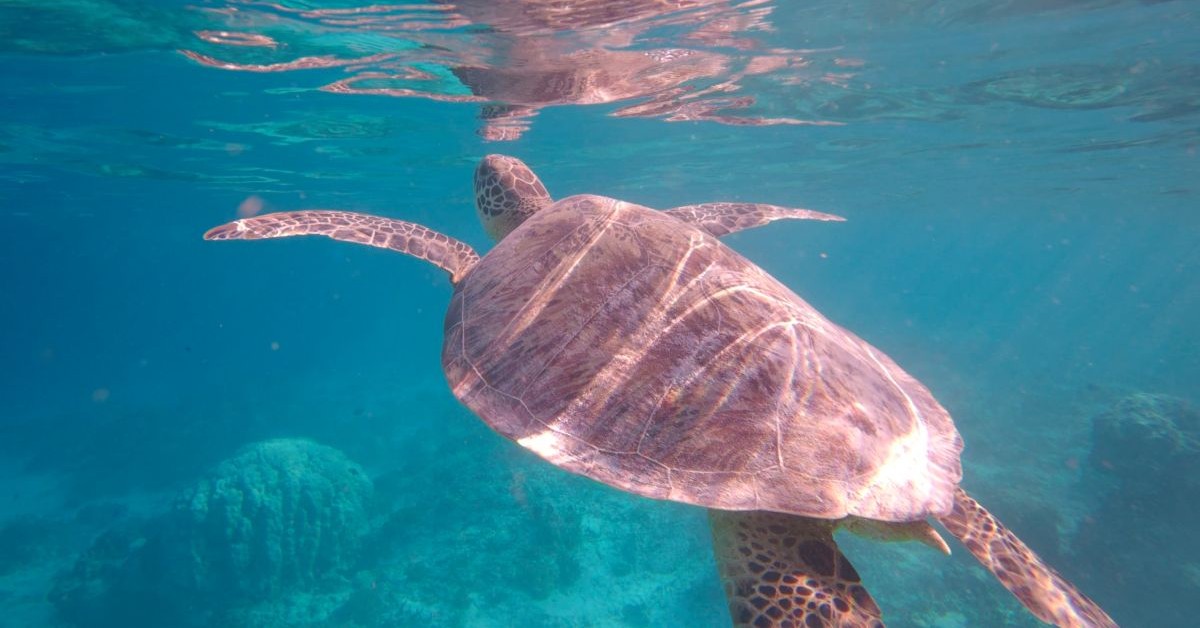
I’ve never been much of an ocean girl. I don’t consider myself a strong swimmer, so anything involving ocean depths, big waves, and strong currents has never been my idea of fun. So while traveling through Indonesia, you can imagine my delight when I found out that there are places in this world where you can snorkel in shallow, crystal-clear water, close to the shore, and still see vibrant, colorful fish. It opened up a whole new world to me. And sparked tons of new questions about our relationship with animals.
Our Insincere Fascination with Marine Life
Discovering a Hidden World
Indonesia is made up of over 17,000 islands. So it’s pretty safe to say that any trip here will involve one thing: water. I’ve never been a keen swimmer, but I also knew I wasn’t going to just lie on the beach all day. I wanted to try new things, to push myself out of my comfort zone. A small part of me even fantasized about becoming a surfer girl. (Spoiler alert: I didn’t.) And as of writing this, I still prefer to keep my head above water rather than under it. I haven’t signed up for a diving course yet, despite half my friends swearing it’s the best experience in the world. But I did discover something perfect for people like me: snorkeling.
Snorkeling allows you to stay on the surface of the water and observe everything happening below, without diving deep. And what’s even better? In some places you don’t even need to take a boat trip or swim out far, but you can simply wade in and close to shore.
Meeting Marine Life

So my first real snorkeling experiences were in Bali and Gili Meno. Both locations offer calm, crystal-clear water. And as soon as you put your head below the surface, you are surrounded by colorful fish. “It’s like swimming through an aquarium”, I joked, euphoric from this new experience. But unlike an aquarium, this was their home – and we humans were more like visitors (intruders?), tumbling uninvited through their living room.
And what a colorful, beautiful living room it was! Through snorkeling, a whole universe opened up to me, a world I’d never seen before. A world full of creatures I hadn’t met. I was fascinated – by their beauty, their diversity, and above all by their personality and behavior. I haven’t done enough snorkeling to call myself a fish expert, so I won’t attempt to name the species I saw. But I noticed some of them were curious, swimming so close to me that it felt like I could reach out and touch them. Some swam in pairs, others in big groups. Others were showing behaviors I could only describe as “play”. What became clear very quickly: this was a whole world on its own, with its own structure, hierarchy, intelligence. The animals I saw lived in communities, had relationships, engaged with each other and lived their own precious and unique lives that are just as meaningful to them as ours are to us.
When I finished my first snorkeling experience, I was enchanted and deeply moved. And at the same time, profoundly sad.
The Fish Paradox
I know I’m far from the first person on earth to discover the wonders of our underwater world. As mentioned, I have many friends rave about how much they love diving. Snorkeling and diving businesses are everywhere, people plan their holidays around these activities. They describe it as surreal, otherworldly, peaceful, sometimes even meditative. They talk about the species they saw, with a twinkle in their eyes. And then, they sit down at the restaurant and order fish.
We have a curious relationship with fish. While hunting is widely considered “cruel” by many, even among meat eaters, it’s perfectly okay to teach your child how to fish. People go fishing “as a hobby” and describe it as peaceful. And it’s not uncommon to dine at a restaurant where you can select a living fish in an aquarium to have it dead on your plate 30 minutes later. And with the label “pescetarian”, there’s even a whole category for people who avoid meat, often for ethical reasons, yet still eat fish.
Cognitive Dissonance and Fish
Social psychologist Melanie Joy explains cognitive dissonance as the discomfort we feel when our actions clash with our values – like loving animals but eating them. To ease this conflict, we justify our irrational behavior (“some animals are food”, “I need protein”) or distance ourselves from the reality – by hiding slaughterhouses or avoiding the link between animals and meat.

With fish, this hiding doesn’t even seem necessary. Why is that?
- Fish live in a world so distant from ours. They’re silent and seem expressionless. We don’t attribute to them the rich emotional lives we might recognize in dogs or even pigs. When fish suffer, they do so in silence.
- Their world is separate from ours, below the surface. We don’t see them live their lives, so it’s easy to dissociate from their experiences.
- We tend to see fish not as individuals, but as part of a faceless mass. From the outside, they all look the same. We catch them by “tons”, not by numbers. The individuality of a fish is completely erased in our food systems.
- We rarely speak about fish the way we do other animals. We say “catch” instead of “kill,” “harvest” instead of “slaughter.” We measure their lives in tons rather than individuals. This kind of language keeps emotional distance and helps maintain the illusion that fish are commodities, not sentient beings.
However, our image of fish is far from the truth.
The Truth about Fish
1. Fish are intelligent and capable of complex learning
Fish can solve problems, use tools and even learn by observation. For instance, archerfish can learn to aim at prey by watching others do it – a skill previously thought to require higher cognition (Schuster et al., Nature, 2006). Wrasse fish have been seen using rocks as anvils to crack open shells (Brown, Animal Cognition, 2012).
2. Fish have good memories and spatial awareness
Fish remember the location of food sources, social companions and can even navigate mazes. A study on cichlids showed they could remember social interactions and recognize previous winners and losers in fights, which is crucial for avoiding future conflict (Bshary & Grutter, Nature, 2002).
3. Fish have individual personalities
Research has shown that fish display consistent personality traits, such as boldness or shyness, across time and contexts (Wilson et al., Animal Behaviour, 1994). These personality differences influence how fish explore, take risks and interact with others – just like in mammals.
4. Fish feel pain and can suffer
Fish have nociceptors (sensory receptors that detect painful stimuli) and show clear pain responses. In a landmark study, trout injected with acetic acid rocked back and forth, rubbed their lips on the tank and lost appetite, which are all signs of distress. When given morphine, these behaviors stopped (Sneddon et al., Applied Animal Behaviour Science, 2003).
5. Fish experience fear and stress
Fish produce cortisol – the same stress hormone as humans – when exposed to threatening or painful situations. They also learn to avoid areas associated with past harm, showing both memory and emotional learning (Davis, Animal Welfare, 2004).
6. Fish have the neural capacity for consciousness
While fish brains differ anatomically from mammalian brains, they contain analogous structures that process pain, learning and emotion. The Cambridge Declaration on Consciousness (2012), signed by leading neuroscientists, explicitly recognized that fish are capable of conscious experience.
How Fishing Harms Fish – and Our Oceans
Fishing doesn’t just impact fish populations, but causes widespread suffering and damages entire ocean ecosystems. While fish often go unnoticed in conversations about animal welfare, the reality of industrial fishing paints a different picture.
1. Fish Suffer During Capture
Fish endure extreme physical and psychological stress when caught. Those caught in nets are often crushed, suffer barotrauma (organ damage from pressure changes), or suffocate slowly once removed from the water. Longline-caught fish may be hooked for hours or even days before dying. Unlike mammals, fish don’t scream, which has contributed to the myth that they don’t suffer. But studies show otherwise. Research from the University of Liverpool found that fish exhibit behavioral and physiological responses to pain, including rubbing injured areas and avoiding painful stimuli (Sneddon et al., 2003). Fish have pain receptors, and their brains respond to injury in ways similar to mammals (Braithwaite & Boulcott, 2007). Yet despite this, fish remain almost completely unprotected by animal welfare laws in most countries.
2. Bycatch Kills Millions of Non-Target Animals

Fishing gear doesn’t just catch the fish it’s meant to. It also unintentionally captures sea turtles, dolphins, whales, sharks and seabirds – collectively known as bycatch. Most of these animals are discarded dead or dying.The Food and Agriculture Organization (FAO) estimates that bycatch accounts for over 38 million metric tons of marine life every year (FAO, 2022).
This is one of the leading causes of death for endangered species like sea turtles and small whales.
3. Overfishing Depletes Fish Populations
According to the FAO, over one-third of global fish stocks are now fished beyond sustainable limits (FAO, 2022). Some species, like the Atlantic cod, have seen their populations collapse entirely due to decades of overexploitation.
4. Marine Habitats Are Destroyed
Destructive fishing methods like bottom trawling drag heavy nets across the seafloor, tearing up coral reefs, sponge beds, and other habitats that took centuries to form. These ecosystems are critical breeding grounds and shelters for countless species. According to the Deep Sea Conservation Coalition, bottom trawling has impacted an estimated 4 million square miles of seafloor globally. Once damaged, these areas may never fully recover, leading to long-term biodiversity loss.
5. “Ghost Gear” Kills Long After It’s Lost
Lost or abandoned fishing gear (often called ghost gear) continues to trap and kill marine animals for years. These nets and lines drift through the oceans, entangling whales, seals, turtles, and fish who die slowly from injuries or starvation. A report by Greenpeace and others found that ghost gear makes up to 46% of the Great Pacific Garbage Patch (Lebreton et al., 2018).
6. Ocean Food Webs Are Disrupted
When too many large fish are removed, such as sharks, tuna, or groupers, the balance of the entire food web can collapse. This can lead to cascading effects, such as coral reef degradation. This weakening of ecosystems also reduces their ability to adapt to climate change, making the ocean more vulnerable overall.
7. Fish and Human Health
Last but not least, we don’t only harm fish and the environment, but also ourselves. Many people eat fish for health reasons, especially for omega-3 fatty acids. But concerns are growing over mercury, PCBs (polychlorinated biphenyls) and microplastics found in seafood. Farmed fish are almost always exposed to antibiotics, overcrowding and parasites. Plant-based sources like flaxseed, chia, and algae oil can provide safer, sustainable omega-3s.
What You Can Do: Helping Fish and Our Oceans
1. Choose plant-based alternatives
Eliminating fish from your diet is one of the most powerful things you can do to help marine life. There are so many delicious plant-based seafood alternatives available now, from vegan “tuna” to fishless filets and seaweed-based snacks. If you’re wondering how to combine a vegan lifestyle and travel, you can find more about it here.
2. Get educated on Fish
Maybe it’s easy for you to stay away from meat, but not eating fish feels much harder? You’re not alone. As mentioned earlier, we often struggle to relate to fish, because they live in a world so different from ours, and we rarely get to observe their lives up close. That’s exactly why learning more about them is such a powerful step.
The more we learn about fish, the harder it becomes to see them as “just food.” Start by getting informed, for example through watching documentaries such as:
- Seaspiracy: A deep dive into the global fishing industry, its environmental impact, and ethical concerns.
- My Octopus Teacher: While not about fish specifically, this beautiful film shows the emotional depth and intelligence of octopus.
- Blue Planet (BBC): Stunning visuals and storytelling that bring the underwater world to life and highlight its fragility.
- Mission Blue: Follows marine biologist Sylvia Earle’s journey to protect our oceans.
3. Avoid Plastic & Support Clean Oceans
Much of the ocean’s plastic pollution comes from the fishing industry, but household waste plays a role too. Say no to single-use plastics, participate in beach clean-ups and support organizations working to protect marine life.
Final Thoughts
The next time you’re near the ocean, or even looking into an aquarium, take a moment to really look: not at “fish,” but at individuals, each navigating a rich, hidden world. Isn’t it amazing that we share this planet with such diverse and remarkable creatures?

Further Reading
Blog Articles
- Why Vegan? The Reason We Travel the World Plant-Based
- Vegan Travel – Exploring the World Without Compromising Your Values
Useful Resources

About the Authors
Lynn & Daniel are the vegan couple behind VanderlustJourney, combining their passion for adventure and plant-based living. They share stories and visuals of natural places, hikes, vegan discoveries, and meaningful encounters from around the world – always striving to travel with kindness.
👉 Follow us on Instagram
✉️ Contact: vanderlustjourney@outlook.com
I’ve actually never tried snorkeling before, but this makes it sound like so much fun—especially the part about staying close to shore in clear, shallow water (that’s more my speed too 😅). I love how you tied it into our relationship with animals. Definitely bookmarking this one—it might just push me to try snorkeling one day! Also good information about fish. I learned a lot.
Interesting article. I hope it brings more attention to the health of our oceans and planet. You’re right that it’s often overlooked. People often talk about how factory farming effects the environment but they don’t really talk about the effects on our oceans.
This was a really insightful and illuminating post. It has been a few years since I last ate fish. I appreciate you sharing.
This was such an inspiring post! We really should be taking better care of our planet!
That’s an insightful article about fishes! Also, some of the dangerous fishing methods is the use of explosives to fish (e.g. dynamite fishing).
Ghost gear and fishing nets make me so mad! It’s one thing to fish, it’s another to litter and harm the animals you aren’t targeting.
What a thoughtful and beautifully written post! I loved how you used snorkeling as a lens to explore our complicated relationship with fish—both admiration and consumption. It really made me pause and reflect on how easily we disconnect from the living creatures we find so fascinating. Thank you for sharing such a personal yet thought-provoking perspective.