
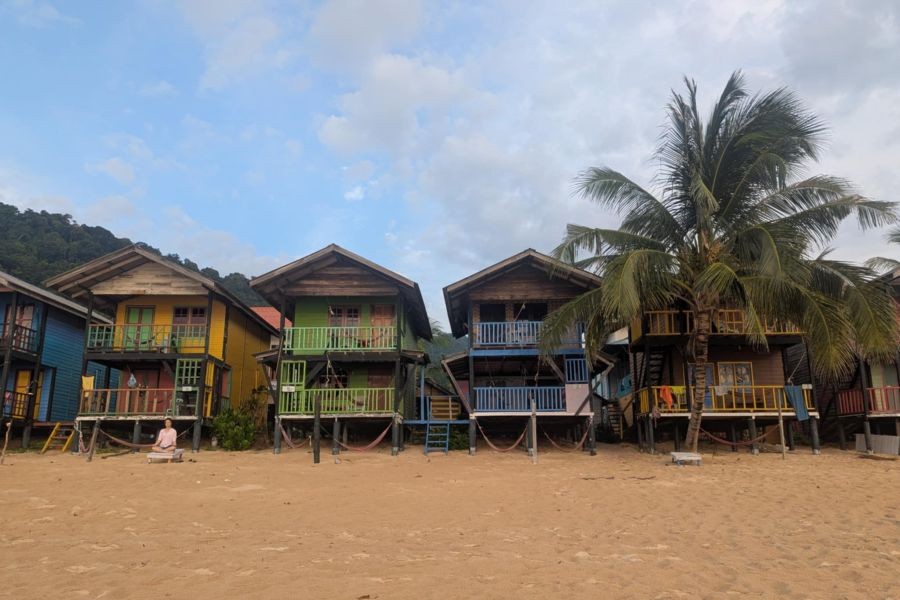
Are you dreaming of a true island escape? A place where you can step out of your hut in the morning to swim, snorkel, or dive, then spend the afternoon strolling along quiet beaches or swinging in a hammock, feeling like you’ve got the world to yourself? Then Tioman Island might be just what you’re looking for.
Tucked just off the east coast of mainland Malaysia, Tioman remains relatively under the radar. In this post, we’ll share everything you need to know to plan your visit: from how to get there, where to stay and what to do, to how to survive as a vegan.
Welcome to Tioman Island
Picture warm, crystal-clear waters, long golden beaches and dense green jungles. That’s Tioman Island in Malaysia.

When we first came across this island, we couldn’t believe it wasn’t better known. With its untouched nature, simple accommodations and laid-back vibe, Tioman felt like a real-life tropical dream. It didn’t take long to decide that it would be our next destination!
About Tioman Island
Quick Facts about Tioman Island
- Location: Off the southeast coast of Peninsular Malaysia
- Size: About 39 km long, 12 km wide
- Population: ~3,000 people, living in small fishing villages
- Religion: Mostly Muslim → modest dress is appreciated outside the beach
- Language: Malay, but English is widely understood in tourist areas
- Currency: Malaysian Ringgit (MYR)
- ATMs: None on the island → bring enough cash from the mainland
- Transport: No roads across the island → ferries, water taxis, or 4x4s only
- Power & Wi-Fi: Patchy in some villages, don’t expect fast internet everywhere
- Marine Park Fee: ~30 MYR per person, payable before boarding the ferry
Size & Geography
Tioman Island lies in the South China Sea, about 32 km off the east coast of Peninsular Malaysia (in Pahang state, but often accessed via Johor). It is approximately 20 km long and 12 km wide. The island is mostly mountainous and covered in dense rainforest, with some flat coastal areas where villages are located. Most accommodations are located on the west and east coasts, while the central part of the island is largely untouched and only accessible by foot or 4×4.
Population
Tioman has around 3,000 residents, mostly ethnic Malays. The population is spread across several small villages including Tekek (main village, ferry port, airport) Juara (east coast surf beach), ABC (Air Batang) (laid-back backpacker vibe) and Salang (diving hotspot).
Currency
The local currency in Malaysia is the Malaysian Ringgit (MYR).
At the time of writing:
1 EUR ≈ 5.00 MYR
1 USD ≈ 4.70 MYR
Cash is essential on Tioman Island, especially in smaller shops, local restaurants and for smaller accommodation. While a few guesthouses or dive centers may accept cards, don’t rely on it — and there are no ATMs on the island, so be sure to withdraw enough cash in Mersing or Tanjung Gemok before boarding the ferry.
Religion
Malaysia is a Muslim-majority country, and Tioman Island is no exception. Most of the local population are Malay Muslims, and you’ll hear the call to prayer from village mosques. That said, Tioman is very laid-back and welcoming to travelers of all backgrounds. Just be respectful of local customs, especially when walking through villages. Alcohol is available in some places, but not everywhere
Visa
Malaysia has a generous visa policy for many nationalities.
- Most EU, UK, US, and Australian passport holders can enter visa-free for up to 90 days
- No online application is needed for short stays
- Your passport must be valid for at least 6 months
You may be asked for proof of onward travel, though it’s rarely enforced for land or ferry entries.
Transport
Getting around Tioman Island depends on which part you’re staying in:
- West coast villages (like Tekek, ABC, and Salang) are connected by walking paths, roads or short boat rides.
- To reach the east coast (Juara Beach), you’ll need a 4×4 transfer over the island’s central hill – a steep but scenic jungle road.

There’s no public transport or ride-hailing apps like Grab on the island. Local water taxis can take you between villages, and prices vary depending on distance and negotiation.
SIM Cards & eSIMs
Staying connected on Tioman can be a bit spotty but manageable.
- Local SIM card: Cheap and widely available in mainland Malaysia, for example airports, shops and convenience stores.
- eSIM: More expensive, but you can keep your SIM card from home. We personally used Saily during our stay in Malaysia.
Wi-Fi is available in some accommodations and restaurants, but speeds can be limited.
Drinking Water
Tap water on Tioman Island is not safe to drink. Always stick to bottled or filtered water. To reduce plastic waste, bring a reusable water bottle. Many guesthouses offer free or low-cost refills from large water containers.
Best Time To Visit
Tioman has a tropical climate with warm temperatures year-round, but seasons make a huge difference for travel. The weather in Tioman Island usually looks like this:
- Dry season (March – October): This is the best time to visit, with calmer seas, plenty of sunshine and perfect diving visibility. Most accommodations and restaurants are open, ferries run regularly and you can count on clear days for snorkeling, hiking and exploring.
- Monsoon season (November – February): Heavy rains and rough seas mean ferries can be canceled, many guesthouses close, and tourism slows down to a trickle. It’s still possible to come, but be prepared for limited options. For surfers however, this season can be interesting, because the monsoon brings big swells to the east coast (especially Juara Beach).
Tioman vs. Perhentian vs. Redang
Lots of people wonder which Malaysian island to choose, so here’s a quick comparison to help you decide:
- Tioman: Wild and less touristy, with dense jungle and good diving/snorkeling. Perfect for eco-travelers and those seeking a mix of adventure and relaxation.
- Perhentian Islands: Budget-friendly and backpacker-oriented, lively vibe, lots of snorkeling and party spots. Easier to access for shorter trips.
- Redang: Known for luxury resorts and crystal-clear water. More expensive, less backpacker-oriented, great for honeymooners or those looking for comfort.
In short: Tioman = adventure & jungle, Perhentian = budget & fun, Redang = luxury & comfort.
Staying in Tioman
How to Get to Tioman Island
There are no flights to Tioman Island. The easiest way to reach Tioman is via Mersing, a coastal town in Johor. Mersing is well-connected by bus from various cities across Malaysia. There is even a bus from Singapore to Tioman Island (via Mersing). From Mersing, are two main ferry operators running from mainland Malaysia to Tioman Island: Bluewater Ferry and Cataferry. We chose Bluewater Ferry simply because their departure time fit our schedule best. We bought the tickets online, but you still have to get your boarding pass at the Mersing Harbour Center (opposite of the jetty) and pay a conversation fee. The Bluewater Ferry stops at several jetties on Tioman’s west coast (such as Tekek, ABC, …), but don’t worry, they’ll announce the names of the stops onboard. If you’re heading to Juara Beach or other east coast spots, you’ll need a 4×4 transfer across the island once you arrive. These can usually be arranged through your accommodation in advance or directly at the jetty. It’s not a cheap ride (we paid 35 MYR/person), but so beautiful and fun, because you can sit in the open back of the pickup truck and get panoramic jungle views all the way.
Suggested Stay & Itinerary
How long should you stay on Tioman? We recommend at least 3-4 nights to really enjoy both the west and east coasts. Here’s what we did (more details below):
- Day 1: Arrival in Tekek, 4×4 transfer to Juara, settle in, swim, beach walk.
- Day 2: Jungle hike to a waterfall, swim + relax, visit Juara Turtle Project
- Day 3: 4×4 transfer back to Tekek, settle in, swim + snorkel
- Day 4: Relax on beach, snorkel, rent a bike

Budget & Costs
Tioman is generally affordable, but being an island, some things cost a little more than on the mainland.
- Ferry tickets: Around 35-50 MYR one-way, depending on the operator. You’ll also need to pay a Marine Park conservation fee (about 30 MYR).
- Accommodation: Budget chalets start around 60-90 MYR per night, while mid-range guesthouses are 120-200 MYR. More comfortable beach resorts can go up to 300-500 MYR+.
- Food: Local dishes at small cafés or hawker stalls cost 8-15 MYR, while more touristy cafés or Western-style meals are 20-35 MYR.
- Activities:
- Snorkeling boat trip: 80-120 MYR per person.
- Fun dives: around 120-150 MYR per dive.
- PADI Open Water Course: approx. 1,000-1,200 MYR.
- 4×4 transfer to Juara: around 35 MYR per person (one way).
For backpackers, 100-150 MYR/day is doable. For a more comfortable stay with diving or nicer accommodation, budget around 200-300 MYR/day.
What to Do in Tioman Island
Whether you’re looking for adventure or relaxation, Tioman offers something for everyone:
West Coast
The west coast of Tioman is where the ferries arrive, making it the most accessible part of the island. Even though infrastructure is a bit more developed here, you won’t find any big resorts or fancy hotels. The vibe remains laid-back and peaceful. We stayed in Tekek, the island’s main village. It offers a handful of guesthouses, small restaurants and even a couple of duty-free shops. However, despite being the island’s “hub,” it still feels super calm and uncrowded. The main activities on the west coast revolve around the water: snorkeling right off the beach, scuba diving at nearby reefs, stand-up paddleboarding, or simply floating in the warm, clear sea. Many accommodations are directly at the beach or just some minutes’ walk away, making it easy to spend your days swimming, relaxing and watching the sun set into the sea.

- Snorkeling: Snorkeling is possible right off the beach in places such as Tekek South Bay, ABC or Salang. You can also take a boat to snorkel around Renggis Island just off the coast of Tekek.
- Diving: Tioman is a popular diving destination with crystal-clear waters, vibrant coral reefs and a variety of marine life, including reef sharks, turtles, barracudas and nudibranchs. There are many dive centers scattered across the island, especially in Tekek, ABC, and Salang. Most offer fun dives, PADI Open Water courses and advanced certifications. Some of the best dive sites include Renggis Island, Tiger Reef, Soyak Island and Chebeh & Labas.
- Renting a bicycle: If you have enough of beach activities, this can be a fun thing to do! From Tekek, a paved road runs parallel to the coast and leads all the way up to ABC (Air Batang) village.
East Coast
In contrast, the east coast of Tioman, especially around Juara Beach, offers a wilder, more untouched atmosphere. The beaches are longer and quieter, with fewer tourists and accommodations are often basic. The main activities still happen at the beach and you can swim, snorkel or surf depending on the season. To reach the east side of the island, you’ll have to take a fun 4×4 ride over a jungle road.

On Juara Beach, you’ll also find a turtle sanctuary. We’ve grown a bit suspicious of that term, as we’ve seen many so-called “sanctuaries” in Southeast Asia that don’t live up to it (think baby turtles in sad, small basins, tourists taking pictures with them for a fee, …) and provide very little actual conservation work. But Juara Turtle Project is different! They run a turtle hatchery (with no live turtles on display) right on the beach, provide education about turtle nesting and ecosystems and even offer live-in volunteer programs that participants seem to love. If you’re on Juara Beach, definitely stop by, get informed and leave a donation 🙂
Interior of Tioman
When researching things to do on Tioman Island, most suggestions revolve around coastal activities, like snorkeling, diving, and relaxing on the beach. But for us, the inner island was even more fascinating. Tioman’s interior is covered in dense, untouched rainforest that not a lot of tourists seem to explore. That said, many accommodations offer guided jungle tours, for example to discover waterfalls, or (depending on the season) to see the Rafflesia, the largest flower in the world!
We personally embarked on a self-guided hike from Juara to Ali’s Waterfall. The trail follows the same main road used by the 4×4 vehicles that bring visitors into Juara. It steadily climbs uphill and, while not technical, it can be steep and tiring in the tropical heat. Depending on your pace, expect the walk to take between 45 minutes and 1 hour 15 minutes. Keep an eye out for a very old wooden sign on the left side of the road marking the entrance to the waterfall trail. It’s easy to miss (seriously, it’s really old :P), so we recommend checking the exact location before heading out. Once you step off the road, it’s just a few minutes through the jungle to reach the waterfall. The pool at the base is the perfect place for a refreshing, well-earned swim. We were honestly surprised by how crowded it got later in the day, so if you’re hoping to have this magical spot to yourself, we definitely recommend going early in the morning.

Where to Stay in Tioman Island
The first decision when choosing your accommodation: east or west? As already mentioned, the west side is more accessible and developed, while the east side is wilder and more secluded.We decided to experience both: 2 nights on the east, 2 nights on the west. Here are our stays:
- Beach Shack Chalet (Juara, east side): A simple accommodation directly at Juara beach. The room is clean and functional, equipped with a fan, private bathroom and a balcony where you can relax in a hammock. It can get a bit warm at night without air conditioning, but the location and falling asleep to the sound of the waves make up for it. Breakfast is included, with some vegan options such as pancakes, toast with peanut butter, oatmeal (specify no honey) and roti. If you value nature and simplicity and can do a few days without tooo much comfort, this place is for you!

- Cheers Garden Chalet (Tekek, west side): This guesthouse offers a variety of rooms in all sizes, from basic budget options with shared bathrooms to more comfortable ones with private bathrooms, some with fans and others with air conditioning. The place is well-maintained, run by friendly, smiling staff and located just a few minutes’ walk to the beach.
Other than that, we’ve also seen great reviews for Ella’s Place (Teluk Selang, west side) and ABC Chalet Tioman (ABC Beach, west side). If you’re looking for something a bit more upscale, maybe Tioman Dive Resort (ABC Beach, west side) or Melina Beach Resort (Kampung Genting, west side) is the right choice for you.
Vegan Food on Tioman Island
Is Tioman Vegan-Friendly?
Let’s be honest right from the start: vegan food is not the reason to visit Tioman Island :P. We had a bit of a hard time finding satisfying vegan options, and there are a few good reasons why:
- Imported ingredients: Tioman is an island, so many food items need to be shipped from the mainland. While in mainland Malaysia (or Indonesia, where we’d just been before) it’s usually easy to swap meat with tofu or tempeh, these options were often missing here. In fact, we didn’t see tempeh at all during our stay, and tofu only showed up occasionally on menus.
- Ingredients out of stock: Even when tofu was technically on the menu, it wasn’t always available. One café advertised a baguette with hummus and veggies, but they were out of bread the day we visited.
- Traditional cuisine: Malaysian cuisine leans heavily on meat and fish, and this is even more noticeable on an island where seafood is everywhere. We saw a lot more chicken and fish dishes than on our travel through Indonesia for example.
- Limited restaurant options: Tourism isn’t as developed yet and Tioman has a rather small number of eateries, especially outside of the main villages.
- Self-catering: There are no large supermarkets, so you’ll find mostly basics in local mini-markets. Tofu wasn’t available, but we found plant-based milk, vegan instant noodles (always check ingredients!) and some cookie snacks (Oreos are saving the day 😀 ).

Vegan Options on Tioman Island
However, this shouldn’t keep you from discovering an awesome island paradise! Our motto is that it’s always possible to find something to eat, and this is true for Tioman Island too. Here are some of the dishes we ate during our stay:
- Roti Canai with Dhal: Flatbread served with lentil curry. Ask for no ghee or butter. Some places also offer roti with sugar, banana or peanut butter.
- Nasi Goreng / Mee Goreng: Fried rice or noodles, be sure to specify that you want only vegetables and no egg.
- Vegetable Curry with Rice
- Peanut Butter Toast / Jam Toast / Banana Toast: simple, but satisfying when hungry 😉 Often found in beach cafés or guesthouse restaurants.
- Fried Bananas: Often vegan, but better to ask if eggs or dairy are added to the batter for banana fritters.
Vegan Restaurants on Tioman Island
Even if we sounded super dramatic earlier, we did manage to find vegan options in restaurants! Below are the places we tried, along with a few that were either closed or missing ingredients during our visit. Hopefully, you’ll have better luck!
- Tioman Cabana Beach Bistro (Tekek): A relaxing beachside spot with lovely views, serving a vegan burger (listed as vegetarian burger on the menu). The location is right on the beach, and offers a nice, cosy vibe.

- Trumbu Café (Tekek): The only place that actually did have the tofu items it listed on the menu 😀 The location is just a few meters away from Tioman Cabana Beach Bistro, with equally amazing views. They serve a tofu wrap and a tofu sandwich. Open for lunch until 5pm.
- Wak’s Café (Tekek): Hawker stall serving Malaysian food with vegan options (roti, fried rice, fried noodles, veggies). Unfortunately, they were closed during our stay and there don’t seem to be exact opening times, but maybe you can get lucky 😉
- Driftwood Restaurant (Juara): Restaurant right next to our accommodation in Juara, serving rice and noodles with vegetables and with different sauces, such as coconut or teriyaki. They also have a tofu burger on the menu, but tofu wasn’t available on the days we were there. For breakfast, they offer (vegan) banana pancakes, roti, toast and oatmeal.

- Pantai Café (Juara): Café serving baguettes, one with hummus and vegetables. On the day we visited, they didn’t have baguettes, but according to the reviews, the place is worth a visit.
- Amdan Beach Café (Juara): Restaurant run by a lovely elderly couple, serving a vegan vegetable curry.
Responsible Travel Tips on Tioman
Wildife & Nature on Tioman
One of the things we loved about Tioman is how alive the island feels. Here are some of the furry and scaly friends you can encounter:
- Underwater: Turtles, reef sharks, barracudas, rays, colorful fish, corals.
- On land: Keep an eye out for monitor lizards, macaques (don’t feed them!), flying foxes at dusk and hornbills in the jungle canopy.
- Special plants: Depending on the season, you may spot the Rafflesia, the world’s largest flower, which blooms deep in the jungle. To find it, a guide is recommended. Normally, your accommodation should be able to arrange a tour for you.
Protecting Nature on Tioman
Traveling consciously on Tioman isn’t always straightforward, but with a bit of preparation it’s definitely possible. You won’t find as many vegan-friendly cafés as in Penang or Kuala Lumpur, but finding basic, decent vegan options is possible.
- Snorkeling & Diving: Coral reefs around Tioman are stunning, but also fragile. Always use reef-safe sunscreen, never stand on coral and don’t touch fish or turtles. Some tours may encourage feeding wildlife – skip those, as they disrupt natural behaviors.
- Monkey Encounters: You’ll likely spot long-tailed macaques around guesthouses and jungle trails. They can look cute, but feeding them makes them dependent on tourists and sometimes aggressive. Best is to admire from a distance and keep snacks out of sight.
- Plastic Waste: Like on many Southeast Asian islands, plastic is a serious issue here. We always carry a reusable bag (or reuse old ones) when shopping, and say no to plastic bags and straws. A refillable water bottle is a lifesaver – many guesthouses have filtered water stations where you can top up for free instead of buying bottles.
- Eco-Projects: If you want to give something back, stop by the Juara Turtle Project. It’s a small conservation center where volunteers work to protect turtle nesting beaches, and visitors are welcome to come by and learn more.

FAQ: Tioman Island Travel Guide
Is Tioman worth visiting?
Yes! Tioman is less touristy than islands like Perhentian or Redang, with dense jungle, authentic villages, and amazing diving. It’s perfect if you want a mix of adventure and relaxation in a more natural setting.
When is the best time to visit Tioman?
The best season is March to October, when the seas are calm and ferries run regularly. From November to February (monsoon season), heavy rains and rough seas limit transport and many guesthouses close.
Are there ATMs on Tioman?
No, there are no ATMs on Tioman Island. You’ll need to bring enough cash from the mainland. Some resorts accept cards, but smaller guesthouses and local restaurants usually don’t.
Is Tioman good for vegan travelers?
Vegan options are limited, but it’s manageable with some preparation. Most guesthouses will adapt meals if you ask, and you can bring snacks from the mainland (like nuts, fruit, soy milk, or instant noodles). For more tips, check out our Eco & Vegan Responsible Travel section.
What is Tioman known for?
Tioman is famous for its marine life, jungle-covered mountains, and laid-back fishing villages. Snorkeling, scuba diving, and hiking are the top activities here, along with simply enjoying its quiet beaches.
Tioman vs. Perhentian vs. Redang: Which should I choose?
It depends on your travel style: Tioman is wilder and more adventurous, with jungle hikes and excellent diving. Perhentian is budget-friendly, social, and popular with backpackers. Redang offers clear water, luxury resorts, and a quieter atmosphere.
Further Reading
Blog Articles
Useful Resources

About the Authors
Lynn & Daniel are the vegan couple behind VanderlustJourney, combining their passion for adventure and plant-based living. They share stories and visuals of natural places, hikes, vegan discoveries, and meaningful encounters from around the world – always striving to travel with kindness.
Tioman island sounds quite interesting. I like the idea of participating at the turtle sanctuary (something I did for years when I was in Florida). You mention a shortage of some foods. Did they usually have a good variety of vegetables available though?
Ohh, that’s so cool that you did that in Florida! Yes, veggies were mostly fine. Restaurants mostly advertised meat (mostly chicken) and fish dishes, but of course it was always possible to just ask for rice and veggies:)
I’ve visited Tioman once — it’s actually quite popular among local and Singaporean tourists. But I only stayed in Kampung Salang. Now I’m planning to visit again to try the via ferrata on Mount Mukut. Thanks for this guide. It gives me an idea of what else I can do there 😊
That’s true that it’s well known among locals and a popular weekend trip for some of them 🙂 Climbing Mount Mukut sounds so exciting, although we love hiking in the mountains, we didn’t even consider this haha. Good luck with that!