
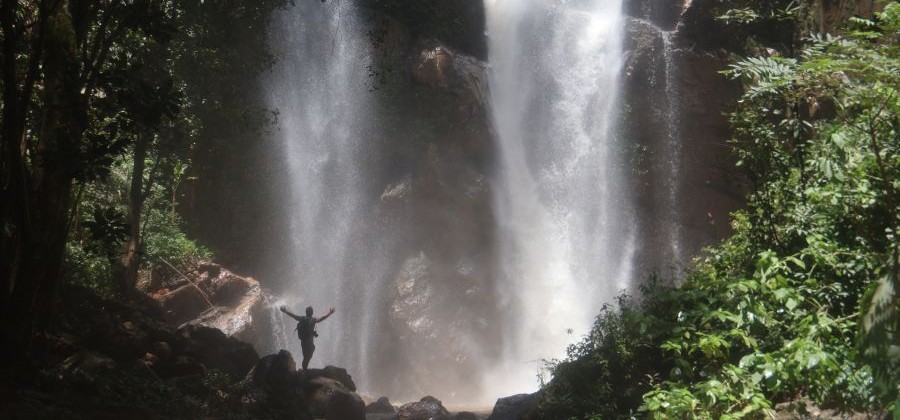
When people think of Thailand, they often picture palm trees, beaches, and maybe the bustling streets of Bangkok. But for those seeking mountains, charming villages, and mindful travel experiences, Thailand’s North is a hidden treasure. This mostly mountainous region is filled with winding roads, historic temples and statues, and breathtaking viewpoints. To explore it fully, we embarked on a multi-day road trip along the famous Mae Hong Son Loop. In this article, we’ll share the route, the best villages to stay in, must-see sights, and, of course, the top spots for vegan food.
Introduction to the Mae Hong Son Loop
- Our Route: Chiang Mai → Pai → Ban Rak Thai → Khun Yuam → Mae Sariang → (Doi Inthanon National Park) → Chiang Mai
- Best time to travel: Dry / cool season (roughly November–May; coolest November–February)
- Best for: mountain roads, scenic villages, tea plantations, viewpoints, hot springs, local culture
- Highlights: Pai Canyon, Ban Rak Thai tea village, Ban Khun Yuam (WWII history & rural life), Doi Inthanon National Park, countless viewpoints
- Getting there: Usually done by motorbike or car. Roads are very winding with hundreds of curves – drive carefully!
- Practical tips: Allow at least 3–5 days, book accommodation in advance in Ban Rak Thai during high season, carry cash for small villages
For practical vegan tips about Thailand as a whole, check our Vegan in Thailand travel guide.
The Mae Hong Son Loop is one of Thailand’s most famous road trips, winding through the mountains of the country’s far north. Starting and ending in Chiang Mai, the full loop stretches around 600 kilometers and takes travelers past green forests, stunning viewpoints, hot springs, waterfalls and small villages. Along the way, you’ll pass through charming towns like Pai and Mae Sariang, discover picturesque villages such as Ban Rak Thai near the Myanmar border, and get a taste of northern Thailand’s diverse culture and landscapes. With its endless curves and countless opportunities to stop and explore, the Mae Hong Son Loop is the perfect adventure for anyone looking to combine nature, culture, and the freedom of the open road.
This post contains affiliate links. If you make a purchase or booking through these links, we earn a small commission at no extra cost to you. This supports our work and allows us to keep offering free content here on the blog.
Mae Hong Son Loop Map
How many Days for the Mae Hong Son Loop?
Here’s our Mae Hong Son itinerary. You can easily adjust it to your own pace, for example by spending more time at the stops that interest you most or slightly change the route, for example by skipping Ban Rak Thai, which is a little out of the way.
| Day | Route | Distance (approx.) | Driving Time (approx.) |
|---|---|---|---|
| Day 1 | Chiang Mai → Pai | 130 km | 3–4 hours |
| Day 2 | Pai → Ban Rak Thai (via Mae Hong Son) | 120 km | 3–4 hours |
| Day 3 | Ban Rak Thai → Ban Khun Yuam | 100 km | 2–3 hours |
| Day 4 | Ban Khun Yuam → Mae Sariang | 120 km | 3–4 hours |
| Day 5 | Mae Sariang → Doi Inthanon → Chiang Mai | 200 km | 5–6 hours |
| Total | ~670 km | ~16–21 hours total driving | |
Vegan Food on the Mae Hong Son Loop: What to Expect
Thailand is generally a very vegan-friendly country, but – as with most large countries – your experience can vary depending on where you are. In cities such as Chiang Mai and Pai, being vegan is a super easy experience: you’ll find countless options listed on HappyCow or Google Maps, making it easy to plan your meals. In smaller towns or more remote stops along the way, however, things aren’t always as straightforward. Typing “vegan” into Google Maps often doesn’t bring up much: not because vegan food isn’t available, but simply because these villages are less touristic and their restaurants haven’t been listed online. And most of the time, you won’t find the word “vegan” on any menu, but don’t worry: Being vegan on the Mae Hong Son Loop is totally possible; it just sometimes takes a little more direct communication.
Here are some tips we’ve learned along the way:
- Start with HappyCow or Google Maps: Our first step when arriving somewhere new is always to check HappyCow or type “vegan” into Google Maps. If nothing comes up, no worries – it doesn’t mean vegan food doesn’t exist, it’s just not labeled as such on the menu. In reality, almost every small restaurant will have something vegan, even if it’s “only” rice and vegetables (though often you’ll get much more!). Another reason you won’t find results is that places simply haven’t been tagged or reviewed yet by other travelers. That’s why we’re big advocates of leaving reviews while traveling! By mentioning the word vegan in your review, you can really help future vegan travelers.
- Try local Thai places: Most small towns in northern Thailand have plenty of eateries, though menus are often written only in Thai. This makes it harder to check in advance what’s available. In practice, though, we found that most places can easily make vegan dishes, even if they don’t advertise them. While restaurants often highlight their meat dishes, a polite request usually gets you a plant-based version – often with fresh vegetables and usually also tofu.
- Learn a little Thai (or use a translation app): In smaller villages along the Mae Hong Son Loop, English is spoken much less than in bigger tourist hubs in Thailand, but a bit op preparation helps you being able to explain your needs. Don’t rely on the word “vegan,” as it’s not always understood. Instead, ask specifically for dishes with “no meat, no fish, no milk, no eggs”. Having this written down in Thai or using a translation app makes things much easier.
- Use the “Jay” symbol: The Jay sign is a bright yellow square with a red Chinese character. It signals “strict vegetarian” and is widely recognized in Thailand. It means no meat, fish, dairy, eggs, or honey, and it also excludes pungent vegetables like garlic and onions. When communication is difficult, showing or pointing out this symbol can help. Just keep in mind: because it excludes garlic and onions, some places may tell you that they don’t serve this food, even though vegan dishes are possible.

- What to watch out for: Some Thai dishes look vegan, but can sometimes contain hidden animal products, such as oyster sauce, fish sauce, or shrimp paste. Pad Thai, for example, often contains fish sauce and sometimes egg. Tom Yum Soup may include shrimp or fish sauce, while Som Tum (Papaya Salad) is commonly made with dried shrimp and fish sauce. To ensure a dish is vegan, it’s best to specifically request no fish or oyster sauce (mai sai nam pla, mai sai nam hoi). The good news is: The dishes are most often made from scratch, so the locations should be able to accommodate your special request.
Useful Thai sentences for vegans
| English | Thai (transliteration) |
|---|---|
| I am vegan | chan pen mang-sa-wi-rat baep wee-gen |
| I don’t eat meat, fish, eggs, milk, honey | chan mai than nuea, pla, khai, nom, rue nam-phueng |
| No meat / No fish / No eggs / No milk | mai sai nuea / mai sai pla / mai sai khai / mai sai nom |
| Please do not add fish sauce or oyster sauce | yà sai nám-pla lae sâwt hǒi naang-rom |
| No garlic and no onion (please) | mai sai gra-thiam lae hom yai |
| Is this vegan? | aa-hăan née pen aa-hăan mang-sa-wi-rat baep wee-gen mai? |
| Does this contain fish sauce / oyster sauce / eggs? | menu nee mee nám-pla / sâwt hǒi naang-rom / khai mai? |
| Can you cook this without fish sauce, eggs, or milk? | chûai tham doi mai sai nám-pla, khai, nom dai mai? |
| I would like Jay (strict vegetarian) food | khǒr aa-hăan jay |
| Do you have Jay food? | mee aa-hăan jay mai? |
| I’m allergic to seafood / eggs / milk | chan phâe aa-hăan ta-lay / phâe khai / phâe nom |
| Thank you | khòp-khun |
Tip: Add ครับ (khráp) if you’re male, or ค่ะ (khâ) / คะ (ká) if you’re female add the end of the sentence to make it more polite.
Translation Card
Feel free to capture this card any way you like: screenshot, print, or save for your future travels.

Driving on the Mae Hong Son Loop
The Mae Hong Son Loop is famous for its 1,864 curves and countless stunning viewpoints along the way. If you’re a motorbike rider, just reading that might make your heart beat faster! For us, we had very little motorbike experience (our first proper ride was in Lombok!), so tackling a technical route like this during the rainy season wasn’t the right moment to try. Before planning the Mae Hong Son Loop route, we’ve always associated Thailand with scooters – but it quickly became clear that driving a car was not only possible, but also surprisingly convenient. We rented a car at Chiang Mai Airport for 64€ for 5 days, which made it easy to enjoy the scenery at our own pace, stop wherever we wanted, and feel a bit more secure on tricky curves.
Best Time to Visit
The Mae Hong Son Loop can be done year-round, but the most comfortable months are generally during the dry and cool season from November to May, with the coolest period being November to February. During these months, you can expect clear skies, mild temperatures, and ideal conditions for exploring the mountains, villages, and viewpoints. The rainy season (roughly June to October) can make the roads slippery and more challenging to drive, but it also brings beautiful green landscapes and powerful waterfalls. We did the loop in September, and while there was some rain, it mostly fell at night, so it didn’t disrupt our driving or sightseeing. Plus, the scenery was stunningly green thanks to the rain showers!
Locations on the Mae Hong Son Loop
Chiang Mai
What to do in Chiang Mai
Chiang Mai is Thailand’s second-largest city after Bangkok, but has a much more relaxed vibe. It’s often described as the cultural hub of the North, and it’s the perfect place to spend a few days before (or after) tackling the Mae Hong Son Loop. Beyond its famous temples and lively night markets, the city also offers some unique, unconventional experiences – such as having a conversation with monks or spending a day with elephants in an ethical sanctuary.
If you want to dive deeper into all the highlights, check out our full guide to the best things to do in and around Chiang Mai.

Vegan in Chiang Mai
Chiang Mai is vegan food paradise! From street markets, to local restaurants to specialized vegan places, the choice is yours. Here are some of our favorites:
- Chada Vegetarian Restaurant: Our big favorite! Incredibly tasty and affordable local dishes.
- Rad Rabbit: Western-style fully vegan restaurant serving pizza, focaccia, pasta, sandwiches, wraps and dessert. The pizzas were super nice, but our favorite was the Eggplant Parmesan Focaccia.

- V. Napaphud Vegetarian Food: Local thai dishes with a big choice of vegan dishes, also mock-meat.
- Vegan Heaven: Comfy place with friendly owners serving everything from Thai food, to burgers, to Pita bread.
- Pure Vegan Heaven: Another more tourist-orientated place, where you’ll find breakfast plates and bowls. Super tasty!
We also have a detailed vegan in Chiang Mai guide, where we you can find all the details about Chiang Mai’s vegan food scene and a broader selection of eateries and markets.
Where to Stay in Chiang Mai
We stayed in three locations on different occasions:
- La Pillow 8: Big room, clean and very convenient location in the Old Town. Prices vary from 17€ to 22€.
- The Ten Hotel Thippanate: We stayed here for one night and it was comfortable and clean. Breakfast is included in the price, vegan options are toast and jam. Prices vary from 23€ to 26€.
- Wonderful Chiang Mai Home: Again, a very comfy and clean stay. Convenient location in the Old Town. Prices vary from 15€ to 20€.
But that’s not all! Chiang Mai also has two fully vegan accommodations (providing a fully vegan breakfast, as well as optional lunch and dinner):
- Away Chiang Mai Thapae Resort A Vegan Retreat: Prices vary from 45€ to 65€ for the cheaper rooms; 75€ to 125€+ for upgraded / suite type rooms.
- Green Tiger House: Prices vary from 45€ to 50€ for a basic double / standard rooms; 65€ to 75+€ for a superior room.
Pai
Distance from Chiang Mai: 130km (about 2h45)
What to do in Pai
Pai is one of those places that travelers plan to stay for a night and end up staying for a week, because they fell in love with it. The small town is located in a valley surrounded by mountains, and has become a backpacker favorite thanks to its chill vibe, stunning nature, and incredible food and café scene. The atmosphere is a mix of bohemian, outdoorsy and laid-back: think bamboo bungalows, yoga classes, street food stalls, and travelers from all around the world.
Beyond the town center, Pai is full of natural attractions: waterfalls, hot springs, caves, and viewpoints are all within a short ride. One of the most popular spots is Pai Canyon, especially at sunset. On the way from Chiang Mai to Pai, we also stumbled upon an unexpected gem: the impressive Mok Fa Waterfall, located about 55 kilometers from Chiang Mai. We had no expectations when stopping there, but were completely blown away by its power and beauty. The best part was that we had the place almost entirely to ourselves! Traveling in the off-season definitely comes with its perks.

Vegan in Pai
- We ate at Ganita Café, a vegetarian spot with plenty of vegan choices. Our picks were the Happy Chicken Burger, the Falafel Pita and a slice of caramel cashew cheesecake that was absolutely delicious. Before leaving, we grabbed two cookies from the counter (cornflakes and peanut) as a takeaway snack. By the same evening, we were already regretting not buying more, especially the cornflakes cookie, which turned out to be incredible!

- Another popular place that came highly recommended to us was Free Bird Café. More than just a restaurant, it’s also a social enterprise supporting education for refugees in Northern Thailand. Their menu focuses on plant-based dishes, and many travelers say it’s one of the best spots in Pai for healthy, wholesome vegan food.
- Happy Pizza was also suggested to us, especially for those craving comfort food. And they offer vegan cheese on their pizzas!
On the road from Pai to Ban Rak Thai, we stopped about halfway at:
- Noodle Soup House Ban Jabo: Comes with an incredible view! Although there’s no direct vegan dish proposed, you can just order the noodle soup without meat and eggs, and it’s still super flavorful. The place is just a small detour on your regular route to Ban Rak Thai and we’d highly recommend it for the experience.

Where to Stay in Pai
We stayed at Hugga Pai, where we had a comfortable, spacious room. The location is convenient and if you arrive by car, you can park at the nearby hospital. Prices vary from 14€ to 19€.
Ban Rak Thai
Distance from Pai: 170-180 km (about 4h30 – 5h30)
What to do in Ban Rak Thai
Ban Rak Thai is one of those unique places you won’t find anywhere else. Just 1 km from the Myanmar border, this small village carries a fascinating history. It was founded by soldiers of the Kuomintang (KMT, the Chinese Nationalist Army) from Yunnan Province who fled after the Communist takeover of China in 1949. To this day, Ban Rak Thai retains strong Chinese-Yunnanese cultural traits, reflected in its tea cultivation, local dialects, and traditional architecture.
While Ban Rak Thai has genuine Yunnanese roots, some elements of its “Chinese village” charm are intentionally amplified for visitors. Red lanterns, stylized signage, and curated tea shops are part of the tourist image, while daily village life is more down-to-earth.
Ban Rak Thai is also famous for its soft, dreamy morning and evening fog that settles gently around the lake, creating some of the village’s most iconic postcard views. The ideal time to witness this is from November to February, when the cooler temperatures make the mist more likely. We visited in September and still tried our luck by waking up at 6 am – but instead of the magical fog, we were greeted by a grey, rainy sky 😀

On the way from Ban Rak Thai to Ban Khun Yuam, you can also consider stopping at Su Tong Pae Bridge. Here, you can take a lovely (short) walk over a bamboo bridge and enjoy beautiful views over Buddhist temples and rice fields.

Vegan in Ban Rak Thai
- Local restaurant: A small restaurant run by a lovely lady who speaks good English. Just let her know you’d like something with no meat, no fish, and no eggs. She recommended Pad Thai and the Fresh Tea Leaf Salad. It was our first time trying this Burmese specialty, an interesting mix of textures with savory, salty, and sour notes, and it definitely didn’t disappoint!

On the way from Ban Rak Thai to our next destination Ban Khun Yuam, we stopped here for food:
- Little Good Things: Nice cosy café serving sourdough toasts, and some other vegan dishes depending on the day. We had the mushroom and tomato toast, together with some filling smoothies.

- Another place in this area that we didn’t try, but got recommended is Crossroads House (no vegan options on the menu, but owner understands what veganism is and can adapt).
Where to Stay in Ban Rak Thai
We stayed at Chenfong Rakthai Resort, a charming, clean, and spacious place with lovely views of the surrounding hills. The resort is located about a 15-minute walk from the town center. Breakfast is served buffet-style, and while options are a bit limited for vegans, we were happy to find noodles with vegetables available. Prices vary between 30€ to 60€+ depending on room type and season.
Ban Khun Yuam
Distance from Ban Rak Thai: 90km (about 2h to 2h30)
What to do in Khun Yuam
For us, Ban Khun Yuam was mainly a stopover, and we had the most amazing accommodation that let us just relax and enjoy the beautiful view (more on that below)! However, if you’re a bit more active than we were, there are a few things to do in and around Ban Khun Yuam. You can visit Wat Tor Pae, a hilltop temple with stunning views over the valley, and Wat Muai To, a traditional temple within the village. Another interesting stop is the Thai-Japan Friendship Memorial Hall, a small museum that tells the story of the Japanese army’s presence in northern Thailand during WWII, with artifacts, photos, and local accounts. Lastly, the area is famous for the Bua Tong sunflower fields at Doi Mae U-Kho. Every year in late November, the hillsides burst into bright yellow, making it a must-see if you’re visiting around that time.
Vegan in Khun Yuam

- We had a delicious dinner at our accommodation Khunyuam Resort. Just mention that you’re vegan (by explaining that you don’t eat meat, fish, eggs or milk) and they know what to do 😀
- Other places that we found with vegan options are this local restaurant and Mountain High Restaurant.
- On the way to Mae Sariang, we stopped at Herntai Restaurant: a good example of how quickly misunderstandings can happen. Communication was a bit tricky at first, so we showed the “Jay symbol” (see explanation at the beginning of the article) and asked if a “Jay” meal would be possible. The lady shook her head no, understandably thinking we wanted the full package, including no onions or garlic. Not giving up, we tried again with Google Translate, this time asking for a simple dish with rice and vegetables. Suddenly, her headshake turned into a smile and a nod.

Where to Stay in Khun Yuam
Time to introduce our favorite accommodation on the Mae Hong Son Loop: Khunyuam Resort! We stayed in a spacious and comfortable room, but what truly made this place unforgettable was the large balcony with breathtaking views of the surrounding mountains. We ended up spending almost the entire afternoon out there, soaking in the scenery and never getting tired of it. Since the place is located a little outside of town, we also had dinner on-site, and it turned out to be an excellent choice. They prepared a delicious meal with rice, vegetables, and tofu, while breakfast was simple but satisfying with bread, peanut butter, and jam. Really our coup de cœur of this trip! One small thing to note: the rooms aren’t fully soundproof. It didn’t bother us since we’re deep sleepers, but lighter sleepers might find it a bit noisy. Price: ranging from €16 to €25 per night.

Mae Sariang
Distance from Khun Yuam: 93 km (about 1h30 – 2h)
What to See in Mae Sariang
Again, Mae Sariang served mostly a stopover for us, and our plan after a good night’s sleep here was to reach the Doi Inthanon National Park. Still, the town offers a few interesting things to see, so if you have more time than us, definitely check them out! There’s for example Wat Jong Sung, a Burmese-style temple.For a deeper understanding of the region, the Mae Sariang Museum offers an insight into local history, cultural heritage, and traditional Mon architecture. A short hike up to Wat Chom Thong provides panoramic views of the town and surrounding landscapes, while Wat Phrathat Chom Mon, situated across the Yuam River, offers the perfect setting to enjoy the natural surroundings. Another Buddhist temple, Wat Chom Kitti, provides insight into local religious practices and a peaceful environment. If you’re looking for a nature escape, head to Salawin National Park to try out one of the different trekking trails.
Vegan in Mae Sariang
- We had dinner at Inthira Restaurant, which featured a whole vegetarian section with many vegan options. We tried the stir-fried soybean-based meat substitute with basil and the red curry with vegetables: both were incredibly flavorful and came in generous portions. After a few days on the Mae Hong Son Loop where tofu was rare, it was especially nice to enjoy dishes with a good source of protein.


- Although we didn’t get to try this one, Sawadee Café & Bar seems to be another great option, including dishes such as curries or stir fried vegetables with tofu.
- For coffee, we can recommend stopping at Mitmaitri Coffee, a cozy riverside café that even offers oat milk (something not always easy to find in smaller towns). If you’re in the mood for a snack, keep an eye out for the “sweet and sour crispy noodles,” a unique vegan treat that was sold pre-packaged during our visit and made for an interesting taste experience.

Where to Stay in Mae Sariang
We stayed in Mit Aree 2 Hotel. While the building and communication with the staff felt a bit cold and impersonal, we only needed a room for one night, and for the price, it did the job. The room was clean, had air conditioning, and included all the basic facilities we needed.
Doi Inthanon National Park
Distance from Mae Sariang: 138 km (about 3h)
What to do in Doi Inthanon National Park
This was our last stop before returning to Chiang Mai. We didn’t stay overnight, but if you have more time, it can be a good idea – it splits the long drive and lets you see more of the park. We started at the Doi Inthanon Summit, the country’s highest point, and known as the “Roof of Thailand”. From the parking area it’s just a short walk to reach it, with a little trail through a moss-covered forest and a shrine on the way. What makes it extra special is the temperature: it can get surprisingly cold up here! In September it was around 17°C, but it can get much colder during other months. For us, it was a refreshing break from the humidity. After this small walk, head down (on foot) to Ang Ka Nature Trail, another short and easy loop leading you through a lush, misty forest.

Then it was time to chase waterfalls! We hiked the Pha Dok Sieo Nature Trail, which leads you past the impressive Pha Dok Sieo Waterfall. The waterfall was breathtaking and especially powerful during the rainy season. The path also rewards you with beautiful views over valleys and rice fields. A local guide is required (around 220 baht). While the trail itself isn’t difficult at all, having a guide can make it more interesting, as they often point out plants and animals along the way. You can usually find a guide right at the trailhead parking area.

Other waterfalls we visited (both easy stops from the parking lot) were the Wachirathan Waterfall and the Mae Klang Waterfall, both definitely worth a stop!
Entry to Doi Inthanon National Park costs 300 THB for foreign adults (150 THB for children), plus an additional 30 THB vehicle fee. Keep in mind that ticket checks happen at several points in the park, so hold on to your receipt.
Vegan in Doi Inthanon National Park
- We made a stopover at Mr. Deang’s Shop, a sweet family-run restaurant in a beautiful garden, and lots of art around. Absolutely worth checking it out on your way!
Where to Stay in Doi Inthanon National Park
We didn’t stay overnight in the national park, but it can be a great way to take things a bit slower and spend more time! Here are some ideas for accommodations:
FAQ: Mae Hong Son Loop
What is the Mae Hong Son Loop?
The Mae Hong Son Loop is a 600 km road trip through Northern Thailand’s mountains, starting and ending in Chiang Mai. It takes travelers past Pai, Ban Rak Thai, Khun Yuam, Mae Sariang, and Doi Inthanon National Park, offering stunning viewpoints, waterfalls, hot springs, and cultural villages.
How many days do you need for the Mae Hong Son Loop?
Most travelers take 3–5 days to complete the Mae Hong Son Loop, depending on how many stops they want to make. A longer trip allows time to enjoy Pai’s relaxed vibe, explore Ban Rak Thai’s tea culture, and hike in Doi Inthanon National Park without rushing.
What is the best time to visit the Mae Hong Son Loop?
The best time is during the cool, dry season from November to February, when temperatures are mild and skies are clear. March to May can be very hot, while June to October brings lush green scenery and powerful waterfalls, but also slippery roads due to rain.
Can beginners drive the Mae Hong Son Loop?
Yes, but with caution. The loop is famous for its 1,864 curves, so it can be challenging for inexperienced motorbike riders. Renting a car is a safe and convenient option, especially during the rainy season. Always drive carefully and allow time for breaks.
What are the highlights of the Mae Hong Son Loop?
Top highlights include Pai Canyon at sunset, Ban Rak Thai tea village, Su Tong Pae bamboo bridge, sunflower fields in Ban Khun Yuam (November), and the waterfalls and trails of Doi Inthanon National Park. Along the way, you’ll also discover countless viewpoints and charming villages.
Is the Mae Hong Son Loop vegan-friendly?
Yes! Chiang Mai and Pai are full of vegan cafés and restaurants, while smaller villages usually offer plant-based dishes if you explain your needs. Learn key Thai phrases, request no fish or oyster sauce, and look out for the yellow Jay symbol for strict vegetarian food. With a bit of flexibility, eating vegan on the loop is very doable.
Where should I stay on the Mae Hong Son Loop?
Popular stops for overnight stays include Pai (backpacker vibe and nature activities), Ban Rak Thai (tea plantations and misty lake views), Khun Yuam (relaxed rural atmosphere), and Mae Sariang (gateway to Doi Inthanon). Accommodation ranges from budget guesthouses to scenic resorts with mountain views.
How do you get to the Mae Hong Son Loop?
The loop begins and ends in Chiang Mai. Travelers usually rent a motorbike or car in Chiang Mai to drive the route. Cars offer more comfort and safety for beginners, while motorbikes appeal to adventurous riders. Always check road conditions before starting.
Is the Mae Hong Son Loop worth it?
Yes – the Mae Hong Son Loop is one of Northern Thailand’s most scenic road trips. Between lush mountains, remote villages, waterfalls, and authentic Thai towns, it offers a mix of nature and culture that few other routes can match.
How difficult is the drive on the Mae Hong Son Loop?
The loop is famous for its 1,864 curves, but the roads are in good condition and well-paved. If you’re used to driving a scooter or car, it’s manageable – just take it slow, especially in the rain. For comfort, renting a car is the easiest option.
Further Reading
Blog Articles
- Our Week of Volunteering at Elephant Nature Park
- Unique Things to do in Chiang Mai
- Vegan in Thailand
- Vegan in Chiang Mai
Useful Resources

About the Authors
Lynn & Daniel are the vegan couple behind VanderlustJourney, combining their passion for adventure and plant-based living. They share stories and visuals of natural places, hikes, vegan discoveries, and meaningful encounters from around the world – always striving to travel with kindness.
👉 Follow us on Instagram
✉️ Contact: vanderlustjourney@outlook.com