
Thailand is one of the world’s most beloved travel destinations. With its stunning beaches, breathtaking landscapes, welcoming people, and world-famous cuisine, it’s easy to see why so many travelers fall in love with it. And the best part? Being vegan in Thailand is surprisingly easy! In this guide, we’ll share the best vegan-friendly Thai dishes, our favorite restaurants, the different types of eateries you’ll encounter, common pitfalls to avoid when ordering, and even a crash course in useful Thai phrases. Enjoy exploring!
Thailand – Quick Facts
An overview of essential information about Thailand.
Short overview
Thailand, the “Land of Smiles,” is famous for its temples, vibrant street life, tropical beaches, and rich culinary culture. From exciting Bangkok to the serene northern mountains around Chiang Mai and beautiful southern islands like Koh Samui and Koh Lanta, the country offers an incredible mix of culture, nature, and relaxation. Food plays a central role in daily life, making it an interesting destination for vegan travelers.
Practical tips
- Languages: Thai (official), English widely understood in tourist areas.
- Time zone: UTC+7.
- Plug type: A, B, C (flat & round plugs, 220V).
- Best time to travel: November-March is dry and cooler; April-May is hot; June-October is rainy season, but also lush nature and less crowded.
- Transport: Trains and buses cover long distances. Domestic flights are common. In cities, Grab and tuk-tuks are popular for local transport.
- Best for: street food, temples, beaches, trekking, and wellness (yoga, meditation).
Vegan in Thailand: A Food & Travel Guide
We spent several weeks traveling through Thailand, from Bangkok’s busy streets to the peaceful mountains of Chiang Mai, explored the country’s stunning North by car, and finally took a relaxing break at the turquoise waters around Thailand’s islands. Each region had its own rhythm, flavors, and surprises; and as vegans, we couldn’t wait to find out how it feels like to live plant-based in this country.
The short answer: Thailand is one of the most vegan-friendly countries in Asia, once you learn a few key phrases and what ingredients to watch out for. Many Thai dishes can be veganized, and the Buddhist influence means there are countless vegetarian (jay) restaurants across the country.
In this guide, we’ll cover traditional dishes to try, common snacks, the different types of eateries, and of course, our favorite vegan spots in Bangkok, Chiang Mai, and beyond.
Traditional Thai Dishes
Thai cuisine is one of the most popular cuisines in the world. The secret lies in the flavors: it’s all about balancing sweet, salty, sour, bitter and spicy. Often dishes include fish sauce (nam pla), oyster sauce, or shrimp paste, so it’s important to ask for vegan-friendly versions. Look for signs with “เจ” (jay), which indicates Buddhist vegetarian food, often vegan by default.

The Five Flavors That Make Thai Food So Special
Thai cuisine is all about balancing flavors, and there are five key ones to know:
- Salty: Usually from fish sauce (nam pla), shrimp paste, or oyster sauce. Other than soy sauce, tamari our mushroom sauce can also be used to replace these flavors for a vegan-friendly version.
- Sweet: From palm sugar, other sweeteners, or naturally sweet ingredients like mango and coconut milk.
- Sour: Lime, tamarind, green papaya, or other tart fruits give dishes that refreshing tang.
- Spicy: Provided by chilies, for example Thai bird’s eye chilies.
- Bitter: Often subtle, but ingredients like turmeric or bitter melon add an earthy depth.
Miak Kham is a traditional Thai snack that perfectly balances the five fundamental flavors. It features shredded coconut (sweet), peanuts (salty), shallots (salty/umami), chili (spicy), lime (sour), ginger (bitter), and a drizzle of sweet sauce. All the ingredients are wrapped in a betel leaf and eaten in one bite, creating an explosion of flavors in every mouthful.


Jay – Buddhist Vegetarian
Many countries in Southeast Asia (such as Indonesia) are known to be vegan-friendly, but Thailand has one feature that makes life especially easy for vegans: the Jay symbol (เจ). Introduced to Thailand by Chinese immigrants, it indicates that a dish is free from animal products (what we would consider a vegan diet) as well as pungent ingredients (onions, garlic, leeks, …) and alcohol. Honey is a bit of a grey area: it’s not explicitly forbidden, but it’s rarely used in Thai cuisine, so you’re very unlikely to encounter it in Jay dishes.

The Jay symbol (เจ) is a Thai character in red or yellow, often displayed in a square or circle. It can sometimes resemble the number ‘17,’ but you may also see it in other variations.
The Thai concept of “Jay” (เจ) comes from Chinese Mahāyāna Buddhist and Taoist traditions brought to Thailand by Chinese immigrants. It’s rooted in spiritual purification and compassion.
- No animal products: meat, fish, seafood, eggs, dairy are avoided.
- No pungent herbs: garlic, onions, chives, leeks (these are avoided because they’re believed to disturb inner balance).
- Philosophy: Inspired by zhāi (斋) fasting in Chinese Buddhism, focused on non-violence and purification.
Jay food is highly visible during events like the Phuket Vegetarian Festival, but it’s not limited to the festival. Look for the yellow/red เจ symbol—many markets, stalls, and restaurants display it year-round, indicating vegan options you can trust.
Tip: If you want a fully vegan meal, ask for “Ahaan Jay” (อาหารเจ) or point to the เจ symbol.
Savory Thai Vegan Dishes
- Pad Thai: Stir-fried rice noodles with tamarind, lime, peanuts, and bean sprouts. Ask for no egg, no fish sauce. Often stalls can replace with soy sauce.
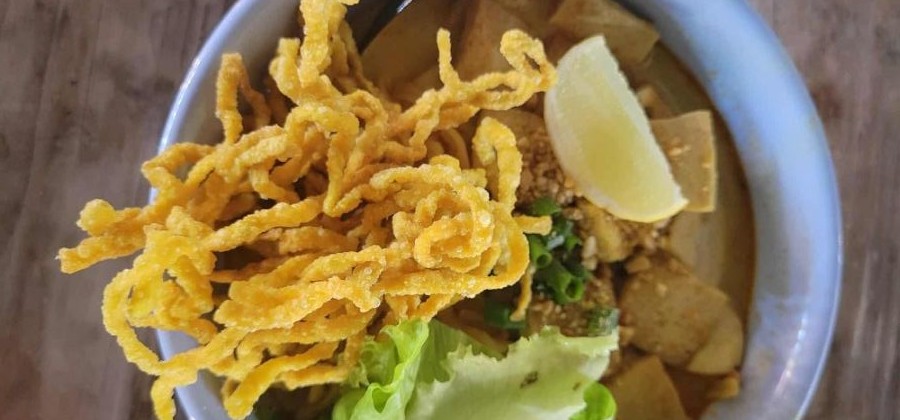
- Khao Soi: A Northern Thai specialty, especially popular in Chiang Mai. It’s a rich coconut curry noodle soup usually topped with crispy noodles. The traditional version contains meat and egg noodles, but many restaurants offer a vegan version with rice noodles, tofu, and veggies.
- Pad See Ew: Wide rice noodles stir-fried with soy sauce, Chinese broccoli, and tofu. Ask without egg.
- Green Curry (Gaeng Keow Wan): Coconut milk-based curry with herbs and veggies. Normally cooked with fish sauce, but many restaurants can swap soy sauce.
- Red Curry / Panang Curry: Similar adjustments as green curry. Often veganizable with tofu and vegetables.
- Massaman Curry: Mild, aromatic curry with potatoes and peanuts. Check base paste (can include shrimp paste).
- Tom Yum Soup: Hot and sour soup with lemongrass, galangal, and lime leaves. Ask for a version without fish sauce or shrimp.
- Laab (Larb): A traditional Thai minced salad flavored with lime, mint, and roasted rice powder. Usually made with meat, but it can easily be prepared with tofu or mushrooms in (vegan) restaurants.

- Som Tam (Papaya Salad): Refreshing salad with shredded green papaya. The traditional version has dried shrimp and fish sauce, but since it’s usually prepared fresh, you can ask without.
- Khao Pad (Fried Rice): Very common dish, just ask with no egg. Usually comes with veggies and soy sauce.
Sweet Thai Vegan Dishes
Good news! In Thailand, many traditional desserts naturally use coconut milk for creaminess and sweetness, and agar-agar (a plant-based gelling agent made from seaweed) instead of gelatin. This makes a lot of Thai sweets naturally vegan. Some examples are:
- Mango Sticky Rice (Khao Niew Mamuang): Sticky rice with coconut milk and ripe mango – naturally vegan.

- Sticky Rice with Banana (Khao Tom Mat): Banana and sticky rice steamed in banana leaves.
- Kanom Krop: Crispy coconut milk and rice flour bites – traditionally vegan, crunchy, and perfect for a sweet snack.
- Tub Tim Grob: Water chestnuts in coconut milk – check for condensed milk, but often vegan.
- Thai Coconut Ice Cream: Sometimes made with dairy, but many street stalls make fully coconut-based versions.
- Khanom Tan: Steamed palm sugar and coconut cake made with rice flour and grated coconut.
Vegan Breakfast in Thailand
Typical breakfasts include:
- Rice porridge (jok): Made from jasmine rice and simmered until it reaches an oatmeal-like texture. Toppings are often savory and can include meat or egg, but for a plant-based version ask for green onions and a sprinkle of soy sauce.
- Fried rice: Often comes with veggies and egg. Ask if the egg can be replaced with tofu.
- Noodle soups: Often made with chicken or beef broth, but it’s always worth asking for a vegan version.
- Patongo: The traditional dough recipe is usually vegan, but sometimes includes eggs or milk. It can be served with sweetened condensed milk, so ask for a plain version or with coconut milk.
- In tourist areas, many modern cafés serve vegan-friendly options like smoothie bowls, avocado toast, or plant-based versions of pancakes.

- Hotels in tourist areas often serve Western breakfasts (eggs, toast, dairy-heavy). We mostly preferred the smaller accommodations serving traditional breakfasts, as they were more filling than toast with jam 😄
- Fresh fruit stands can be found everywhere.
Vegan Street Food in Thailand: Must-Try Snacks
Here are some snacks (or whole meals) that can often be found on Thailand’s street and night markets:
- Grilled Corn on the Cob with Chili-Salt: Sweet corn is roasted over charcoal and often sprinkled with a mix of chili, salt, and sometimes sugar. Tip: Ask for less chili if you don’t like it too spicy.
- Grilled Mushrooms: Local mushrooms, often marinated in soy sauce or a simple seasoning, then grilled over charcoal.
- Fried Bananas (Kluay Tod): Bananas are coated in rice flour batter and deep-fried until golden and crispy. Normally vegan, ask if they use eggs for batter.
- Sweet Potato Balls (Kanom Kai Nok Krata) & Grilled Sweet Potatoes: Both are great for a warm, filling snack.
- Sticky Rice with Beans: often steamed inside bamboo tubes.
- Fresh Tropical Fruit: Thailand is famous for its fruit: juicy mangoes, sweet pineapples, hairy rambutans, tangy mangosteens, and creamy durians.

Drinks in Thailand
Thailand has plenty of refreshing vegan drink options:
- Fresh coconut water: Available everywhere, often served straight from the coconut.
- Smoothies: Many street vendors and cafés offer fruit smoothies – ask for “mai sai nom” (no milk) to be sure they’re fully plant-based.
- Thai iced coffee/tea: Traditionally made with condensed milk. Ask for plant-based alternatives or replace the condensed milk with soy/coconut milk if available.
- Fresh fruit juices: Mango, pineapple, watermelon, and other tropical blends are widely available.
Different Eateries in Thailand
Jay Restaurants (เจ): These are Buddhist vegetarian restaurants, often marked with the yellow-and-red “Jay” symbol (เจ). Many dishes are entirely vegan, as they avoid meat, fish, and pungent ingredients like garlic and onion during certain days. Jay eateries usually operate buffet-style, with a wide selection of curries, stir-fried vegetables, tofu dishes, rice, and noodles. They are affordable, filling, and a great way to try local flavors safely. Popular in Chiang Mai, Bangkok, and smaller towns alike.

Street Food Stalls: Thailand’s street food is legendary, and vegans can find plenty of options if you know what to look for. Fresh fruit, grilled corn, sticky rice, and fried snacks like spring rolls are common. Some noodle or stir-fry vendors are happy to adapt their dishes—ask for no fish sauce, no oyster sauce, and no eggs. Using a translation card or showing the Thai “เจ” symbol helps avoid confusion. Cities like Bangkok, Chiang Mai, and Phuket have stalls on almost every corner.
Night Markets: Like street food stalls, night markets can be a good opportunity to find authentic local and cheap dishes. Beyond the fresh fruit shakes and coconut ice cream, many stalls offer local dishes like fried rice, pad Thai, curries, and skewered vegetables. Again, ask for no fish sauce, no oyster sauce, and no eggs.

- Tourist Cafés: In major tourist places, like Chiang Mai, Pai, and the islands like Koh Samui or Koh Phangan, you’ll find cafés targeting health-conscious travelers and digital nomads. These often have smoothie bowls, avocado toast, vegan pancakes, salads, and even vegan burger options. Many also label dishes as vegan, making it easier to order. Prices are higher than local eateries but still reasonable.
- Dedicated Vegan Restaurants: Thailand’s vegan restaurant scene has grown rapidly. Bangkok, Chiang Mai, and Phuket boast fully vegan spots serving everything from traditional Thai dishes to Western comfort food. Expect vegan pad Thai, green curry, sushi, burgers, desserts, and more. Some popular chains include Broccoli Revolution (Bangkok) and May Kaidee (Bangkok, Chiang Mai).
Our Favorite Vegan Restaurants in Thailand
Bangkok
- May Veggie Home: Famous vegan restaurant near Asok with vegan Thai and international dishes.
- Broccoli Revolution: Stylish plant-based spot with global flavors and juices.
- All Vegan Dumplings: Street food stand that sells – the name says it all 😀 – all vegan dumplings. Cheap and tasty! We had the fried chive cakes and kui chai dumplings with vegetable, taro, sweet potato and bamboo shoots fillings.

- Veganerie: Trendy café chain with smoothie bowls, pancakes, and comfort food.
- Kem-Kon Vegan Phahurat: Small café with a big selection of vegan dishes. We had the Vegan fish spicy-sour, Crispy chicken with lime sauce (big recommendation!), Khao Soi and Hong Kong strawberry waffels.

Chiang Mai
- Chada Vegetarian Restaurant: Our top pick! Offers delicious and affordable local Thai dishes that never disappoint.
- Rad Rabbit: A fully vegan, Western-style spot with pizzas, focaccia, pasta, sandwiches, wraps, and desserts. The pizzas were excellent, but we especially loved the Eggplant Parmesan Focaccia.
Chiang Mai is considered a vegan paradise and it’s incredibly easy to find delicious vegan food here. Read more about vegan restaurants and even vegan hotels in Chiang Mai in our article about being vegan Chiang Mai.
The Islands
- Koh Phangan: Known as a vegan paradise – eateries like Pure Vegan Heaven or Eat.Co serve delicious plant-based dishes.
- Koh Tao: The Factory Café (vegan-friendly smoothies and bowls), Coconut Monkey (beachside café with vegan meals).
- Koh Lanta: Yawee Restaurant and Fruit Tree Lodge – great vegan-friendly choices.
Supermarkets & Markets
Supermarkets
In cities like Bangkok and Chiang Mai, large supermarket chains such as Tops, Big C, and Rimping are relatively vegan-friendly. You can easily find soy milk, tofu, plant-based snacks, vegan noodles, canned coconut milk, and even mock meats. Some supermarkets also carry imported vegan products, like nut butters, vegan chocolate, and dairy-free cheese. They’re a convenient option if you’re self-catering, staying in an apartment, or just want to stock up on snacks for travel days.
MaxValu supermarkets in Thailand are mostly found in Bangkok and surrounding urban areas, though there are some branches in popular tourist regions. They are part of a Japanese chain, so they often carry Japanese-style plant-based products, such as tofu, soy milk, vegan snacks, and miso. They’re smaller than Big C or Tops but worth a visit if you’re looking for quality vegan-friendly grocery items.
Not all plant-based milks are fully vegan – some contain milk powder. Brands that are safe: Vitamilk Jay, Tofusan High-Protein, Good Soy, V-Farm and Vitamilk. However, always double-check ingredients, especially in flavored varieties.
Boonniyom Santi Asoke Market (ตลาดบุญนิยมสันติอโศก) is a true gem for anyone looking for plant-based options in Bangkok. The market features multiple shops offering health-focused products, from bulk ingredients and fresh organic vegetables and fruits to fresh-pressed juices and ready-made vegan meals. You’ll also find snacks, an Asian bakery, a vegan juice bar, and breakfast options; all perfect for take-out or a quick bite.
7-Eleven
Thailand’s famous 7‑Eleven stores are convenient for quick stops, but their vegan options are limited. You’ll mainly find nuts, chips, soy milk, coconut water, fruit cups, and occasionally packaged sticky rice snacks. Some stores carry instant noodles or desserts, but always check ingredients for fish sauce, egg, or milk. That said, 7‑Eleven is still handy if you need a fast snack or drink while exploring.

Street Markets
For the freshest vegan options, head to local street markets. They offer an incredible variety of fresh fruit, vegetables, herbs, and cooked snacks like spring rolls, fried bananas, sticky rice, or corn on the cob. Markets are also where you can try freshly made vegan Thai desserts and fruit smoothies. Visiting a market is also a fun cultural experience, where you can see locals cooking, meeting up, and enjoying their daily meals.

Online Shops
Lazada features dedicated sections like “Veg Thailand” and “Vegemeat Products,” where you can find items such as plant-based meats, dairy-free milks, and vegan snacks. Notable sellers include Green & Wholesome, which offers organic and vegan products, and Macrobiotic World, known for its vegan offerings.
Big Vegan Cheese CM sells large packs (600g) of homemade vegan cheese made from coconut milk and herbs. Each pack costs 500 baht and keeps up to three months in the freezer, perfect for snacks, sandwiches, or cooking. Orders can be made via LINE (0802453385), with delivery available nationwide for an additional fee depending on location.
Vegetarian Festival Thailand
Thailand’s annual Vegetarian Festival (usually in October, especially on Phuket and in other southern provinces) is a big celebration of plant-based eating and spiritual purification. Locals and visitors alike enjoy a wide array of vegan-friendly street food, from noodle dishes and stir-fries to tropical fruits and desserts. During this festival, many restaurants temporarily switch to fully vegetarian or vegan menus, marked with the “Jay” symbol (เจ), and stores like 7-eleven sell more vegan products. The festival is also accompanied by colorful parades, rituals, and cultural performances, giving a full immersion into local traditions.
Tips for Finding Vegan Food in Thailand
How to Start
Use Google Maps
In Thailand’s bigger cities like Bangkok, Chiang Mai, or Phuket, it’s surprisingly easy to find fully vegan and vegetarian restaurants just by typing “vegan” into Google Maps. You’ll find menus with vegan options, as well as entire vegan restaurants.
In smaller towns and rural areas, though, results might be less obvious. But don’t worry, it doesn’t mean that vegan food doesn’t exist. Many local places simply don’t have a menu online, and it also often means that nobody has added or reviewed them yet. In fact, almost every Thai restaurant can prepare a simple vegan option. That’s why we love leaving reviews on Google Maps after visiting a place: just mentioning the word “vegan” in your review helps guide future travelers. Read more about how you can easily support the vegan community while traveling in our article: Vegan Travel – Exploring the world without compromising your values.
Check HappyCow
HappyCow is another great starting point, especially in bigger destinations where vegan and vegetarian spots are well-documented. You’ll quickly see which places are fully plant-based and which ones are “vegan-friendly.”
Try Local Thai Eateries
Some of the best vegan meals we’ve had in Thailand came from small, family-run restaurants or street stalls. Menus there are often written only in Thai and usually highlight meat dishes, but don’t let that put you off. With a polite request, you can usually get a plant-based version, often with fresh vegetables, sometimes tofu, and always plenty of flavor.

Learn a Few Thai Phrases (or Use an App)
In touristy places, many staff understand basic English. But in villages or rural areas, a little Thai goes a long way. Instead of saying “vegan,” which isn’t always understood, it’s better to be specific:
- “No meat, no fish, no milk, no eggs.”
– ไม่เอาเนื้อสัตว์ ไม่เอาปลา ไม่เอานม ไม่เอาไข่
(mâi ao nʉ́a sàt, mâi ao bplaa, mâi ao nom, mâi ao kài)
Having this written down in Thai script or stored in a translation app makes things much easier and avoids misunderstandings.
Look for the “Jay” Symbol
The Jay sign is a bright yellow square with a red Chinese character. It signals “strict vegetarian” and is widely recognized across Thailand. Jay food excludes meat, fish, dairy, eggs, but also garlic and onions. Many restaurants, street stalls, and even 7-Eleven shops carry Jay options, especially during the annual Vegetarian Festival (Tesagan Gin Jay) in October, when entire streets in cities like Bangkok and Phuket transform into vegan food havens. Outside of the festival, you’ll still see Jay eateries year-round, it just might take a bit more looking.
Useful Thai Words
| English | Thai |
|---|---|
| Meat | เนื้อ (Nuea) |
| Chicken | ไก่ (Gai) |
| Fish | ปลา (Pla) |
| Shrimp | กุ้ง (Kung) |
| Egg | ไข่ (Kai) |
| Milk | นม (Nom) |
| Cheese | ชีส (Cheese) |
| Butter | เนย (Noei) |
| Shrimp paste | กะปิ (Kapi) |
| Fish sauce | น้ำปลา (Nam Pla) |
To ask for vegan: “Ahaan jay” (อาหารเจ) → vegetarian Buddhist food, usually vegan.
Translation Card
Feel free to capture this card any way you like: screenshot, print, or save for your future travels.

Thailand — Vegan Travel Q&A
Sweet: Mango Sticky Rice, Sticky Rice with Banana, Kanom Krop, Tub Tim Grob, Thai Coconut Ice Cream (coconut-based), Khanom Tan.
Street food stalls & night markets: Fresh fruit, grilled snacks, noodle dishes (ask no fish/egg).
Tourist cafés: Smoothie bowls, pancakes, salads.
Dedicated vegan restaurants: Broccoli Revolution, May Kaidee, Kem-Kon Vegan, Chada Vegetarian, Rad Rabbit.
Supermarkets: Tops, Big C, Rimping for tofu, soy milk, plant-based snacks.
7-Eleven: Limited vegan options (nuts, chips, soy milk, fruit).
“No meat, no fish, no milk, no eggs”
ไม่เอาเนื้อสัตว์ ไม่เอาปลา ไม่เอานม ไม่เอาไข่
(mâi ao nʉ́a sàt, mâi ao bplaa, mâi ao nom, mâi ao kài).
Showing the เจ symbol helps avoid confusion.
Further Reading
Blog Articles
- Vegan Guide to Chiang Mai
- Top 10 Unique Things to Do in Chiang Mai
- Mae Hong Son Loop as a Vegan: Discovering Thailand’s Stunning North
- Volunteer with Elephants in Thailand: A Journey of Healing and Love at Elephant Nature Park
- Why Vegan? The Reason We Travel the World Plant-Based
- Vegan Travel – Exploring the World Without Compromising Your Values
Useful Resources

About the Authors
Lynn & Daniel are the vegan couple behind VanderlustJourney, combining their passion for adventure and plant-based living. They share stories and visuals of natural places, hikes, vegan discoveries, and meaningful encounters from around the world – always striving to travel with kindness.
👉 Follow us on Instagram
✉️ Contact: vanderlustjourney@outlook.com
Looks like a wide variety of vegan foods available–the translation card is super handy as well!
This guide is amazing! You make us want to hop a plane and get to Thailand immediately for vegan food (and scenery).
Aww happy to hear that, thanks:)
I think it easy to be a vegan in Asia as Asian dishes are usually full of vegetables. And many of the Thai dishes you mention sound so good – spicy and full of vegetables.