
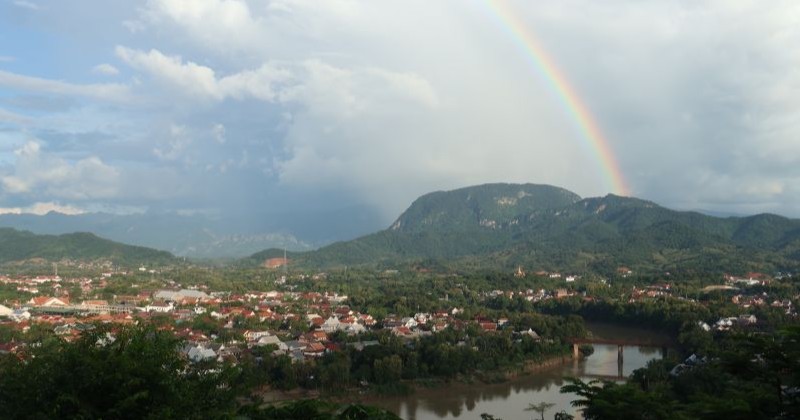
When we started looking for our next travel destination, it quickly became clear that Luang Prabang is everybody’s darling: a firm favorite in Laos not only among backpackers, but also families, digital nomads and adventure seekers. The city between the Mekong and Nam Khan rivers offers something for everyone, and is, on top of that, incredibly picturesque. We were lucky to spend almost a week here, giving us time to get a real feel for the place, explore both its well-known and hidden corners, and sample every vegan meal we could find. In this guide to the best things to do in Luang Prabang, we’ll share all of that and more with you.
Introduction to Luang Prabang
- Why visit: UNESCO-listed city known for its serene atmosphere, golden temples, and riverside charm
- Best activities: Visit temples like Wat Xieng Thong, watch the morning alms ceremony, climb Mount Phousi, explore Kuang Si Falls, take a Mekong sunset cruise
- Best time to visit: November–March (cool, dry, and pleasant for walking and sightseeing)
- Vibe: Peaceful, spiritual, and beautifully slow-paced — ideal for culture, food, and photography lovers
- Getting there: Flights and buses from Vientiane, or slow boat on the Mekong from Huay Xai (2 days via Pakbeng)
- Practical tips: Dress modestly when visiting temples, bring cash for markets, and book accommodation early during high season
For vegan food and travel tips in Luang Prabang, check our Vegan Guide to Laos.
This post contains affiliate links. If you make a purchase or booking through these links, we earn a small commission at no extra cost to you. This supports our work and allows us to keep offering free content here on the blog.
Map of Luang Prabang
Here’s an overview of the different locations mentioned in this article. Most attractions are in and around Luang Prabang, while the Pak Ou Caves and the Kuang Si Waterfall lie a bit outside the city.
About Luang Prabang
Luang Prabang (also spelled Luang Phabang or Louangphabang) is a charming city in northern Laos, surrounded by mountains and rivers. Recognized as a UNESCO World Heritage Site since 1995, it’s celebrated for its beautifully preserved mix of traditional Lao architecture and elegant French colonial influence. Beyond its architectural heritage, Luang Prabang is home to countless stunning temples and the famous morning alms-giving ceremony (more on that below). Despite being one of the largest cities in Laos, Luang Prabang retains that delightful small-town atmosphere, inviting you to leisurely wander around, pause for a coffee or a Beerlao, and take in the river views from one of its many enchanting cafés.

Best Things to do in Luang Prabang
We went back and forth on whether to call Luang Prabang a town or a city. Technically, it’s a city, and even a former royal capital – but it feels much more like a calm, walkable town. That’s part of Luang Prabang’s magic: it carries the soul of a small town with the history of a royal city.
Temple Hopping
By exploring Luang Prabang’s temples, you’ll truly get a feel for the its spiritual heart. The city has more than 30 active temples (known locally as wats), each with its own story and atmosphere. One of the most fascinating one is Wat Xieng Thong, often called the “Golden City Monastery.” It’s the most important and best-preserved temple in Luang Prabang, famous for its gold decorations, roofs that nearly touch the ground, and beautiful mosaics showing scenes from daily life and Buddhist legends. Situated right by the Mekong River, it’s especially magical in the soft light of the late afternoon. Another highlight is Wat Mai Suwannaphumaham, located near the Royal Palace. It’s known for its richly decorated façade and detailed reliefs showing episodes from the life of the Buddha. This temple once served as the residence of the head of Laotian Buddhism. A little further up the hill, Wat Chom Si sits at the top of Mount Phousi, offering stunning views over the town and the Mekong and Nam Khan rivers. The climb up the hill is a bit steep, but the panoramic view at the summit makes it well worth the effort, especially at sunrise or sunset. Other temples worth visiting include Wat Sensoukaram, with its red façade and golden accents, and Wat Visounnarath, the oldest temple in town, known for its distinctive stupa nicknamed “That Makmo” (the Watermelon Stupa) because of its rounded shape.

Tip: When visiting temples, always dress modestly as a sign of respect, which means shoulders and knees should be covered for both men and women.
Watch the Sunset from Mount Phousi
Another highlight (and almost a rite of passage in Luang Prabang 😀 ) is climbing up to the viewpoint on Mount Phousi. The walk to the top takes about 15-20 minutes, with a few smaller viewpoints and golden shrines along the way. It’s a bit of a workout, especially in the midday heat, but the panoramic view from the summit makes every step worth it. We literally said out loud“wow” when we reached the top – and in that moment, we truly understood why Luang Prabang is often called one of the most picturesque towns in Southeast Asia. From up there, you can see the Mekong River winding around the town, the Nam Khan River meeting it from the other side, and the green mountains stretching endlessly into the distance. It’s one of the best spots in town to watch the sunset, but it can get quite crowded around that time, so it’s worth heading up at least an hour before to have a good spot.

Tip: If you want to visit one of the temples on your way up, don’t forget to dress modestly, by covering knees and shoulders.
Find Mount Phousi on google maps: Click here.
Entrance fee: 20.000 LAK, payable at the base of the stairs (you can climb up from either Sakkaline Road or the Nam Khan side).
Royal Palace Museum (Haw Kham)
Right in the heart of Luang Prabang sits the Royal Palace Museum, also known as Haw Kham, an elegant building that offers a glimpse into the city’s royal and cultural past. Built in 1904 during the French colonial era for King Sisavang Vong and his family, the palace combines traditional Lao design with subtle French influences. Inside the museum, the highlight is the Prabang Buddha statue, a revered golden image that gave the city its name. You’ll also find royal carriages, vintage photographs, and even the king’s old cars on display in a small garage nearby.
Tip: The museum is open daily except Tuesdays, and visitors are asked to dress modestly (shoulders and knees covered). You’ll also need to leave your shoes and bags at the entrance before entering the main building.
Find Royal Palace Museum on google maps: Click here.
Entrance fee: 30.000 LAK
UXO Lao Visitor Center
Few travelers know this, but Laos carries a deeply painful history: it is, in fact, the most heavily bombed country in the world. Even today, unexploded ordnance (UXO) continues to endanger lives across the country. The UXO Lao Visitor Center in Luang Prabang is a small yet powerful museum dedicated to raising awareness about this ongoing issue. Through documentaries, exhibits, and survivor stories, it sheds light on the country’s past and the lasting horrific effects of war. It’s a moving and important place to visit if you want to understand the history of Laos.

Find UXO Lao Visitor Center on google maps: Click here.
Entrance fee: Free of charge, though donations are appreciated and go directly toward efforts to locate and clear remaining UXO from affected areas.
Have a Beerlao at a Riverside Café
After a day of exploring, we have the perfect thing to do: sitting by the river with an ice-cold beer or a fresh coconut in hand. Both the Mekong and Nam Khan riverbanks are lined with cozy cafés and bars, where you can watch boats drift by and locals go about their day. Some of our favorites are tucked away on the quieter Nam Khan side, offering beautiful sunset views without too many people. It’s the perfect way to slow down and soak in Luang Prabang’s laid-back charm.

Kuang Si Waterfall
The Kuang Si Waterfall is located a bit outside of Luang Prabang, but we really recommend going there! It’s a multi-tiered cascade that tumbles down through a series of natural pools. During the dry season, the pools turn a stunning shade of turquoise, and you can even swim in them. For this reason, most people visit Kuang Si between November and April. We visited during the rainy season in September, and although we didn’t experience the famous color and couldn’t bathe in the pools, it was still a fascinating visit – perhaps even more so. The waterfall was incredibly powerful at that time of year, roaring through the forest with full force. We followed this trail to reach the top (the way up was super muddy and slippery, and we only learned afterward that there’s now a proper staircase 😄), which leads to a wonderland of rivers and pools and offers a beautiful view over the falls and surrounding landscape. You can either walk back down or take the zip line for around $25. Kuang Si is best visited early in the morning, before the tour groups arrive, or later in the afternoon when the light gets softer and the crowds thin out.

Find the Kuang Si Waterfall on google maps: Click here.
Entrance fee: 25.000 LAK
How to get there: Hire a tuk-tuk, rent a scooter, or join a shared minivan tour from town.
Right at the entrance, you’ll also pass through a small bear rescue center, run by Free the Bears. To be honest, we felt a bit unsure about the setup: the organization does incredibly important work rescuing sun and moon bears from the illegal wildlife trade and bear bile farms, but the way the animals were displayed to visitors left us with mixed feelings.
Still, it’s a valuable initiative that raises awareness about the plight of these animals, and the organization runs several other sanctuaries in Laos, Cambodia, and Vietnam that we think are truly worth supporting.
Sunset Cruise on the Mekong River
The Mekong is the lifeline of Luang Prabang, and seeing the city from the water offers a completely different perspective. A popular option is to take a sunset cruise, which often lasts about 2 hours and offers a peaceful way to end the day. Most cruises include a drink and some light snacks (though we can’t confirm if they’re vegan). If you’re looking for a longer adventure, you can also join a half-day or full-day trip that explores more of the Mekong’s surroundings: stopping at local villages, caves, and traditional weaving communities along the riverbanks. It’s a beautiful way to experience everyday life along the river and see beyond the main town. Check out the next point for more info on visiting the Pak Ou Caves, one of the highlights along this route 🙂

How to book: Simply stroll along the riverfront in Luang Prabang: plenty of local agencies offer both boat trips and kayaking tours.
Pak Ou Caves
A visit to the Pak Ou Caves is one of the most popular day trips from Luang Prabang. You can either get there by boat (the classic way) or, for a more unconventional (and adventurous) option, paddle by kayak. The journey itself is half the magic: as you glide along the Mekong, limestone cliffs rise from the water and you’ll cross the path of many locals traveling by boat. An enchanting and timeless experience! The Pak Ou Caves are a pair of limestone caverns carved into the cliffs where the Mekong and Nam Ou rivers meet. Inside, thousands of Buddha statues of every size, shape and expression fill the space, offerings left by devotees over the centuries. The atmosphere is quiet and spiritual, a beautiful contrast to the open river outside.
Find the Pak Ou Caves on google maps: Click here.
Entrance fee: 20.000 LAK (often included if you join a group tour)
How to book: You can book online via GetYourGuide, or simply stroll along the riverfront in Luang Prabang: plenty of local agencies offer both boat trips and kayaking tours.
Witness the Morning Alms Ceremony
This one is a bit of a controversial one, so let’s start with an important note: if you take part in his century-old tradition, please do so with respect and in the knowledge that you’re participating in a deeply sacred practice. The Morning Alms Ceremony, known locally as Tak Bat, is a central part of Laotian Buddhist culture. Each morning at dawn, locals kneel quietly along the streets to offer food (mostly sticky rice) to monks in saffron robes who walk in silence from their temples. The ritual symbolizes generosity, humility, and compassion, and it’s a beautiful expression of the connection between the monastic and lay communities.

You can witness Tak Bat in Buddhist regions across Laos, Cambodia, and Thailand. So why has it become so famous in Luang Prabang? The reason lies in the city’s unique character: it has an unusually high concentration of monasteries and monks for its size, so the sight of dozens, sometimes hundreds, of monks walking in long lines is truly impressive to witness. However, this growing popularity also means the ceremony has sometimes been disrupted by unaware tourists. If you attend, please do so respectfully: dress modestly, observe quietly from a distance, and avoid taking photos up close or using flash. Unless you are Buddhist, it’s also better to simply watch rather than participate.
Explore the Local Villages and Craft Centers
Beyond Luang Prabang with its temples and cafés, you can visit the nearby craft villages. These small communities have preserved their traditional skills for generations, and visiting them gives you a wonderful glimpse into local life and Lao artistry. Just a few kilometers from the city center lies Ban Xang Khong, also known as the “Paper Village.” Here, families produce beautiful handmade paper from mulberry bark, a traditional craft known as sa paper. You can watch the process from start to finish: soaking and pounding the bark, spreading it into thin sheets, and decorating it with dried flowers and leaves. Many workshops have small shops attached, where you can buy lanterns, notebooks, and cards directly from the artisans. A bit further along the Nam Khan River is Ban Xieng Lek, another charming village known for hand weaving.
Visiting Luang Prabang – Practical Tips
How to Get to Luang Prabang
Luang Prabang is one of the easiest destinations to reach in northern Laos, thanks to its central location and good connections by air, road, and river.
By Plane: The fastest and most convenient way to arrive is by plane. Luang Prabang International Airport (LPQ) has daily flights from Vientiane, Pakse, and several international hubs such as Bangkok, Hanoi, and Chiang Mai. The airport is only about 4 km from the city center.
By Bus/Minivan: Luang Prabang is also connected to major cities like Vang Vieng, Vientiane, Nong Khiaw, and Phonsavan by road. Buses and minivans can be booked online through 12go.com or directly at the southern bus station. Be prepared for long travel times and sometimes crowded vehicles, but the scenery along the way makes up for it.
By Boat: For those seeking adventure, the slow boat from Huay Xai (near the Thai border) is a classic two-day journey along the Mekong River, with an overnight stop in Pakbeng. It’s one of the most scenic ways to arrive in Luang Prabang and a memorable experience in itself. In fact, we chose this option to go to Luang Prabang! If you want to know more, check out our blog post where we share our full experience about the slowboat trip.

Getting Around Luang Prabang
The town is compact, and most attractions can easily be reached on foot or by bicycle. Walking through the old town’s quiet streets is part of the charm, as you’ll pass temples, colonial buildings, and riverside cafés at every turn. For slightly longer distances (like Kuang Si Falls or the airport), you can hire a tuk-tuk, rent a motorbike, or join an organized tour. Bicycles can be rented for about 20.000-30.000 LAK per day, while motorbikes cost around 100.000-150.000 LAK depending on type and duration.

How Long to Stay in Luang Prabang
We spent almost a week in Luang Prabang, which felt perfect: enough time to visit temples, take day trips, and still have slow days just soaking in the vibe.
If you’re short on time, 3 days will let you cover the highlights like the Mount Phousi, the Royal Palace, and Kuang Si Falls. If you prefer a slower pace, five to six days is ideal: you’ll have time to explore nearby villages, visit the Pak Ou Caves, enjoy multiple sunset spots, and simply relax in one of the many cozy cafés overlooking the Mekong.

Luang Prabang has that special kind of magic that makes it easy to linger: it’s the kind of place where you’ll want “just one more day” than initially planned 😀
Best Time to Visit Luang Prabang
The best time to visit is during the dry season (November to March), when temperatures are pleasant, skies are clear, and it’s perfect for walking, temple visits, and outdoor activities. The hot season (April to June) can get quite warm, but it’s still manageable if you plan your sightseeing for early mornings or late afternoons. The rainy season (May to October) brings beautiful green landscapes, fewer tourists, and lower prices. Showers are usually short and refreshing rather than all-day downpours, so it can still be a really good time to visit; especially for photographers and those who prefer a quieter atmosphere.
What to Pack for Luang Prabang
Here are a few essentials that came in handy during our stay:
- Light, comfortable clothing for warm days
- A light jacket or shawl for cooler mornings and evenings
- Modest attire for temple visits (cover shoulders and knees)
- Comfortable walking shoes or sandals
- Refillable water bottle (some cafés offer refills)
- Insect repellent, especially near rivers at dusk
- Sunscreen and a hat for exploring during the day
Money & ATMs
There are plenty of ATMs around Luang Prabang, especially in the old town, but not all accept foreign cards or dispense large amounts. It’s best to bring some cash (Lao Kip) for small shops, local markets, and tuk-tuk rides, as many places still operate cash-only. Some guesthouses and tour operators also accept Thai Baht or US Dollars, though it’s best to pay in local currency whenever possible.
As a travel card, we recommend the Wise multi-currency card : you can hold and spend in many currencies, withdraw local cash at ATMs with competitive exchange rates, and avoid the hefty FX markups of some banks.
Practical tips: always check the ATM’s fee notice (local ATM fees may still apply), withdraw reasonable amounts to avoid repeated fees, and keep a little cash on you, as many stalls and guesthouses still prefer cash.
Where to Stay in Luang Prabang
We stayed in two different locations during our time in Luang Prabang, both of which were comfortable, clean and a good value for money:
- We spent the first few days at Le KhounSok Boutique Hotel, which offered clean and comfortable rooms. For breakfast, they kindly prepared vegan banana pancakes on request, with fried rice as another vegan option.
- For the rest of our stay (after coming back from Nong Khiaw), we moved to Dawn Boutique Luangprabang Hotel, where we had spacious, spotless rooms and the bonus of a refreshing swimming pool.
Other accommodation ideas:
- My Dream Boutique Resort: Offers charming rooms and private villas set in a lush garden right beside the river, with a lovely pool for relaxing after a day of sightseeing.
- Jasmine Luangprabang Hotel: Spacious, clean, and comfortable rooms, an inviting outdoor pool, and a convenient location close to many of Luang Prabang’s main attractions.
- Sunrise Hotel Luang Prabang Mekong River: Ideal for those looking to treat themselves: cozy, well-appointed rooms, an outdoor pool, and a central spot with beautiful river views.
- Maophasok River Side Hotel:: A budget-friendly option offering clean rooms and, depending on the room type, a balcony with scenic views of the river.
Vegan Food in Luang Prabang
Finding vegan food in Luang Prabang is relatively easy. From tasty street food to cozy cafés and social enterprises, there’s a growing variety of plant-based options. Lao cuisine naturally includes lots of fresh vegetables, herbs, and rice-based dishes, and with a few simple swaps (like asking for no fish sauce or shrimp paste), you can enjoy many traditional meals vegan-style. For a better idea of what authentic Lao dishes can easily be made vegan (and what ingredients to look out for), check out our upcoming Vegan in Laos Guide, or download our free Vegan Travel Cheatsheet to take with you on your trip!
Our Favorite Vegan Restaurants in Luang Prabang
Luang Prabang has plenty of options for vegans! There are a few fully vegetarian cafés with many vegan dishes, as well as local spots and some really tasty, affordable street food stalls.
- Happy Cat Café: This charming vegetarian café serves creative plant-based twists on Lao and Western classics: think smoothie bowls, curries, and good coffee. It’s also home to a few friendly rescue cats who come and go freely. The owners use the café’s proceeds to support sterilization and care projects for local strays, so eating here helps a good cause too.
- Two Little Birds Café: A lovely, health-focused spot offering vegetarian and vegan dishes, including fresh salads, smoothie bowls, and Lao-style meals. The friendly atmosphere makes it an ideal place for a relaxed breakfast or lunch. Our tip: try the Laab, an authentic Lao meal made with tofu!
- La Silapa Italian & Lao Kitchen: If you’re craving Italian food, La Silapa is a solid choice: they offer vegan-friendly pasta, pizza, and salads. It’s a nice change of pace if you’ve had your fill of rice and noodles.

- Khaiphaen Restaurant: A restaurant with a mission: Khaiphaen helps disadvantaged youth through training and employment in hospitality. The menu includes several clearly marked vegan dishes, and by dining here, you support an important local cause.
- Yuni Yupoun: A creative spot with a great mix of flavors from around the world; from curries and fried eggplant to a Mezze Platter and burgers (ask for pita instead of the milk-based bun). The atmosphere is stylish yet laid-back, perfect for an evening out.

- Fathima Indian & Malaysian Restaurant: With a beautiful riverside setting, Fathima offers plenty of vegan curries, breads, and rice dishes. Great flavors, generous portions, and friendly service make this a go-to for Indian food lovers.
- Lost In Baan: An Asian fusion restaurant with inventive vegan dishes, cozy décor, and a slightly more upscale feel; ideal for a nice dinner after a day of exploring.
Streetfood
- Vegetarian & Vegan Buffet (Night Market): A long-time favorite among budget travelers! This is a fully vegan stand at the night market in Luang Prabang. For 50.000 LAK, you can pile your plate high with rice, noodles, curries, tofu, and a variety of veggies. It’s fun and casual, and right in the middle of the night market. The food isn’t super hot, but really flavorful, and a great way to try several local dishes at once. (Note: the vegan buffet stand is next to a regular meat and fish vendor.)
- Kanom Krok/Khanom Babin (Thai pancakes): There’s no Google Maps listing for this spot, but you’ll find it on the same street as the Vegetarian & Vegan Buffet, on the left-hand side, near the beginning of the street. The friendly women running the stall make Kanom Krok (10.000 LAK for a bunch) and Khanom Banin (10.000 LAK for one), naturally vegan coconut-rice desserts, right in front of your eyes.

Both of these stalls are part of the Luang Prabang Night Market, which comes alive every evening from around 5 p.m. onwards. In addition to the main food street, you’ll also find plenty of stands gathered around the square at the intersection of Sisavangvong Road and Kingkitsalad Road. This area has several local food vendors, plus benches and tables where you can sit down and enjoy your meal. Vegan options are rather easy to find here: think local dishes like Pad Thai, hot pots, stir-fried vegetables, and curries. Just make sure to ask for your dish without fish sauce, oyster sauce, or shrimp paste. Since everything is cooked fresh, most vendors are happy to adjust and prepare a fully vegan version for you.
Grocery Stalls
Luang Prabang has a few larger supermarkets that are handy for stocking up on snacks, drinks, and travel essentials. We often went to D&T Supermarket and JC Mini Market, both of which had a surprisingly good selection of vegan-friendly items, including plant-based milk, cookies, oats, and peanut butter. Perfect for a quick breakfast or to bring along on day trips.
Bonus: Vegan Translation Card
A useful card to always have with you; feel free to save, screenshot or print it for your travel to Laos.

Getting From Luang Prabang to Your Next Destination
Luang Prabang is well connected, making it an ideal starting point for exploring more of Laos. Whether you’re looking for nature, adventure, or city life, here are some great next stops to consider:
Nong Khiaw: This peaceful riverside village is surrounded by impressive limestone cliffs and lush jungle landscapes. It’s about 4-5 hours away by minivan and has become a favorite for travelers looking for quiet nature escapes with viewpoints, river cruises, and scenic hikes. It was our favorite place to visit in Laos!
Vang Vieng: Once known for its wild nightlife, Vang Vieng has transformed into a paradise for adventure lovers. You can go kayaking or tubing on the Nam Song River, explore caves, hike, or take a hot-air balloon ride at sunrise. The trip takes around 5-7 hours by road or just 1 hour with the new Laos-China high-speed train. If you’re planning a visit, check out this guide to the best things to do in Vang Vieng for a varied and fun-packed itinerary.
Vientiane: The laid-back capital of Laos lies further south, around 10-12 hours by bus or minivan. Though not the country’s most exciting stop, it offers peaceful temples, local markets, and a relaxed riverside atmosphere: a nice place to slow down before continuing your travels.
Conclusion
We arrived in Luang Prabang with high expectations — and, as you might have guessed from this article, they were more than met. Surrounded by rivers and mountains, this UNESCO-listed city blends natural beauty with a peaceful rhythm that’s hard to resist. Its relaxed pace of life, friendly atmosphere, and abundance of cosy cafés and vegan restaurants make it a comfortable and inspiring place to linger for a while.
FAQ: Luang Prabang Travel Guide
Where is Luang Prabang located?
Luang Prabang is a charming city in northern Laos, situated at the confluence of the Mekong and Nam Khan rivers. It’s known for its Buddhist temples, French colonial architecture, and surrounding natural beauty.
How many days should I spend in Luang Prabang?
We recommend spending at least 3–4 days to explore the temples, waterfalls, night market, and nearby villages without rushing. Many travelers end up staying longer thanks to the relaxed vibe.
When is the best time to visit Luang Prabang?
The dry season (November–April) is the best time to visit, with pleasant temperatures and turquoise waterfall pools. The rainy season (May–October) brings lush scenery and fewer tourists but more humidity.
What are the top things to do in Luang Prabang?
Highlights include visiting Kuang Si Waterfall, Mount Phousi, Wat Xieng Thong, and the Night Market. Don’t miss the morning alms ceremony, a Mekong River sunset, or a visit to the UXO Lao Visitor Center.
How to get around Luang Prabang?
Luang Prabang is compact and very walkable — most attractions are within walking distance. You can also rent a bicycle or motorbike for short trips or waterfalls outside the city. Tuk-tuks are available everywhere and can be shared for short rides or booked privately for day trips. Always agree on the price before hopping in.
Is Luang Prabang vegan-friendly?
Yes! Luang Prabang has an increasing number of vegan and vegetarian cafés and restaurants. Street food options like vegan buffets and coconut pancakes are also easy to find—just ask to skip fish or oyster sauce.
How do I get to Luang Prabang?
You can arrive by slowboat along the Mekong River, bus, minivan, or flight from major cities like Vientiane, Hanoi, or Chiang Mai. The new Lao-China train also connects Luang Prabang to Vientiane and Boten.
Where to stay in Luang Prabang?
Luang Prabang offers options for every budget. Boutique hotels like My Dream Boutique Resort, Dawn Boutique Hotel, and Jasmine Luangprabang Hotel provide great comfort, while guesthouses like Le KhounSok Boutique are cozy and affordable.
How expensive is Luang Prabang?
Luang Prabang is affordable compared to Western standards. Budget travelers can spend around $25–30 per day, mid-range comfort around $50–70, and upscale stays from $100 and up.
What should I wear when visiting temples?
Dress respectfully when entering temples—cover shoulders and knees. Light, breathable clothing works best due to the tropical climate.
Is Luang Prabang safe for travelers?
Yes, Luang Prabang is generally very safe. Petty theft is rare, and locals are kind and helpful. Just take standard precautions, especially at night markets or crowded places.
Further Reading
Blog Articles
- Vegan Laos Guide
- Slowboat to Laos – An Enchanting Voyage on the Mekong River (+ Vegan Tips)
- Nong Khiaw Travel Guide
- Top 10 Unique Things to Do in Chiang Mai (Thailand)
Useful Resources

About the Authors
Lynn & Daniel are the vegan couple behind VanderlustJourney, combining their passion for adventure and plant-based living. They share stories and visuals of natural places, hikes, vegan discoveries, and meaningful encounters from around the world – always striving to travel with kindness.
👉 Follow us on Instagram
✉️ Contact: vanderlustjourney@outlook.com