
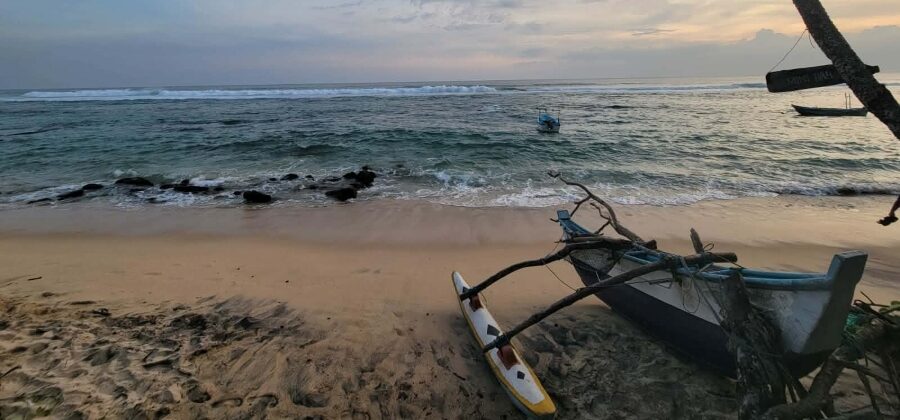
Introduction to Sri Lanka
Sri Lanka – Quick Facts
An overview of essential information about Sri Lanka.
Short overview
Sri Lanka is a compact yet incredibly diverse island nation known for its ancient temples, lush tea plantations, wildlife-rich national parks, and palm-lined beaches. From the Cultural Triangle and the misty Hill Country to the laid-back south and east coasts, Sri Lanka offers a rich mix of culture, nature, and adventure. Thanks to its naturally plant-based cuisine, it’s also a great destination for vegan travelers.
Practical tips
- Languages: Sinhala and Tamil (official); English widely spoken.
- Time zone: UTC+5:30.
- Plug type: D, G (round & rectangular plugs, 230V).
- Best time to travel: December–March for south & west coast; April–September for east coast.
- Transport: Scenic train routes, extensive bus network, tuk-tuks for short distances.
- Best for: culture, hiking, wildlife safaris, beaches, and Ayurvedic wellness.
This post contains affiliate links. If you make a purchase or booking through these links, we earn a small commission at no extra cost to you. This supports our work and allows us to keep offering free content here on the blog.
About Sri Lanka
Sri Lanka is a teardrop-shaped island in the Indian Ocean, located southwest of the Bay of Bengal. While small in size, the country is remarkably diverse. Across its 65,610 km², you’ll find an impressive variety of landscapes, cultures, languages, and religions.
The island is defined by its tropical climate, with long stretches of wild, palm-lined beaches contrasting sharply with the mountainous interior, cooler temperatures, and vast tea plantations. In the southwest, dense and humid rainforests add yet another layer to Sri Lanka’s natural diversity. Home to more than 20 million people, the country is shaped by a rich mix of cultures and faiths (predominantly Buddhist, followed by Muslim, Christian, and Hindu communities) along with multiple languages spoken across the island.

About this Itinerary
The itinerary we suggest here focuses on the south-west of Sri Lanka. Most of the stops are classic first-time destinations and together offer a wonderful overview of what the island has to offer: culture, tropical beaches, mountains, jungle, tea plantations, and lively cities. We personally followed this itinerary during our own trip, with one small change: we skipped Nuwara Eliya. A cyclone had passed through Sri Lanka just a few weeks before our visit, causing significant damage in the area, and many hiking trails were still closed at the time.
Our trip lasted two weeks, but this itinerary is very flexible and can easily be adapted to shorter or longer trips, depending on your travel style and pace. If you have any questions, feel free to leave a comment below or get in touch with us directly through vanderlustjourney@outlook.com 🙂
Itinerary Map
Practical Tips
Best Time to Visit
Sri Lanka has a tropical climate influenced by two monsoon seasons, which affect different parts of the island at different times.
- Dry Season (December – March): Best time to visit the south and west coast (Mirissa, Unawatuna, Galle) and the hill country (Ella, Nuwara Eliya). Expect sunny weather and calm seas.
- Dry Season East Coast (May – September): Best for destinations like Arugam Bay, Trincomalee, and Pasikudah.
Most travelers visit between December and March for the most reliable weather across popular areas, especially if combining beaches and inland travel.
Visa/ETA
Most nationalities need a visa to enter Sri Lanka. For short stays, this is done via an Electronic Travel Authorization (ETA). The ETA is Sri Lanka’s online tourist visa system.
What you need to know:
- The ETA is applied for online before travel
- It is usually valid for 30 days for tourism
- Approval normally takes 1-3 days
- Your passport must be valid for at least 6 months beyond your arrival date
- You may be asked to show proof of onward travel and sufficient funds
Money & ATMs
The official currency is the Sri Lankan Rupee (LKR).
- Most payments are cash-only in Sri Lanka, especially outside major cities.
- ATMs are widely available in cities and tourist areas, but can be scarce or unreliable in rural region.
- Credit cards are accepted in hotels and upscale restaurants, but small guesthouses, cafés, buses, and tuk-tuks are cash-only.
- Tip: Withdraw enough cash in cities like Colombo, Galle, Kandy, or Ella before heading to more remote areas.
As a travel card, we recommend the Wise multi-currency card : you can hold and spend in many currencies, withdraw local cash at ATMs with competitive exchange rates, and avoid hefty FX markups from banks.
Internet & SIM Cards
Sri Lanka has a good mobile coverage overall.
- You can buy a local SIM card at the airport or in cities from providers like Dialog, Mobitel, or Airtel.
- eSIMs are also an option (more expensive, but very convenient). We used Saily, which worked very well across the island.
How to Get Around Sri Lanka
Getting around in Sri Lanka largely depends on how fast you want to travel from A to B. The island has a well-functioning bus and train network, which is very affordable and scenic, but also slower than traveling by private car or taxi. For longer distances, we mostly relied on 12Go.Asia to book transportation – especially shared minivans, which were a great balance between comfort, speed, and price. For shorter distances within cities or villages, Uber and PickMe both work very well and are reliable options. Another alternative is to rent a car and drive yourself – we even saw travelers renting and driving their own tuk-tuks 😀

Budget & Typical Costs
Sri Lanka is in general very affordable, even if you opt for a bit more comfort.
Typical daily budget:
- Budget traveler: €20-35/day (guesthouses, local food, buses & trains)
- Mid-range: €45-75/day (boutique stays, cafés, private tuk-tuks)
- Comfort/luxury: €90-150+/day (heritage hotels, resorts, drivers)
Train travel, taxis, safari tours, and whale watching are the main extra expenses.
Useful Things to Pack for Sri Lanka
- Cash (especially small notes)
- Lightweight clothing (shoulders & knees covered for temples)
- Reef-safe sunscreen
- Mosquito repellent
- Waterproof bags (monsoon rains & beach days)
- Reusable water bottle (many guesthouses offer refills)
- Power adapter (Type D, G, or M)
- Light scarf or sarong (temples & sun protection)
Vegan in Sri Lanka
Traveling as a vegan in Sri Lanka is both easy and incredibly rewarding. The country offers a wide variety of local dishes that are naturally plant-based, such as flavorful curries, dosa, kottu (chopped roti bread), hoppers (rice-flour pancakes), and lots of fresh tropical fruit. In more touristic areas, you’ll also find restaurants that cater specifically to vegans, serving dishes like vegan burgers and smoothie bowls. Throughout our trip, every accommodation was happy to provide a vegan breakfast without any issues – and they were always generous, filling, and absolutely delicious. If you’d like to dive deeper into Sri Lanka as a vegan destination, keep an eye out for our Guide to Being Vegan in Sri Lanka (coming soon).

Sri Lanka Itinerary
Negombo
How to get here from the airport: By booking a taxi in advance through 12Go, booking.com, or apps like PickMe or Uber.
Recommended days: 1-2 days
Things to Do
Negombo is the starting point for many travelers thanks to its convenient location close to the airport. With its long, sandy beaches, it offers an easy and relaxed introduction to Sri Lanka. We stayed here for two nights because our flight arrived late at night, and it turned out to be a pleasant place to recover from the journey, enjoy the beach, and ease into the rhythm of the country before continuing our travels. However, if you’re short on time, Negombo isn’t a must-see destination in Sri Lanka in our opinion, and can easily be skipped.

Where to Stay in Negombo
We stayed in Negombo for two nights and arrived at our accommodation around 1 a.m. after our flight. Our lovely Airbnb host stayed up to welcome us and made sure we had everything we needed during our stay. The accommodation didn’t have a full kitchen, but it came with a table, basic tableware, and a kettle, which made it easy to prepare simple meals. It’s located just a few minutes’ walk from the beach and within easy reach of restaurants and shops.
Vegan Food
Finding vegan food in Negombo is relatively easy, and the city is home to several vegetarian and vegan-friendly places, such as Koththamalli or Zen Café. Otherwise, you’ll also find Indian restaurants that offer vegan dishes. We had a delicious dinner at Bangalore Café – they were knowledgeable about vegan food and put together some amazing dishes with Dosa, Vada and Poodi.
Sigiriya
How to get here from Negombo: By private car or shared minivan, booked through 12Go.
Recommended days: 2-3 days
Things to Do
Sigiriya is one of Sri Lanka’s most famous destinations, largely thanks to the iconic Sigiriya Rock, and it features on almost every traveler’s itinerary. That’s why we were all the more surprised when we arrived and found, instead of a flashy tourist hotspot, a green, authentic, and cozy town with a relaxed backpacker vibe. There are a handful of restaurants, a few low-key (mostly reggae) bars, and massage spots – but very few souvenir shops or overly touristy stalls.
The area is rural and immersed in nature, surrounded by trees and rice fields. Some accommodations feel as if they’re tucked into a small rainforest, with the sounds of birds, monkeys, and insects filling the air. Sigiriya is even home to wild elephants! We (sadly) didn’t spot any, but from what locals told us, encounters aren’t that uncommon, especially in the early mornings or evenings. This is also one of the reasons it’s not recommended to walk around after dark.

So, what are the things to do in Sigiriya?
- Sigiriya Rock (also known as Sigiriya Lion Rock) is one of Sri Lanka’s most iconic landmarks and a UNESCO World Heritage Site. What makes it so remarkable starts with its setting: the rock rises more than 100 meters above an otherwise largely flat landscape, making it a truly unique sight. At its summit sits a fascinating archaeological complex, and to this day it’s still debated whether the site once served as a royal fortress or a Buddhist monastery. Reaching the top of Sigiriya Rock requires climbing over 1,200 steps, but the effort is well worth it for the panoramic views across the surrounding countryside.
Entrance fee: 30 – 35 USD. Like many travelers, the steep price made us think twice about visiting, but we took comfort in knowing it would be by far the most expensive activity of our Sri Lanka trip. If this cost feels too high, a great alternative is climbing Pidurangala Rock instead (see the next section).
- Pidurangala Rock is an entrance-free, but equally rewarding alternative to Sigiriya Rock. Located just a short distance away, this impressive rock formation offers fantastic views of Sigiriya Rock itself, making it a popular spot for sunrise and sunset – when the weather cooperates. In our case, sunrise came with a sea of clouds, but the hike up was still fun! The climb to the top of Pidurangala Rock is shorter and less structured than Sigiriya’s, involving a combination of steps, rocky trails, and a short scramble near the summit. While it’s a bit more adventurous, it’s still manageable for most travelers with basic fitness and proper footwear.

Where to Stay in Sigiriya
We spent a few wonderful days at Sigiriya Hillside View Villa, run by a lovely local family. Every morning, they prepared a generous vegan breakfast for us, which we enjoyed on the terrace while surrounded by jungle sounds. From the garden, we could spot all kinds of birds, peacocks, geckos, and the occasional monkey. At night, wild elephants even roam the area (hence why it’s not recommended to walk around after dark). Just outside the property, you’ll find a fantastic view of Sigiriya Rock, and a short walk leads to a nearby lake offering one of the best viewpoints of the rock in the entire area.
Vegan Food
Finding tasty vegan options in Sigiriya was super easy. We tried out Liya Restaurant (and we can highly recommend the kottu!), Flavor Heaven and the The Lion’s Choice. If you visit Sigiriya Rock, Soul Food is a nearby option with lots of vegan options. If you stay at Sigiriya Hillside View Villa, Royal Kitchen is just a few meters away and a convenient place to eat in the evening (to avoid the elephants 😀 ).
Kandy
How to get here from Sigiryia: By private car or shared minivan, booked through 12Go.
Recommended days: 2-3 days
Things to Do
Kandy is Sri Lanka’s second-largest city and is best known as the starting point of the famous Kandy-Ella train journey. However, the city has much more to offer than just its connection to Ella. While the city center has a quirky, slightly chaotic atmosphere, the surrounding hills provide plenty of opportunities to escape into nature, with scenic hikes and viewpoints nearby. Here are some of the best things to do in Kandy:

- Kandy Lake (also known as Kiri Muhuda) is an artificial lake located in the heart of the city and now serves as Kandy’s main water reservoir. Visitors can walk the entire loop around the lake (approximately 3.3 km) or simply relax by the shore and watch the calm waters, local wildlife, and people passing by.
- Arthur’s Seat View Point is one of the easiest and most popular viewpoints in the city, offering a panoramic view over Kandy, Kandy Lake, and the surrounding hills. It’s located along Rajapihilla Mawatha road and can be reached by tuk-tuk or even on foot from the city center if you don’t mind a bit of uphill walking.
- The mountainous region around Kandy offers countless hiking opportunities through small villages and forests, all with stunning views. We followed this 13 km trail in the opposite direction, so it ended at the Ceylon Tea Museum.
- To complete the list, we also want to mention the Temple of the Tooth. However, we would personally discourage visiting it. While researching the site, we came across reports of elephants being kept chained within the temple complex, likely in preparation for religious ceremonies. For us, this was a clear reason not to visit.
Where to Stay in Kandy
We stayed at Deer Hill Rest Kandy for a few days and were once again spoiled by a lovely family. The house and our bedroom were beautiful and provided a welcoming escape from the busy center of Kandy. The guesthouse is located a bit outside the city center, but everything was easy to reach by bus, taxi or Tuktuk. The family was incredibly kind and accommodating, made us feel very welcome, and ensured we had everything we needed. They also shared helpful local tips and prepared a vegan breakfast for us.
Vegan Food
If you’re staying in the center of Kandy, Balaji Dosai is a must-visit. Popular with both locals and travelers, they serve a wide variety of dosas, with vegan options clearly marked on the menu. Right next door, Sri Krishna Dosai is another good spot for authentic Indian food at very affordable prices. And whatever you do, don’t skip The Soya Centre: they’re famous for their incredibly tasty soy ice cream, along with a selection of cheap and delicious vegan snacks. The coconut pancakes were our favorites!
Although we didn’t get to try them, Vegan Tranquil Rose, Root’s’Beans and Soul Food have many vegan dishes. And Café Secret Alley offers delicious vegan banana bread.

Ella
How to get here from Kandy: Kandy-Ella can be reached by train and is actually one of the most famous train rides in the world! It’s so popular that during high season, train tickets often sell out (although getting standing places in 2nd and 3rd class is usually still possible). Alternatively, you can travel by taxi or minivan, which is a faster and more flexible option. Tickets for trains, buses, and private transfers can be booked via 12Go.Asia.
To our knowledge, the Kandy–Ella train is currently not operating. In November 2025, a cyclone hit Sri Lanka, causing severe flooding and landslides across the country. Many roads and pieces of infrastructure were damaged, including sections of the railway line between Kandy and Ella. If you’ve been there recently and have any updates, please let us know in the comments!
Recommended days: 2-3 days
Things to Do
Ella is a scenic mountain village offering beautiful valley, mountain and forest landscapes. It’s an ideal escape for nature lovers and hikers. You’ll find:
- Plenty of hiking opportunities: There are several well-known hikes in the Ella Mountain region, such as Little Adam’s Peak and Ella Rock (entry fee: 920 LKR). Both hikes are relatively straightforward and not too technical. Ella Rock involves more uphill forest paths, while Little Adam’s Peak consists mostly of stairs. With a reasonable level of fitness, both hikes are accessible to most people.
- The Nine Arch Bridge: Sri Lanka’s famous stone bridge is a popular viewpoint and well worth a visit, with or without a train passing by. We enjoyed the view from the bridge with a refreshing drink at Asanka Café, before heading downhill to walk across the railway tracks themselves – a really cool experience!
- Ella Town: Ella’s popularity has turned it into a touristic, yet charming little town. As a result, you’ll find plenty of small shops, cafés, and restaurants lining the streets. It can be fun to spend some time strolling along the main road, checking out the shops, and stopping for a drink or roti in one of the cafés.

Where to Stay in Ella
We stayed at Nine Arch Corner, located a bit outside of the city center, but in close proximity to the Nine Arch Bridge. The small place is run by a lovely family, surrounded by green and with a lovely garden, where they grow a lot of fresh fruits and vegetables. They prepared a huge vegan breakfast for us everyday with local dishes and products from their own garden. It was one of the best meals we had during our travel!
Vegan Food
Ella offers many opportunities for delicious, local vegan food. We had for example an amazing curry (“Sri Lankan Vegetable Rice and curry”) at Café Umbrella. A true coup de coeur was Garden View Restaurant, which we visited after our hike to Ella Rock. We tried the coconut roti, vegetable curry and veggie kottu, which were all amazing. The juices were also super fresh and one of the best we’ve tried on our trip. If you visit, expect a bit of a wait, but the view and peaceful surroundings more than make up for that 🙂
Nuwara Eliya
How to get here from Ella: By private car or shared minivan, booked through 12Go.
Recommended days: 1-2 days
Things to Do
Unfortunately, we didn’t make it to Nuwara Eliya during our trip, but it absolutely deserves a spot on this itinerary. Often called “Little England”, Nuwara Eliya feels worlds away from Sri Lanka’s tropical coast. Set high in the hill country, the town is surrounded by rolling tea plantations and mountain landscapes. Colonial-era buildings, neatly kept gardens, and cozy cafés give it a distinctly old-world charm. It’s a great base for exploring the Horton Plains National Park, tea factory visits, and scenic walks around Gregory Lake, as well as for hikes to Adam’s Peak (not the little one this time 😉 ).
Where to Stay in Nuwara Eliya
Suriya Guest seems like a great hotel to base yourself in. For an upscale experience, check out Montagna Luxury Hotel, while New Royal Mount Hotel is a central and more affordable option.
Vegan Food
In Nuwara Eliya, Gaayathri Mess Sri Lankan Restaurant seems to be a great address for vegan food. For a vegan burger, head to Cafe Noshers.
Mirissa
How to get here from Nuwara Eliya: By private car/taxi via 12Go.Asia. If you head there from Ella (like we did), you have the choice between minivan and shared taxi.
Recommended days: 1-3 days
Things to Do
The recommended number of days really depends on how much you enjoy spending time at the beach 🙂 Beaches are the main attraction in Mirissa, and there are plenty to choose from. The most popular is Mirissa Beach, with its long stretch of sand and warm water. It’s also an ideal spot for anyone interested in surfing. Other great options include Secret Beach, Turtle Beach, and Sudirikku Beach. If you feel like moving around for a bit, head to Coconut Tree Hill. It’s especially beautiful at sunset, though it can get quite crowded. It’s also a great spot to watch surfers from above.

Where to Stay in Mirissa
Mirissa is actually home to a complete vegan hotel! The Slow Vegan Hotel is located right on the beach and offers vegan breakfast, as well as vegan lunch and dinner. Prices are a bit on the higher side (especially for dinner), but you’re guaranteed to find yourself in vegan paradise for the entire length of your stay 😉 For a more budget-friendly option, we can recommend Wayside Mirissa, a family-run place with a cozy and welcoming atmosphere. It was also possible to order a vegan breakfast, and we were served a generous plate of local dishes that kept us full well into the day.
Vegan Food
Mirissa offers plenty of vegan options, ranging from local dishes to western-style food. Hungry Hub is a great place to try traditional flavors, serving local “Hoppers” as well as vegan curry dishes. A++ is featuring vegan burgers, tacos and even pancakes on the menu – all of this in a great atmosphere right on the beach. For a more local experience, head to All You Can Eat, where you’ll find a fully vegetarian buffet with lots of vegan options.
Conclusion

So, we’ve come to the end of our beginner-friendly guide to Sri Lanka. This trip focuses on the island’s south-west and offers a great first impression of Sri Lanka’s incredibly diverse landscapes. We followed this itinerary ourselves, so every place included is somewhere we genuinely enjoyed and thoughtfully planned into our journey 🙂 Of course, the rest of the island is absolutely worth exploring too – and from everything we’ve read, each region has its own unique character and atmosphere. We can’t wait to return one day and discover more of Sri Lanka!
FAQ: Sri Lanka Travel Guide
Where is Sri Lanka located?
Sri Lanka is a teardrop-shaped island nation located in the Indian Ocean, southeast of India and southwest of the Bay of Bengal. Despite its relatively small size, it offers a huge diversity of landscapes and cultures.
How many days should I spend in Sri Lanka?
We recommend spending at least 10–14 days in Sri Lanka to get a good overview of the country. This allows you to combine beaches, cultural sights, hill country, and nature without rushing. With more time, you can easily extend your trip.
When is the best time to visit Sri Lanka?
The best time to visit Sri Lanka depends on the region. December to March is ideal for the south and west coast and the hill country, while May to September is best for the east coast. This makes Sri Lanka a year-round destination.
Do I need a visa to travel to Sri Lanka?
Yes, most nationalities need a visa to enter Sri Lanka. For short stays, travelers must apply for an Electronic Travel Authorization (ETA) online before arrival. The ETA is usually valid for 30 days.
How do I get around in Sri Lanka?
Sri Lanka has an extensive and affordable bus and train network, which is scenic but slow. For longer distances, many travelers use shared minivans or private drivers. Uber and PickMe work well in cities, and tuk-tuks are common for short distances.
Is Sri Lanka vegan-friendly?
Yes, Sri Lanka is very vegan-friendly. Many traditional dishes are naturally plant-based, such as rice and curry, hoppers, dhal, and coconut-based meals. In tourist areas and cities, vegan and vegetarian options are easy to find.
Is Sri Lanka expensive?
Sri Lanka is generally very affordable. Budget travelers can get by on €20–35 per day, while mid-range travelers usually spend €45–75. Accommodation, food, and public transport are particularly good value.
Is Sri Lanka safe for travelers?
Yes, Sri Lanka is considered a safe destination for travelers. Violent crime is rare, and locals are welcoming and helpful. As always, basic precautions apply, especially in traffic and when hiking or swimming.
Can I travel independently in Sri Lanka?
Absolutely. Sri Lanka is well-suited for independent travel, including for first-time visitors. Transport is easy to organize, English is widely spoken, and guesthouses and homestays are available throughout the country.
Further Reading
Blog Articles
Other island destinations:
- Tioman Island: A Hidden Paradise in Malaysia
- Koh Rong: A Complete Travel Guide to Cambodia’s Hidden Paradise
Useful Resources

About the Authors
Lynn & Daniel are the vegan couple behind VanderlustJourney, combining their passion for adventure and plant-based living. They share stories and visuals of natural places, hikes, vegan discoveries, and meaningful encounters from around the world – always striving to travel with kindness.
👉 Follow us on Instagram
✉️ Contact: vanderlustjourney@outlook.com
I haven’t been to Sri Lanka (yet), but I heard it’s one of the most beautiful places on earth.
This looks beautiful! Great itinerary and some great ideas. I love how complete this is a some really good ideas of places to go and things to do.
This area of Sri Lanka sounds like a great find for vegan travelers, and for anyone looking to enjoy nature too. I’m not sure I’ve ever heard of an all vegan hotel before. Very cool!