
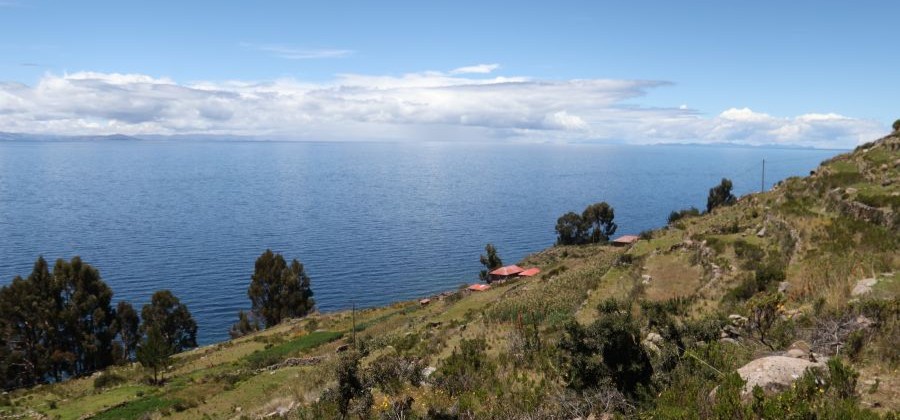
Lake Titicaca holds many records: not only is it the largest freshwater lake in South America by volume, it is also the highest navigable lake in the world and one of the oldest on Earth. A natural border between Bolivia and Peru, this ancient body of water is home to a unique culture and stunning islands. In this guide, we’ll focus specifically on the Peruvian side, including the high-altitude hub of Puno, the famous Uros Floating Islands, and the textile-rich Isla Taquile. Read on to discover the best ways to visit the islands and, most importantly, the top-rated spots to discover Lake Titicaca as a vegan traveler in 2026.
Introduction
- Best for: Ancient indigenous culture, unique reed architecture, UNESCO textile art, and expansive “deep blue” vistas
- Route: Puno Port → Uros Floating Islands → Taquile Island (sometimes including Amantaní for overnight stays)
- Getting around: Motorized boat tours (lanchas); strictly by foot once on the islands (no motorized vehicles allowed)
- When to visit: May-Oct (Dry season, clear skies, cold nights); Nov-Apr (Wet season, greener scenery, higher chance of rain)
- Fees & Cash: Carry Peruvian Soles (PEN). Small island entrance fees and local artisan purchases are strictly cash-only
- Connectivity: Reliable 4G/5G in Puno; spotty signal on the islands. Wi-Fi is extremely rare during island homestays
A cultural journey across the world’s highest navigable lake, where traditional life continues on islands made of reeds and stone.
This post contains affiliate links. If you make a purchase or booking through these links, we earn a small commission at no extra cost to you. This supports our work and allows us to keep offering free content here on the blog.
High Altitudes & Deep Meaning: Facts about Lake Titicaca
A fascinating fact about Lake Titicaca is that at 3,812 meters (12,507 feet), it is the highest navigable lake in the world. “Navigable” in this sense means the water is deep and wide enough for massive commercial ships to traverse the Andes.
Before our visit, we didn’t quite associate lakes with such extreme altitudes (especially given the absence of high mountain peaks to serve as a reminder) and it was a rather strange feeling to experience that slight lack of oxygen during our visit. Titicaca is so vast that as you sail toward the islands, it’s easy to forget that the deep blue water surrounding you is a freshwater lake rather than the sea!

Another discovery for us was that Lake Titicaca is over 3 million years old. This places it among the world’s rare “ancient lakes,” a title shared with only about 20 others on Earth. While most of our planet’s lakes were formed after the last ice age (less than 25,000 years ago), Titicaca feels like a wise old grandmother watching over the world. And indeed, for the Quechua, Aymara, and Uros communities who have lived here for generations, this water holds a deep spiritual significance: it is considered a profound feminine energy point, the “Womb of the World”, where the sun was born and life began.
Note: While we use the international spelling Titicaca to ensure this guide remains visible in digital searches, we recognize Titikaka (or Titiqaqa) as the phonetically correct and indigenous name. In Aymara and Quechua, the “k” or “q” represents the native sounds more accurately. It is pronounced as a hard, crisp “k” like in kite for example.
Lake Titicaca: Peru or Bolivia?
Lake Titicaca forms a natural border between Peru and Bolivia. Since we unfortunately ran into ongoing strikes and roadblocks during our time in Bolivia, we decided to focus our trip on the Peruvian side. However, Copacabana and Isla del Sol are definitely worth a visit – to learn more, we recommend this article.
Exploring Puno
What to Do
Puno is located on the Peruvian side of Lake Titicaca and seen as the gateway for many tours and island visits. Other than that, you can stroll through the Mercado Central, experience the local café culture with cute restaurants and cafés along Jr. Lima and discover a range of artisanal and touristic shops. Most tours to the islands start from the main port (Puerto de Puno), where you’ll catch a boat to begin your journey across the lake.

Where to Stay
We stayed at Marlon’s House in Puno, which provided a very affordable room with a private bedroom and great views of the lake from the 6th floor! We didn’t try the optional breakfast, but they provide free coffee and tea all day long.
If you are looking for something different, here are two other standout options:
- La Vista del Sol Lodge: Great if you want to stay right at the lake’s edge with even more panoramic views.
- Uros Floating Lodge: The ultimate bucket-list experience where you can actually stay on one of the floating islands, interact with the host families and and get a glimpse into local life.
Vegan Food in Puno
Puno surprised us with its great offers of vegan foods! Here are the spots we found (with links to their locations):
- Loving Hut: This is a worldwide vegan food chain with affordable and healthy options. This restaurant offered some Peruvian local dishes, mostly with seitan and beans, with complementary tea and salad. At the salad bar, they also had sweet potato snacks and you could take as much as you wanted. How cool is that? We knew at this moment that we’d love Peru!

- Veggie House: We didn’t get to try this one because it was closed on the days of our visit. However, reviews highlight the affordable prices and huge portions of vegan local food.
- Casa del Corregidor: We tried this spot which offers a tasty quinoa or lentil burger in a beautiful historic setting.

- Tulipans Restaurant: They have well-seasoned vegetable skewers, as well as vegan soup and a vegan ceviche option. They also have a beautiful courtyard to sit in when the weather is good.

- Nizumi Sushi: For those wanting to try something other than local food, they offer great vegan sushi.
- Pizzas D’Richety: For another change from local dishes, this place is serving pizzas without cheese.
Exploring the Islands
Choosing a Tour
When in Puno, you won’t have trouble finding tour operators for your trip to the Uros Floating Islands and Taquile Island. You can book it once you’re in the city or book them ahead to be sure to have a spot on the day you plan to visit.
Personally, we booked our tour directly through our accommodation at Marlon’s House 90 PEN per person (approx. 26$ or 22.50€). Included was a pick-up at the hotel and a super enthusiastic guide who accompanied us throughout the tour. Requesting vegan food was also no problem at all! For lunch, we were served a hearty plate of rice, fresh veggies, fries, and avocado.
The Uros Floating Islands
The first stop on our tour was the Uros Floating Islands, a cluster of approximately 80 artificial, man-made islands made from thick layers of totora reeds, a water plant native to the lake. These islands are both constructed and inhabited by the Uros people. While some of the islands are open to tourism and can be visited as a day trip like we did, travelers can even choose to stay overnight to experience the rhythm of the lake after the tour boats leave.

To be honest, we are always a bit torn when it comes to activities that involve visiting local people’s homes and private lives; we usually avoid these kinds of group tours for that reason. However, learning about the engineering, history, and unique way of life required to maintain these floating structures was undoubtedly fascinating. We gained a detailed insight into how the islands are built and how the reeds are constantly replenished, and their “dragon” boats, also made from totora reeds, were truly impressive.

As for the rest of the experience, it had a heavily commercial side that made us feel rather uncomfortable. First, there was the (somewhat expected) selling of local crafts (although not pushy), followed by a ride on the traditional dragon boats. We had been told in advance that the boat ride was optional, but once we were there, it was presented in a way that made it feel necessary just to get to the other island and back to our main tour boat. It’s these kinds of “forced” tourist moments that we usually try to avoid, even if the craftsmanship of the boats themselves was remarkable. In hindsight, it became clear to us that the Uros community likely doesn’t earn much from the tour agencies themselves and therefore relies heavily on these additional sales. Not to mention, the constant flow of daily tour groups must significantly increase the repair and maintenance work required on these man-made islands. Like many topics in modern tourism, the issue is complex; there are valid arguments for both supporting and bypassing these sites. If you’ve visited the Uros islands yourself, we’d love to hear your perspective in the comments: how did the experience feel for you?
Taquile Island
After the Uros Floating Islands, it was time to visit Taquile Island. This green, picturesque island lies about 45km away from Puno and makes you forget that you’re still on a lake rather than on the Mediterrean coast.

The visit to Taquile began with a leisurely one-hour walk across the island. There is no motorized transport here, which creates a wonderful sense of quiet, though it is a curious feeling to be so close to the “sea” while still lacking oxygen at such a high altitude. Fortunately, the paths are well-laid out and offer magnificent views in every direction. Once we reached the main square, the local community invited us to watch (and join!) a traditional dance on the island’s main square. Taquile is famous worldwide for its textiles and knitting, so much so that it is protected by UNESCO, and seeing the locals in their traditional dress against the backdrop of the lake was a really cool experience. The visit finished with lunch in a beautiful restaurant overlooking the water. The tour handled our vegan request perfectly, and our meal consisted of quinoa soup and a plate of rice, veggies and fresh avocado.

Walking across the island, we couldn’t help but notice the many stone-walled terraces covering the hillsides. These andenes, as they are called locally, are still used for agriculture today to grow crops like potatoes and quinoa. Similar to Isla Amantaní, which is sometimes called the “vegetarian island”, the inhabitants here follow a largely vegetarian diet. Although this is a bit of a romanticized version nowadays (fish is definitely a staple, and the trout is actually a non-native species introduced from Canada), it still makes it much easier for vegan travelers to find tasty meals.

Since 2005, Taquile’s textile art has been recognized by UNESCO as a “Masterpiece of the Oral and Intangible Heritage of Humanity.” One interesting fact is that it’s the men who do the knitting here. They create the famous chullos (hats) that actually signal the wearer’s social status: for example, a hat with a white top means the man is single, while a solid red hat means he is married.
While the knitting culture on Taquile is incredible to witness, keep in mind that the majority of the textiles are made from sheep’s wool or alpaca fiber.

Conclusion
If we didn’t sound quite as enthusiastic in this post as we usually do, you’re not wrong. As we’ve hinted at, the type of travel where groups of tourists visit locals in their homes, and which can easily turn into a performance, is something we aren’t entirely comfortable with. It is also a situation we don’t always feel qualified to judge. In our eyes, truly sustainable tourism involves locals as the main actors and gives them a primary voice; however, with most tours being organized in Puno, it’s difficult to estimate how much the Uros people actually have a say in the process.
We still decided to share our experience, keeping the core mission of this blog in mind: helping you navigate Lake Titicaca as a vegan, sharing restaurants and tours that accommodate your needs. Lastly, we would love to get your feedback and perspective: if you’ve been to the islands, how did you feel about the experience? Don’t hesitate to share your thoughts in the comments!

This guide is completely free. If it helped you plan your trip and you’d like to say thank you, you can do so here 🙂

Further Reading
Blog Articles
Peru Adventures:
Vegan Guides: